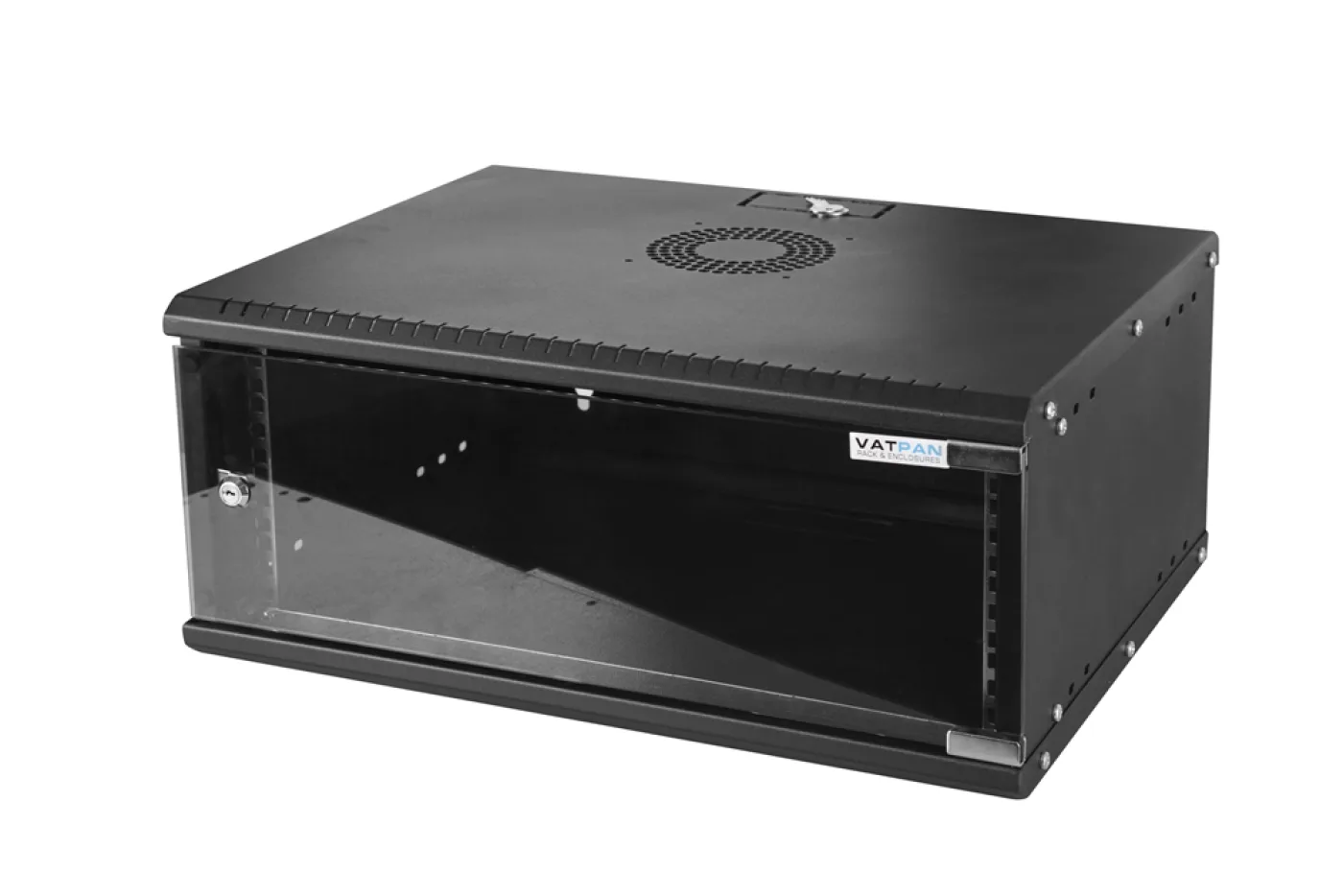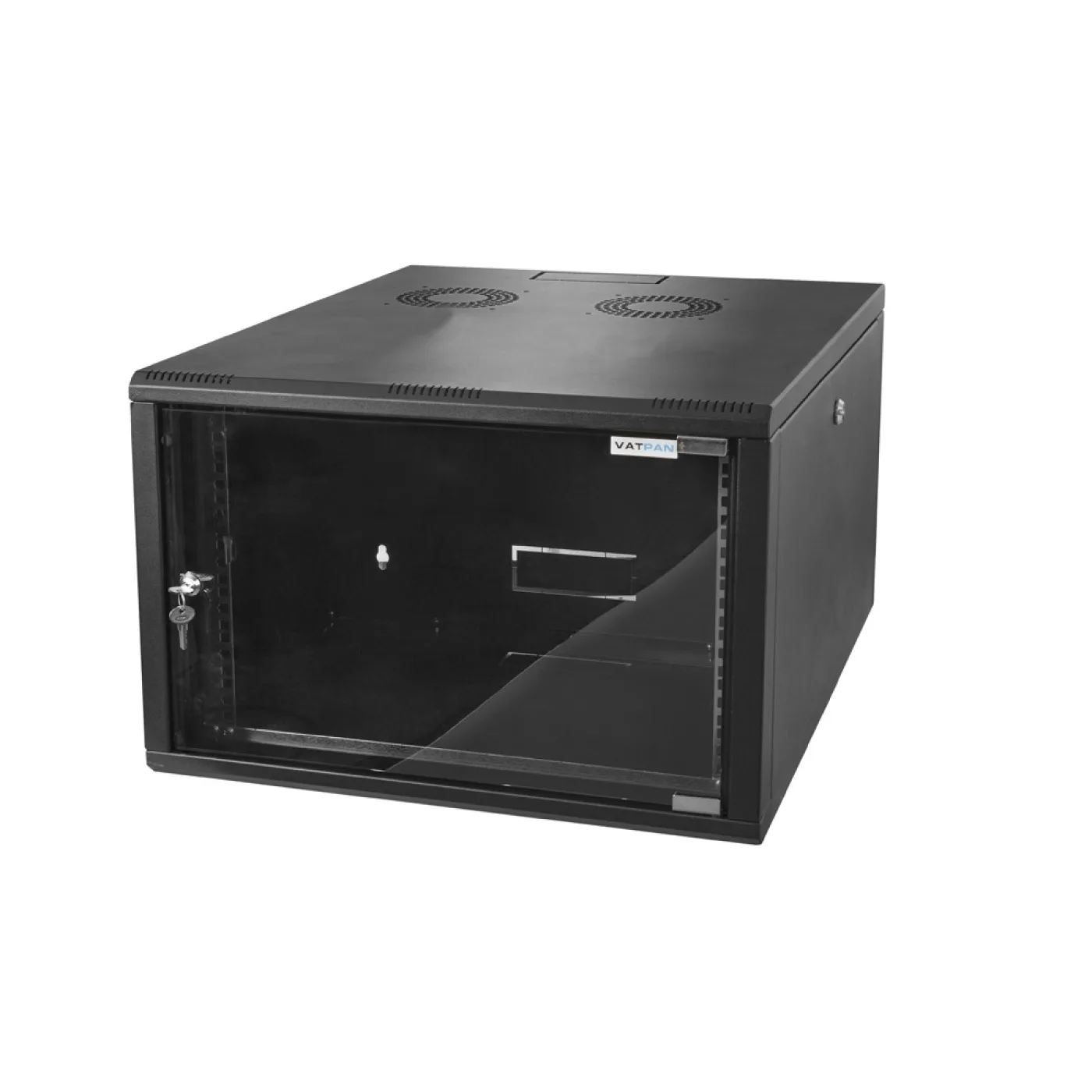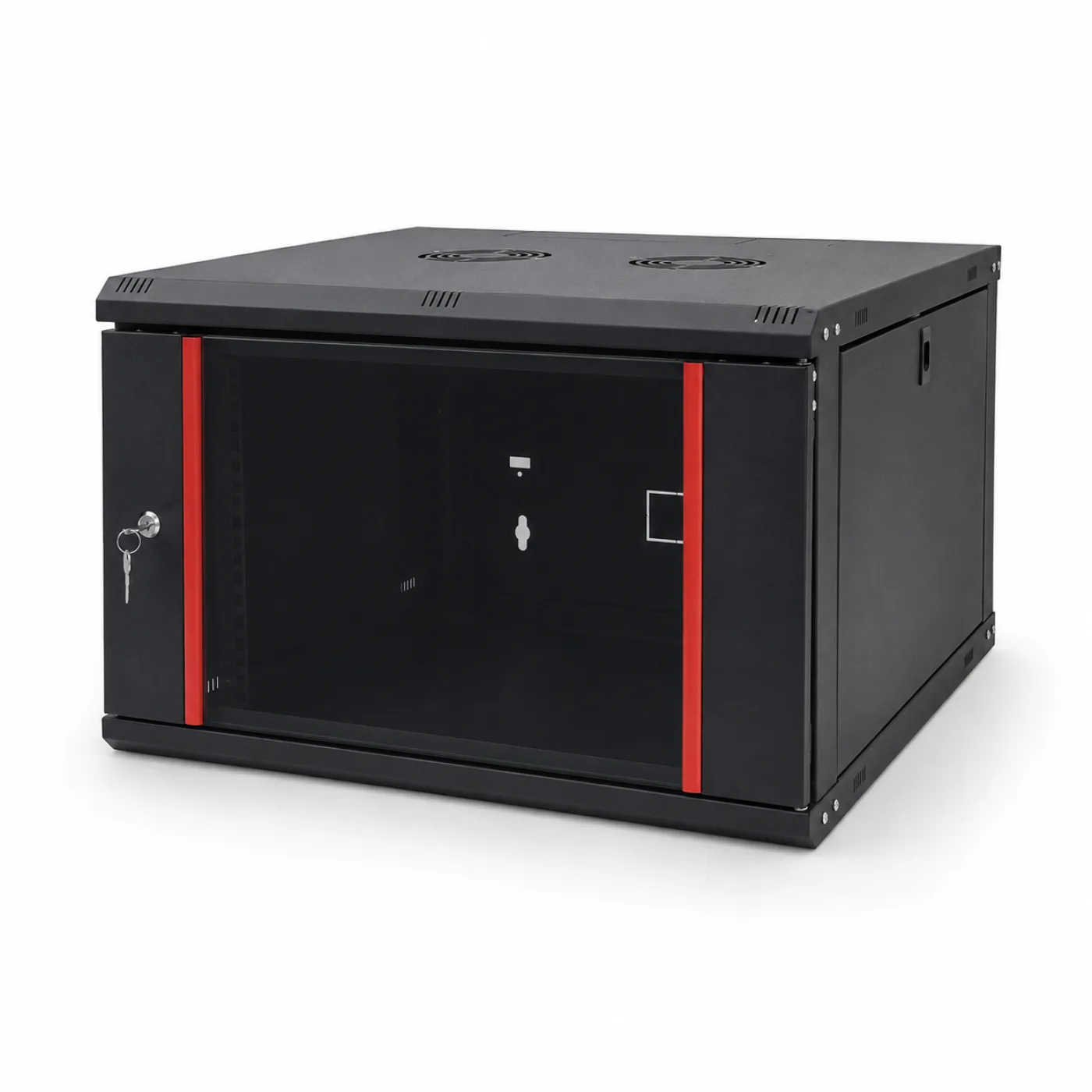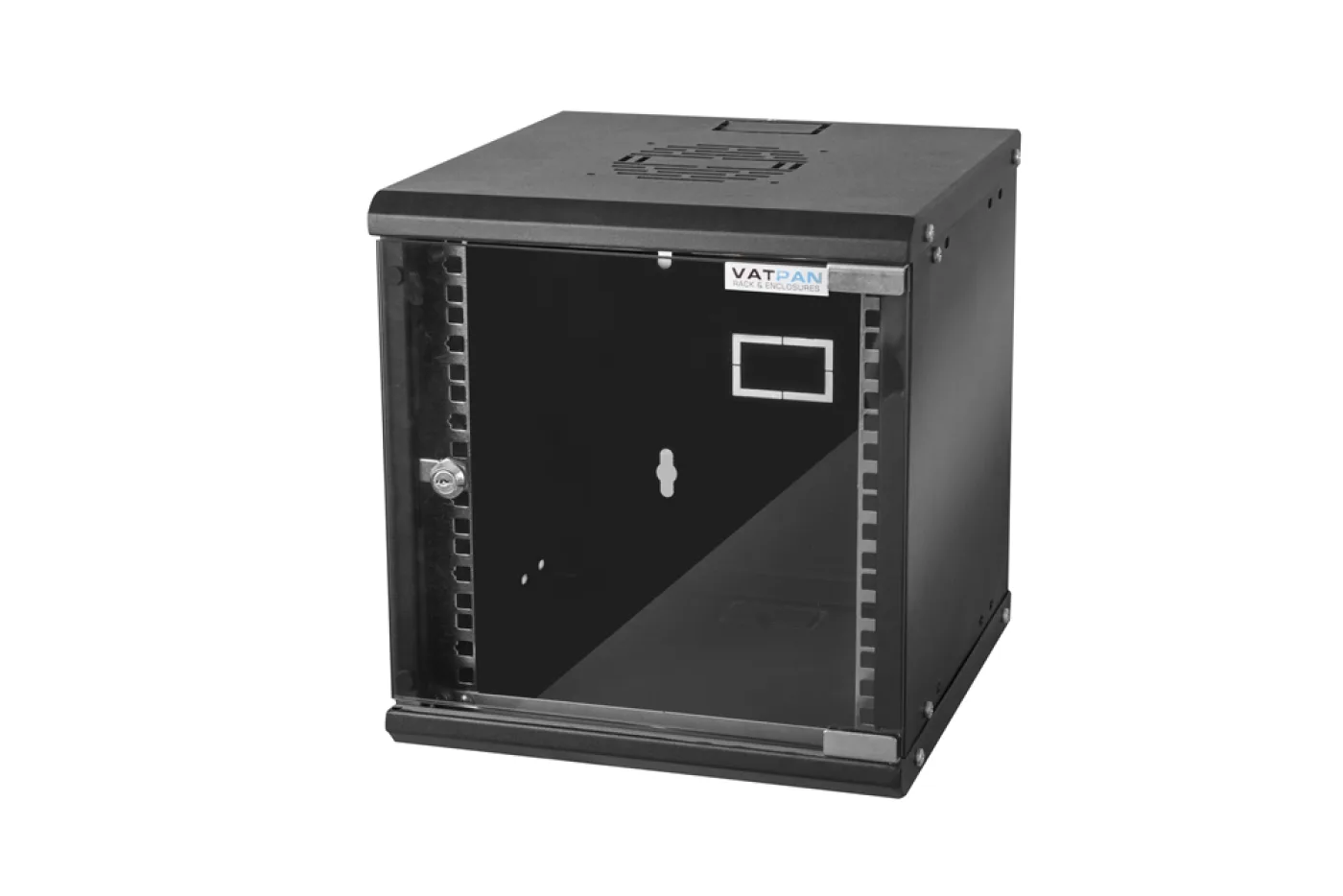
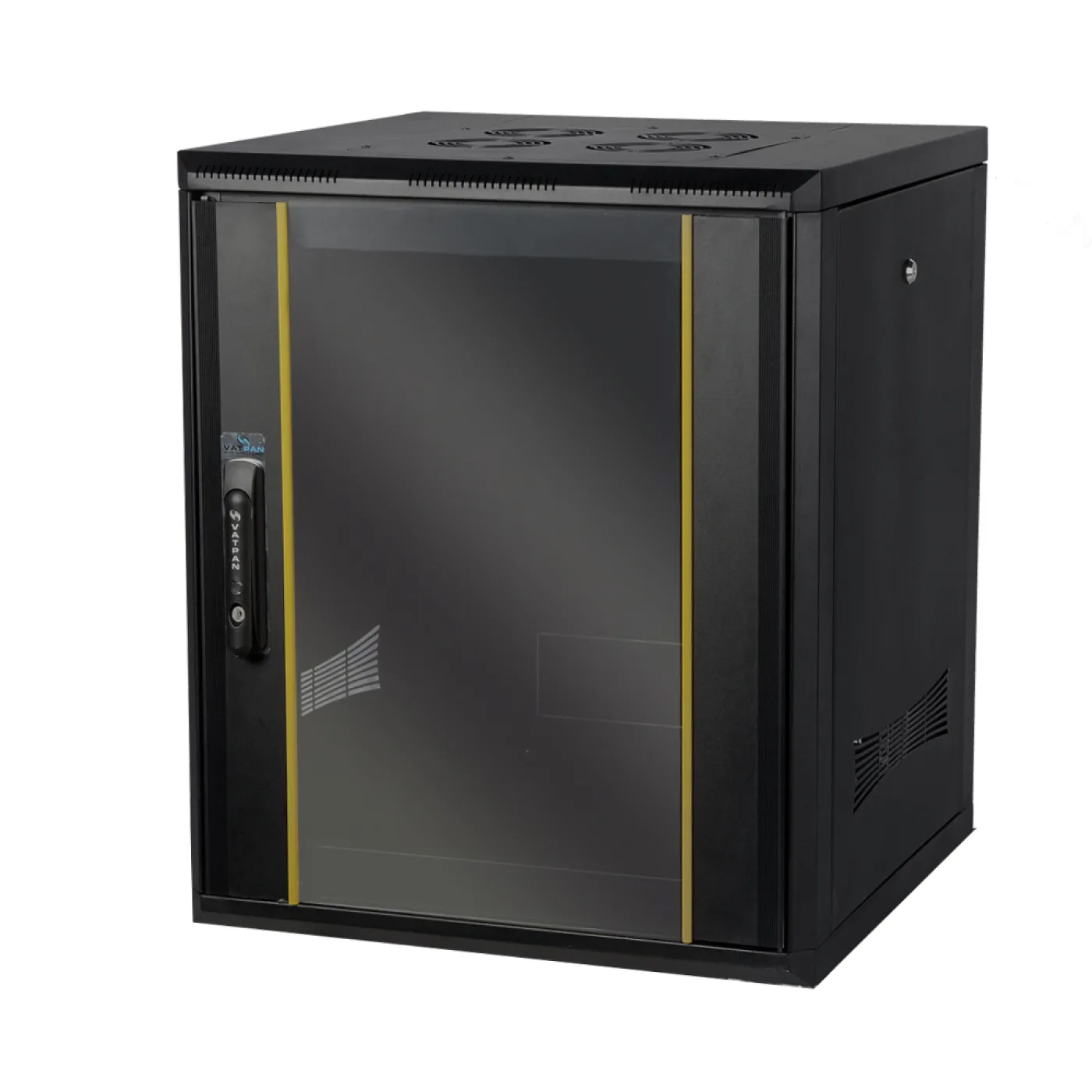
This question usually gets answered with “is there room in the space?”. The real answer comes from three constraints: weight, depth and service access. All three behave differently on a cabinet that hangs from a wall than on one that stands on the floor — and the price of choosing wrong is normally paid on installation day.
First constraint: weight, and the wall itself
A floor-standing cabinet transfers its load to the floor. A wall-mount cabinet transfers it to the wall — and in practice the limit is usually set by the wall, not by the cabinet.
- Reinforced concrete: no difficulty with the right anchors.
- Hollow brick or lightweight block: needs chemical anchors or a through-plate; standard plastic plugs will not do.
- Plasterboard: never mounted directly. It must be fixed to the stud behind it, or to a bearer that passes through to the structural wall.
Calculate with the loaded weight, not the empty one: put a switch, a patch panel, a small UPS and cabling into a 9U cabinet and the total reaches 30–40 kg without effort. Always read the cabinet's own load rating from the product datasheet; it varies by model, and it is not a figure that can be compared across the two families.
When the door of a wall-mounted cabinet opens, the centre of gravity moves forward. Take that into account when choosing the fixing points, particularly on the deeper 600 mm wall cabinets.
Second constraint: depth
This is the dimension that separates the two families most sharply. Our wall-mount cabinets are 450 mm and 600 mm deep; in the floor-standing family the depths are 600, 800 and 1000 mm.
The consequence is clear: a rack server does not fit in a wall-mount cabinet. A 1U server is typically 650–800 mm deep and wants cable room behind it. Wall-mount cabinets are for shallow equipment — patch panels, switches, small UPSs, NVRs. If servers are needed, even only in the plan, the decision is floor-standing.
Third constraint: service access
On a floor-standing cabinet the side panels come off and the rear door opens; all four sides are reachable. On a wall-mount cabinet the rear faces the wall, and access is limited to the front and the sides. In an installation with dense cabling and frequent intervention, that difference is felt at every maintenance visit after the install.
Against that, a wall-mount cabinet has one real advantage: it occupies no floor and sits at eye level. In a cramped floor distribution room, a retail stockroom or an office corridor, that can decide the matter.
Decision table
| Situation | Suitable type |
|---|---|
| Patch panels and switches, no servers | Wall-mount |
| Rack servers now or in the plan | Floor-standing |
| Total load above 40 kg | Floor-standing |
| No floor space, concrete wall | Wall-mount |
| Plasterboard wall with no bearer | Floor-standing |
| More than 12U required | Floor-standing |
| Camera / NVR enclosure, small office network | Wall-mount |
| Rear access and frequent intervention needed | Floor-standing |
The third option in between: 10 inch
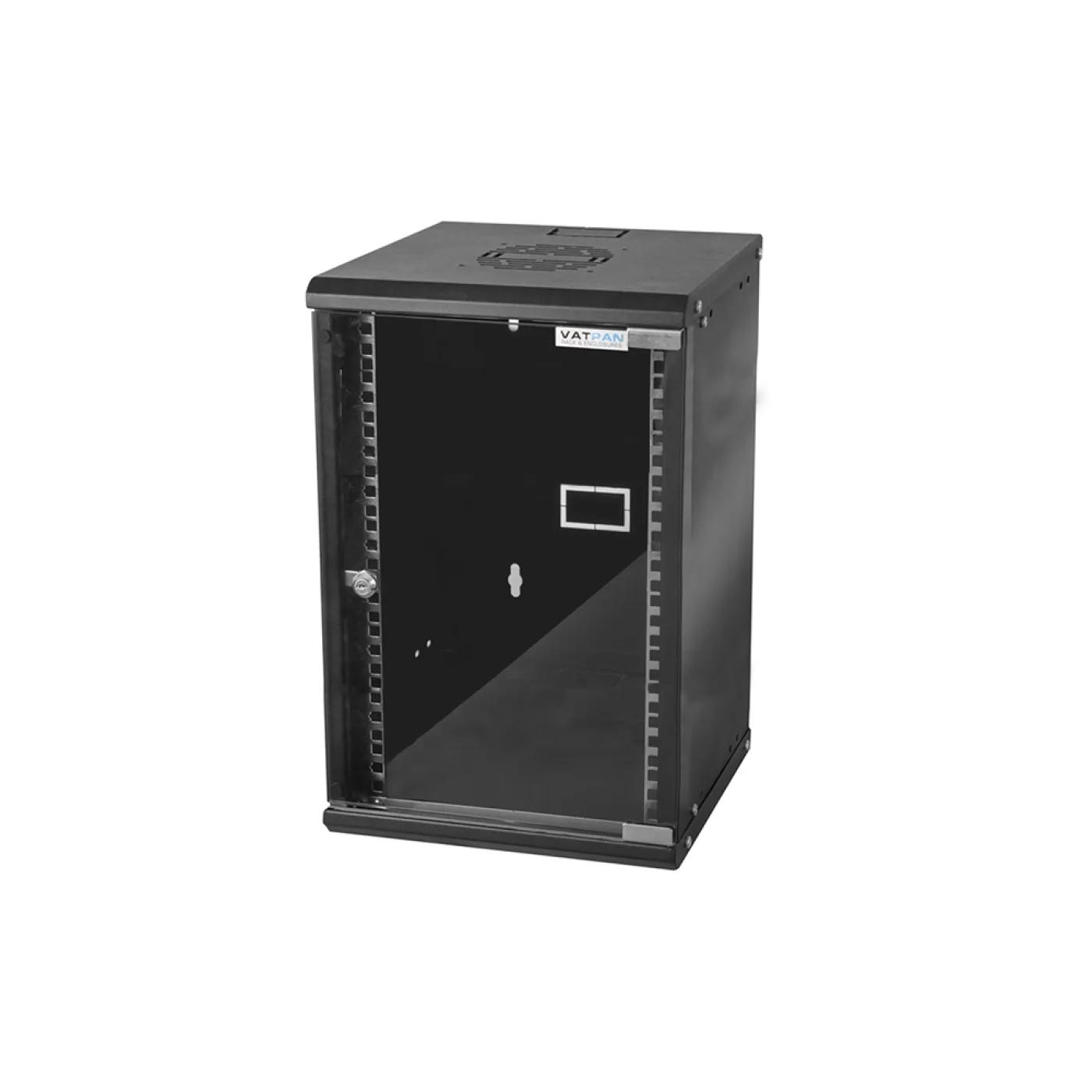
19 inches is not required for every installation. Small network equipment — home and small-office switches, modems, small patch panels — fits a 10-inch mounting width. A 10-inch cabinet is markedly narrower and lighter than a 19-inch wall cabinet, and it finds room in tight corridors and inside cupboards.
Keep the distinction sharp: 10-inch and 19-inch are not compatible. A 19-inch patch panel will not mount in a 10-inch cabinet. If your equipment is 19 inch, the cabinet has to be 19 inch — whether it hangs on a wall or stands on the floor is a separate question.
Where do the heights overlap?
The two families meet between 12U and 20U, and in that band the choice genuinely depends on the situation:
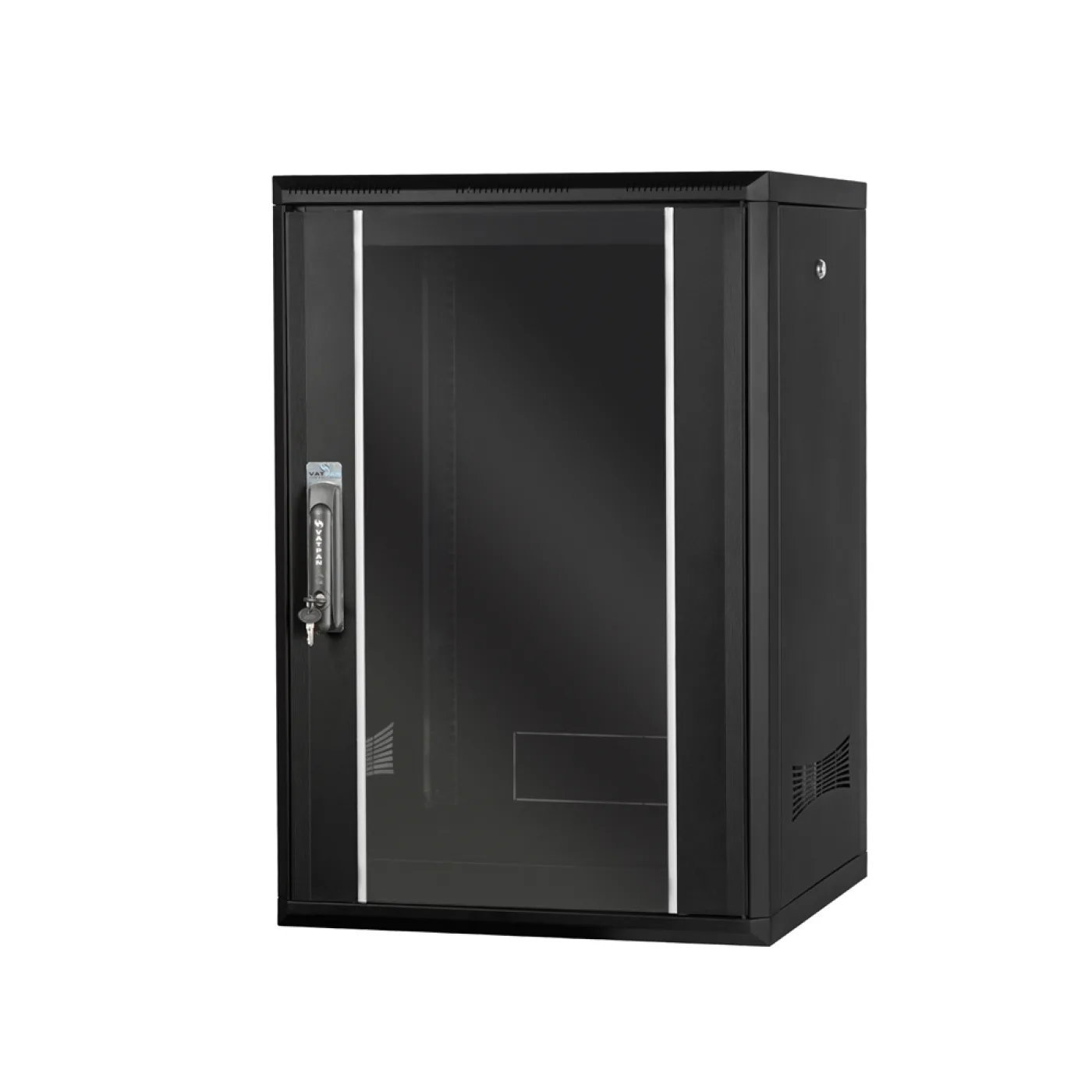
- The VATPAN wall-mount family covers 4U, 6U, 7U, 9U, 12U, 15U and 20U — 55 bodies in total.
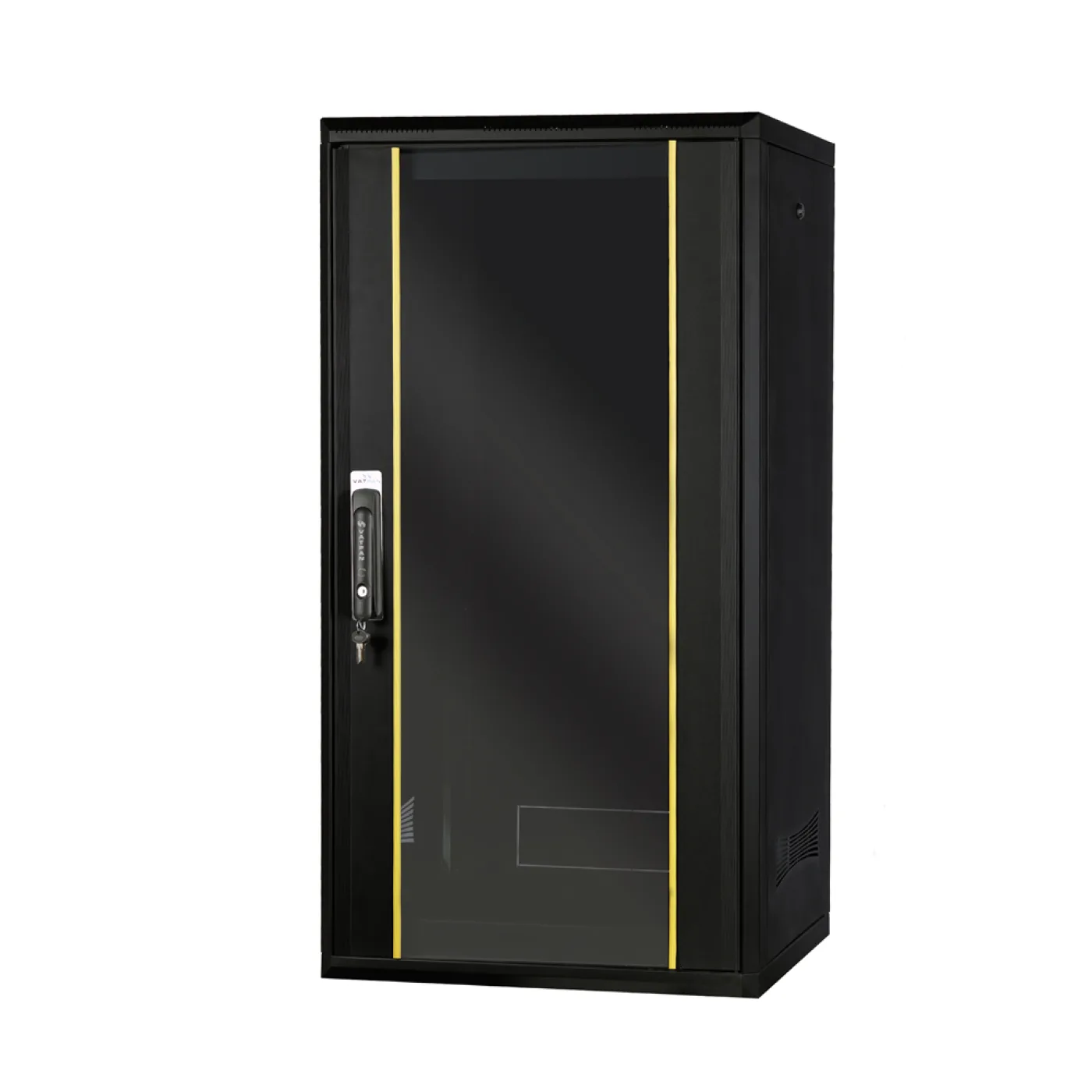
- The floor-standing family starts at 12U and runs to 47U — 95 bodies.
So a 12U requirement can be met either way. The decision goes back to the three constraints: is the equipment shallow, what is the total load, and will you need to get behind it.
Three common mistakes
- Choosing wall-mount for today's equipment. If servers arrive in a year, the cabinet is replaced in a year. Ask about the plan.
- Leaving the wall construction to installation day. Plasterboard appears and the project stops. Settle the wall type before ordering.
- Choosing the depth by eye. The difference between 450 and 600 mm decides whether the cable behind a switch can bend at all.
Which family should you be looking at?
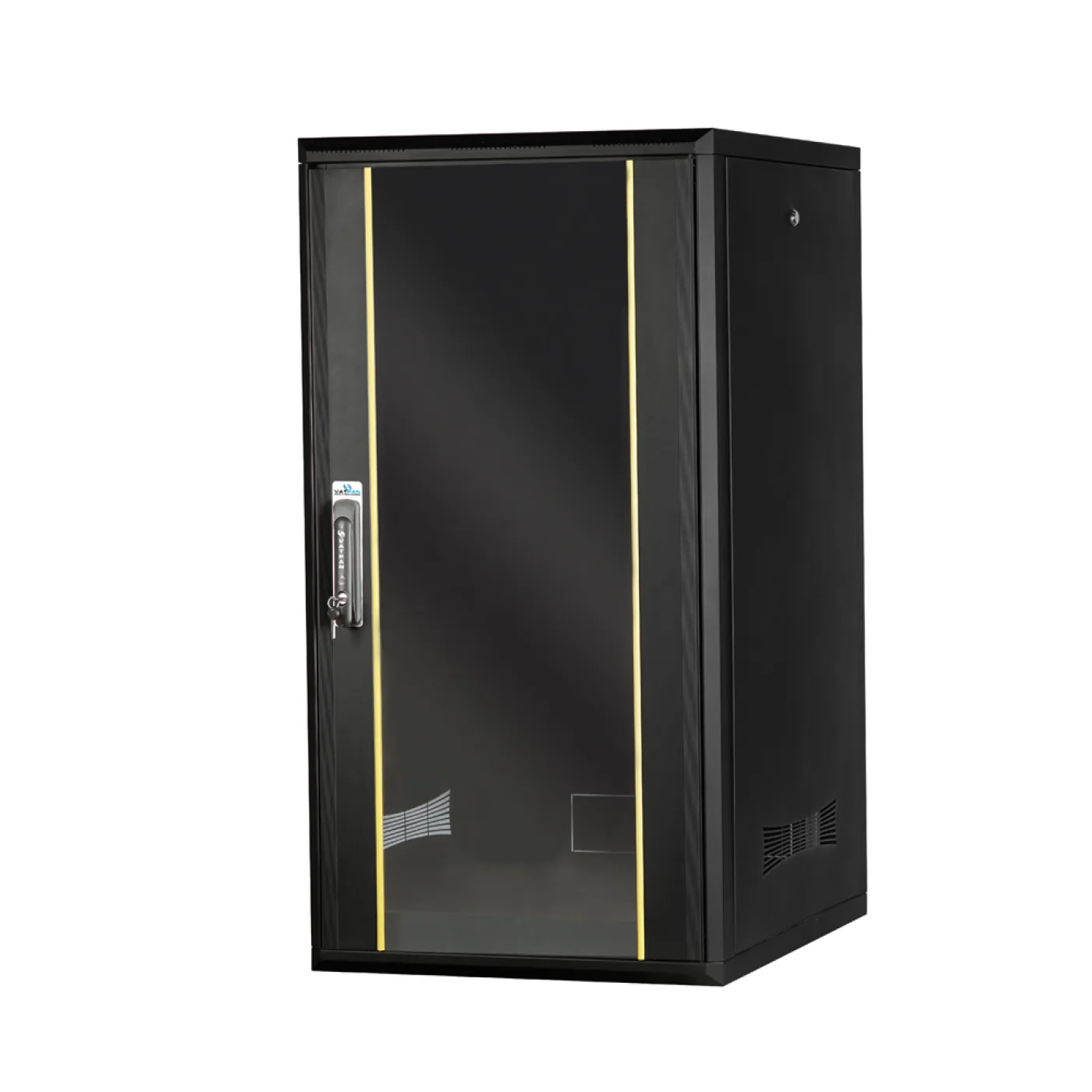
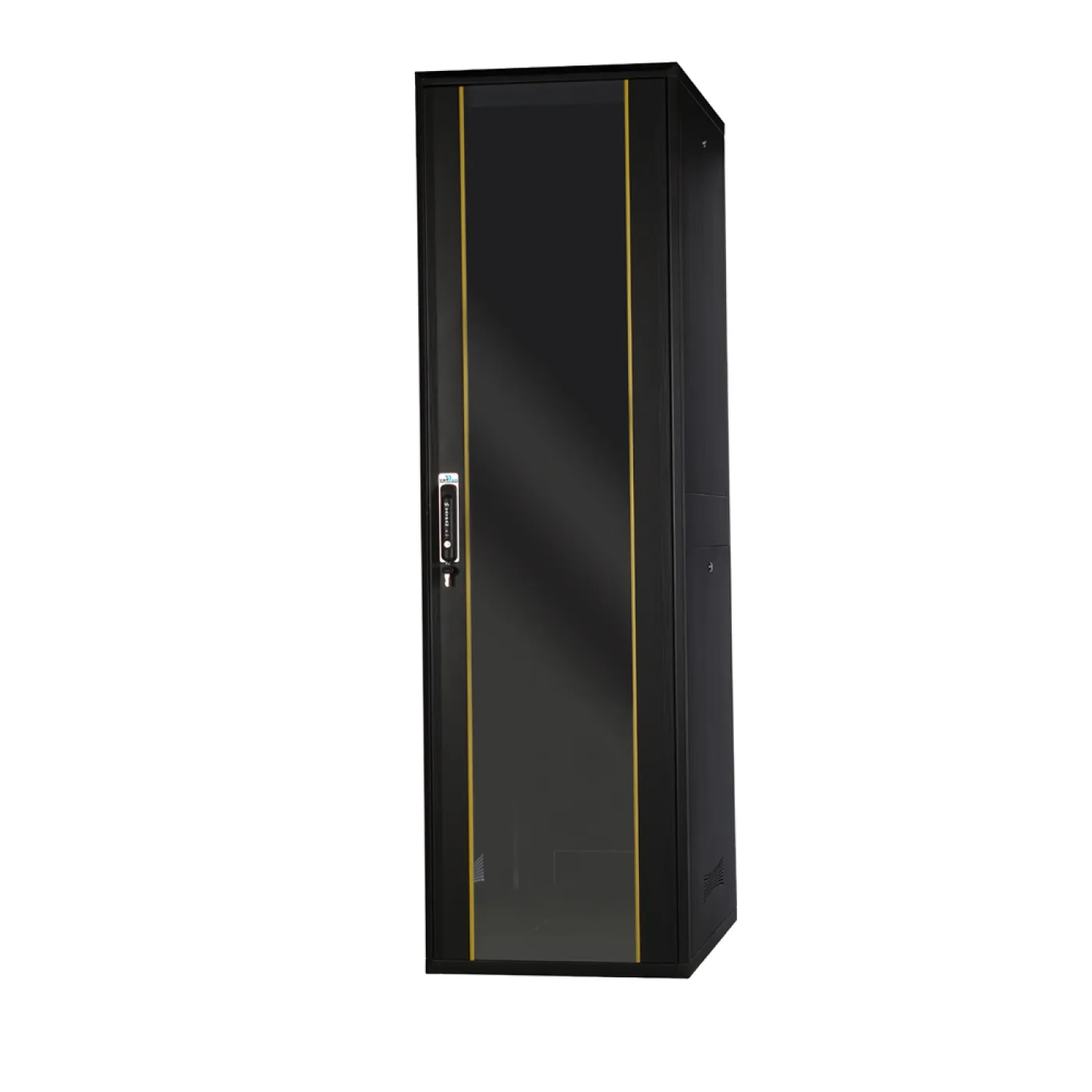
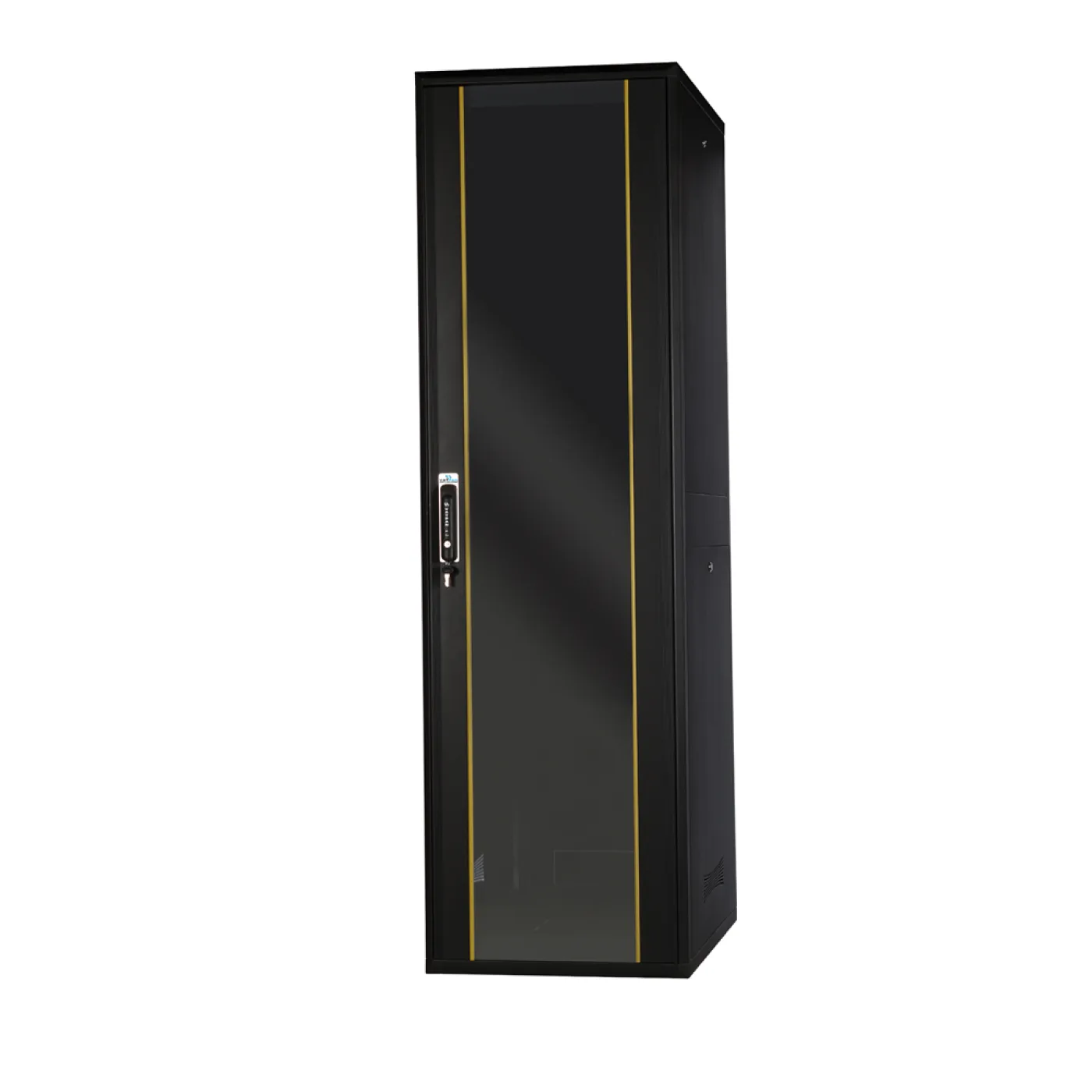
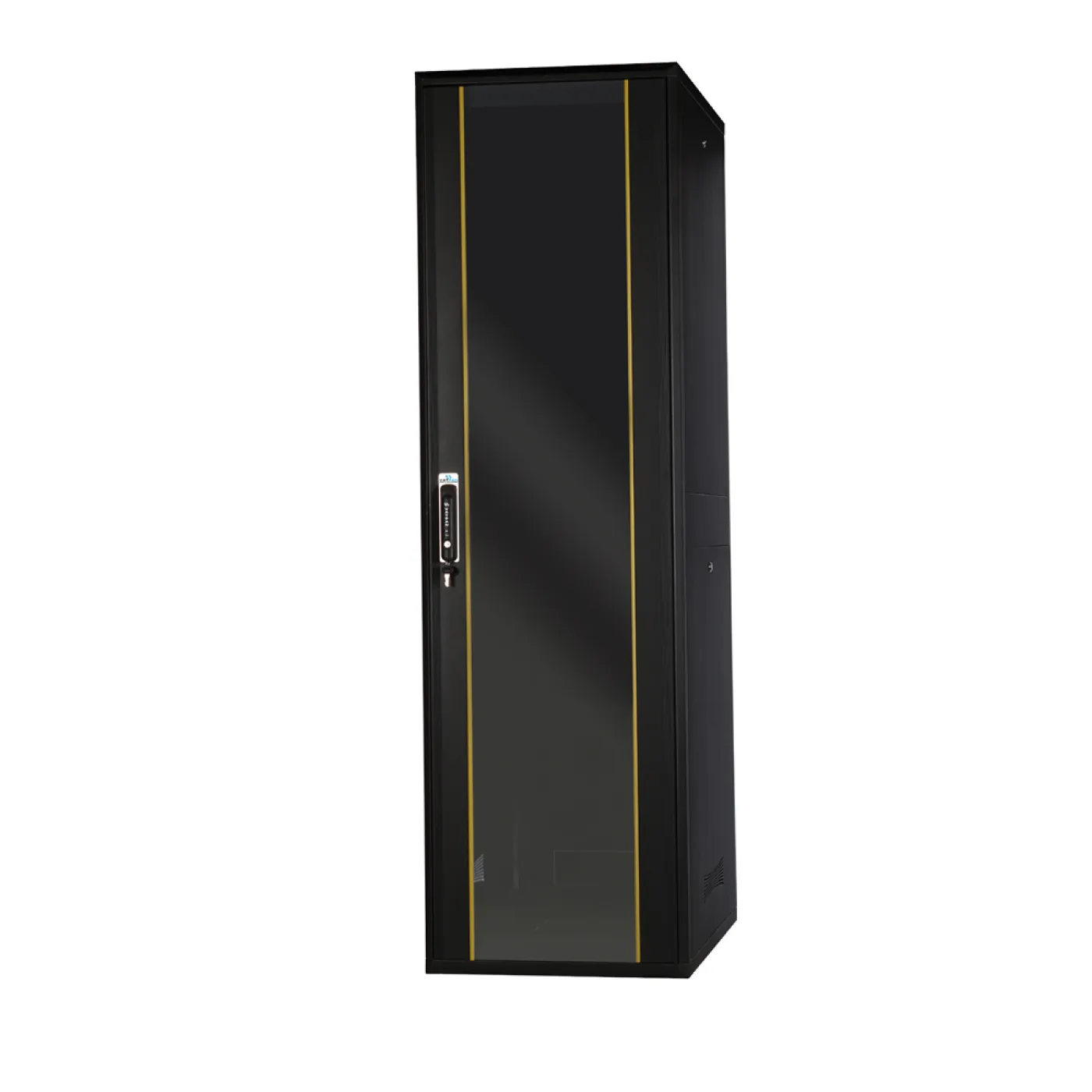
The products below bring representatives of both families together: from 10-inch wall cabinets through 19-inch wall-mount to the floor-standing bodies between 12U and 47U. Each has its own datasheet, and those whose model is ready have a 3D preview.
If you have settled on floor-standing, the next two questions are height and depth, both of which the other articles in this guide cover in detail.