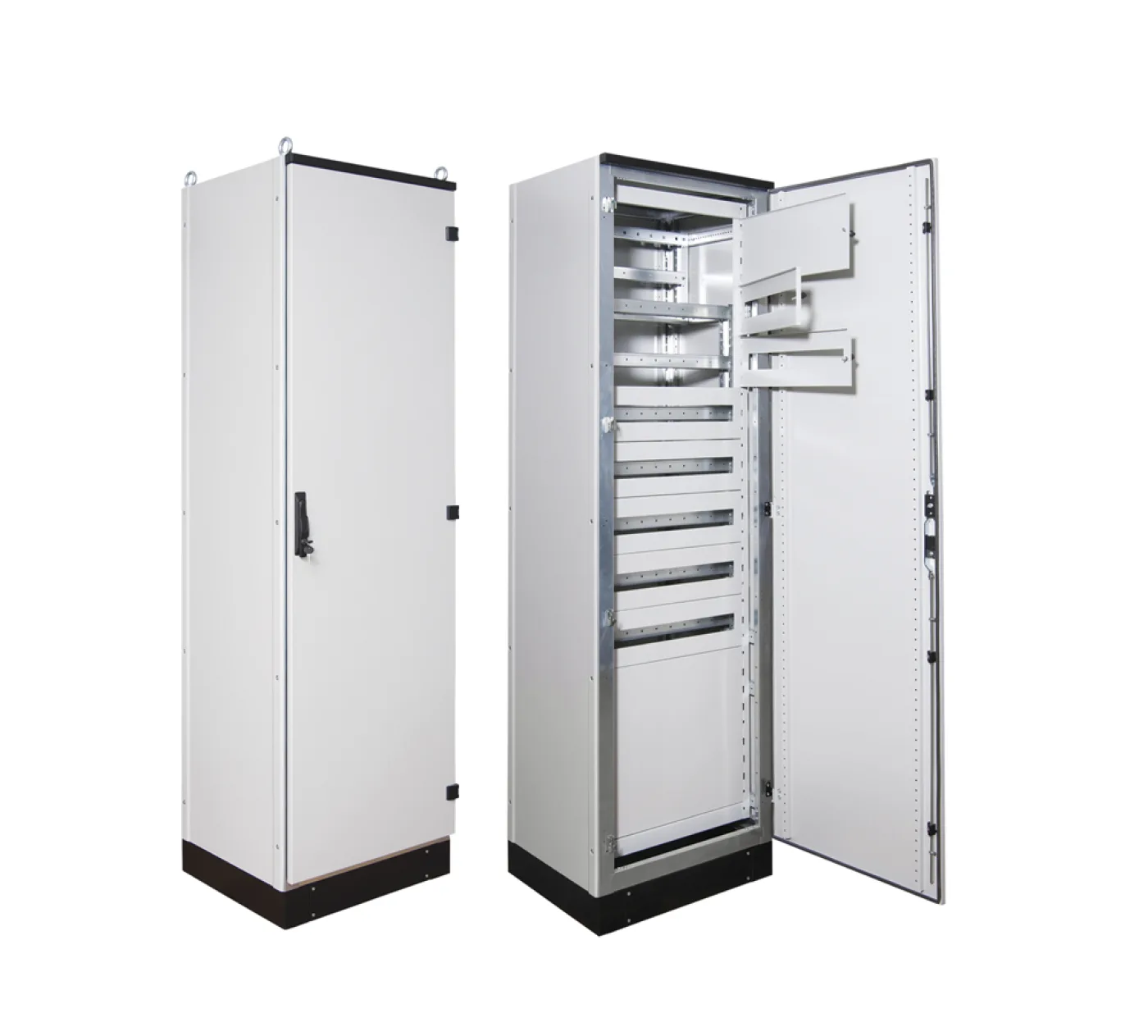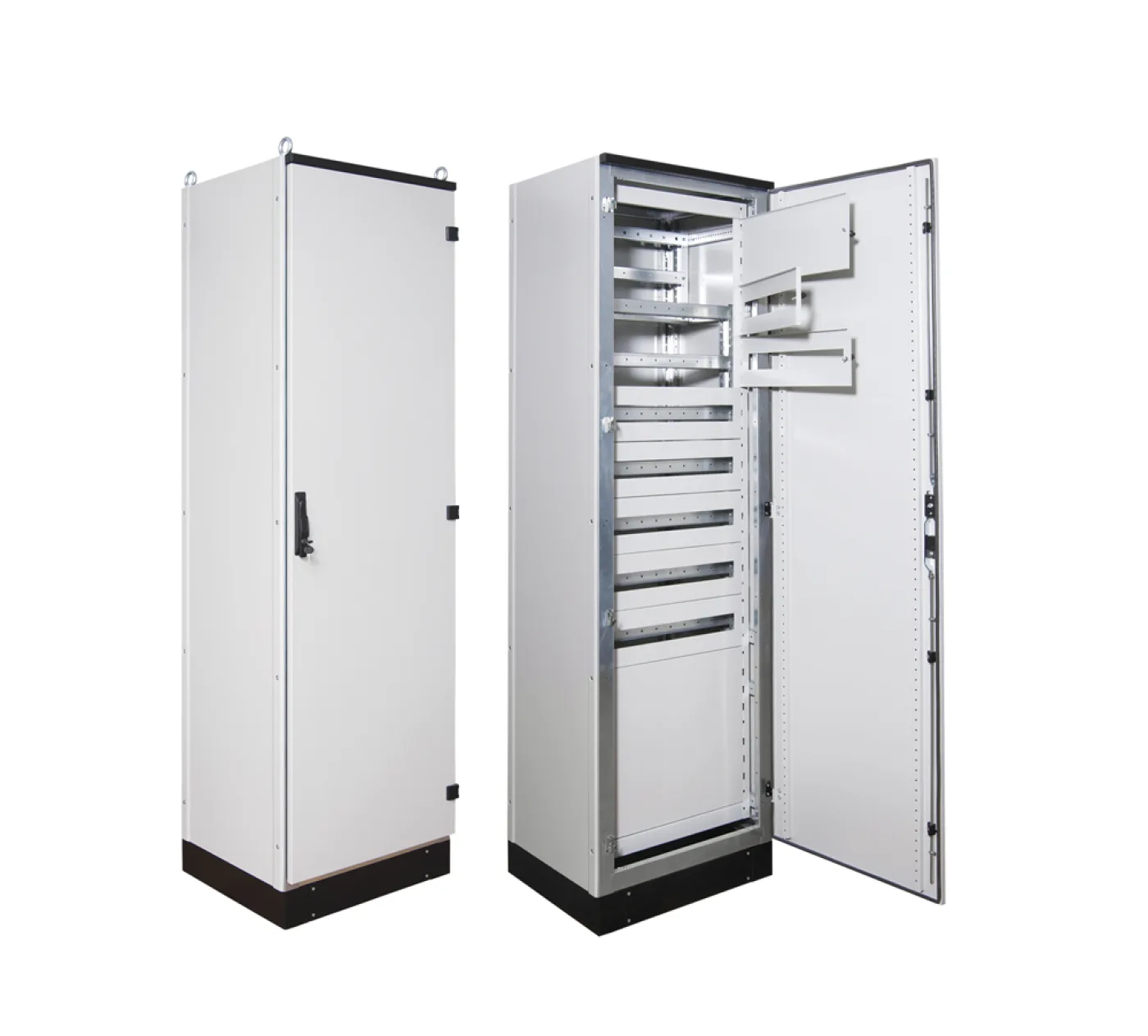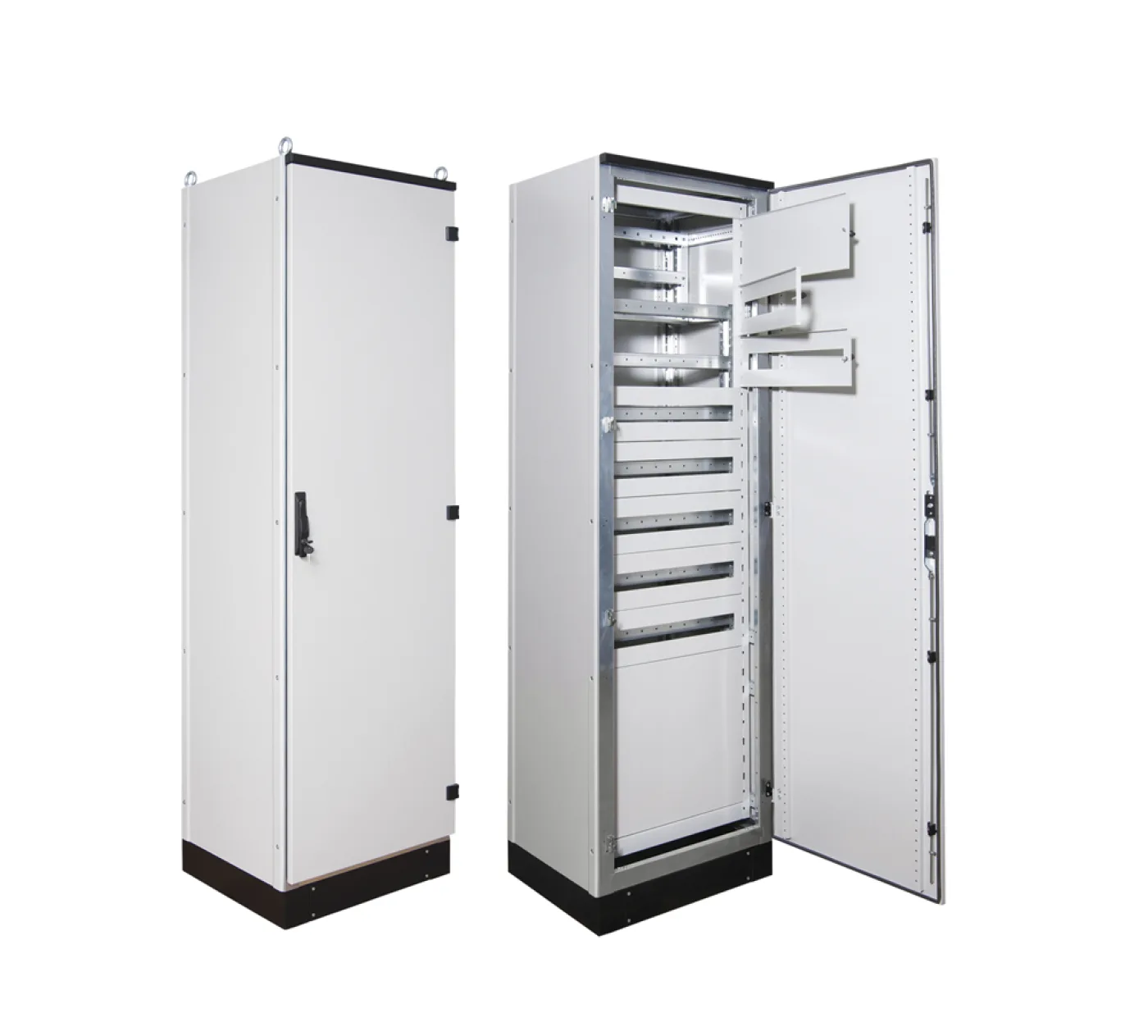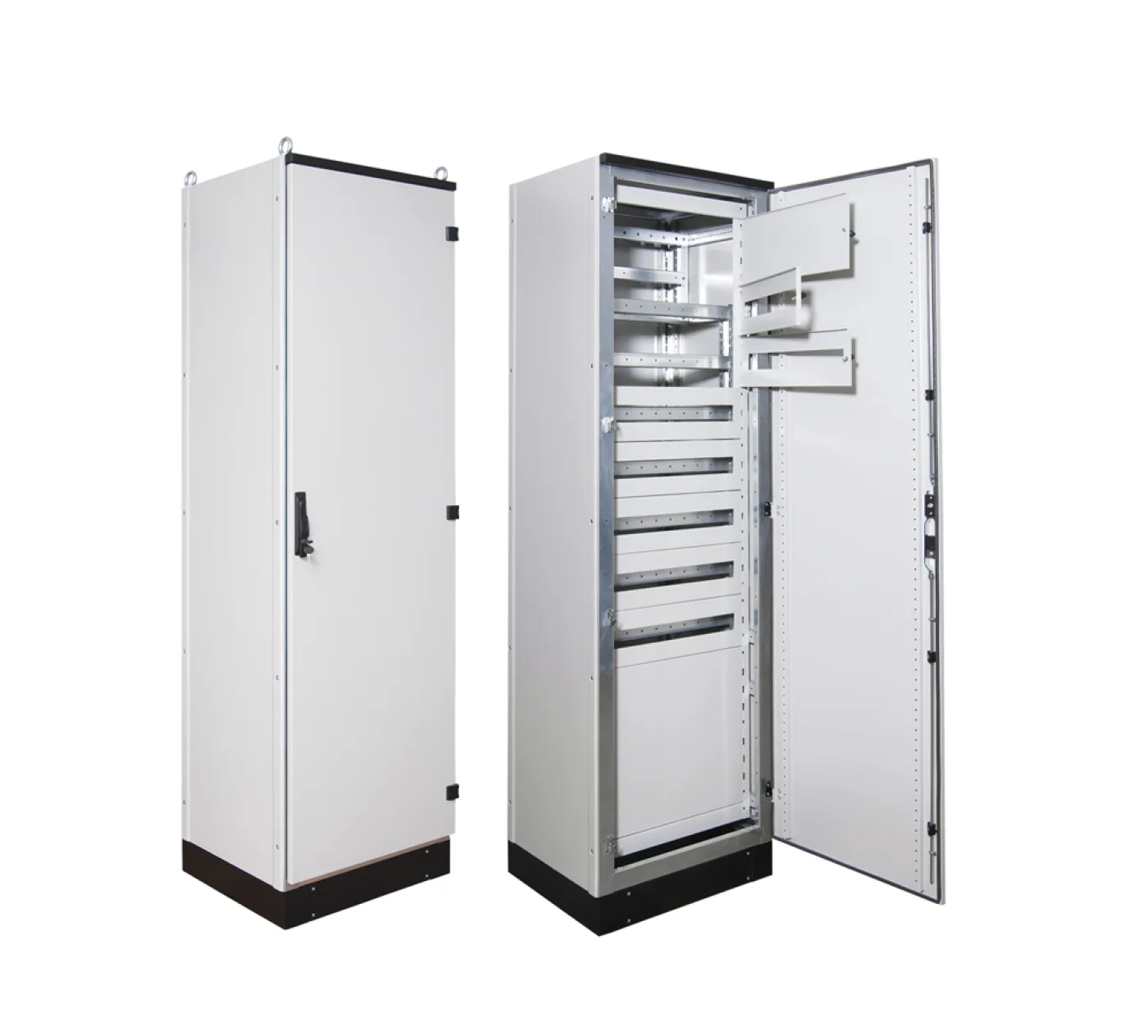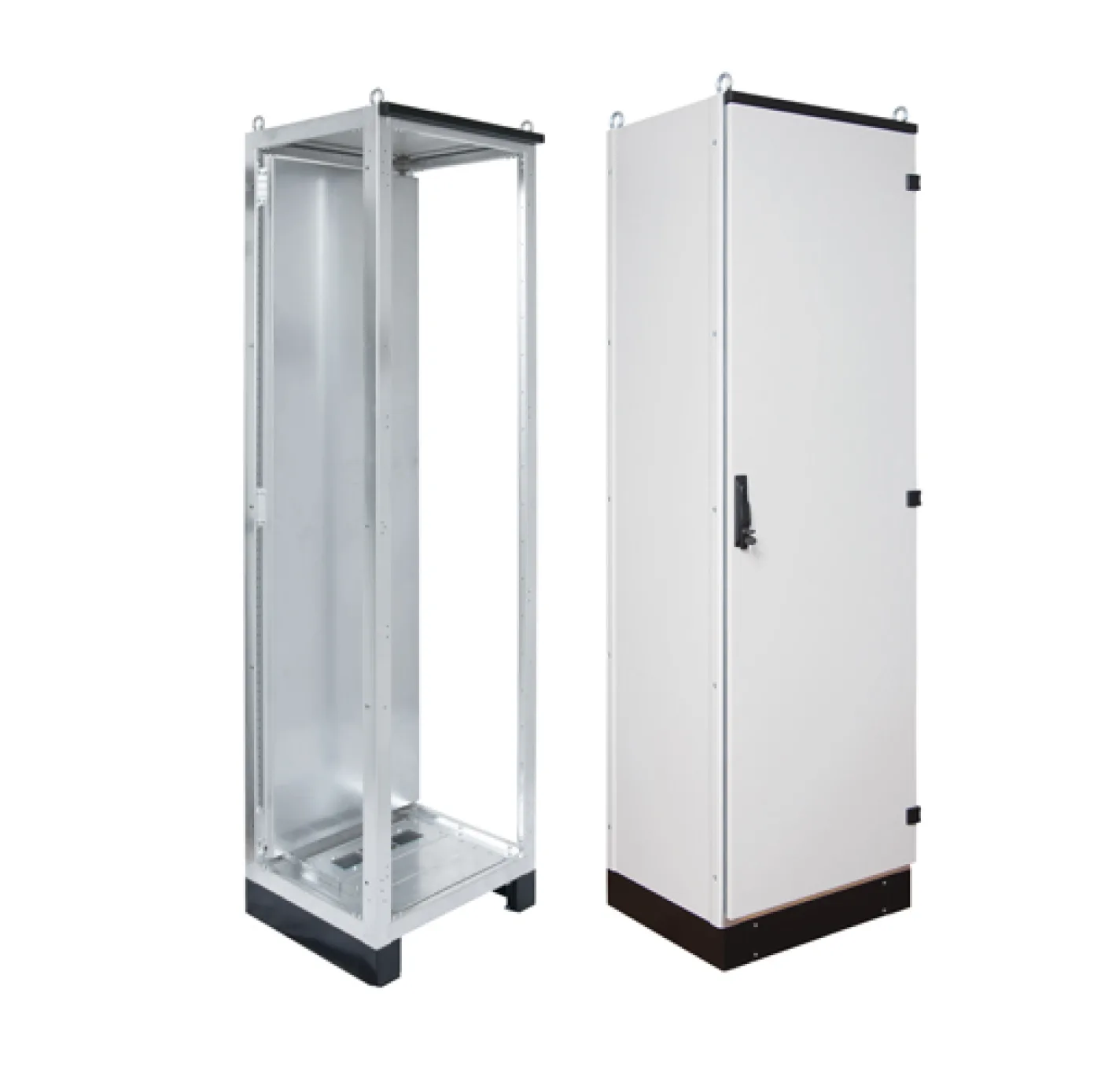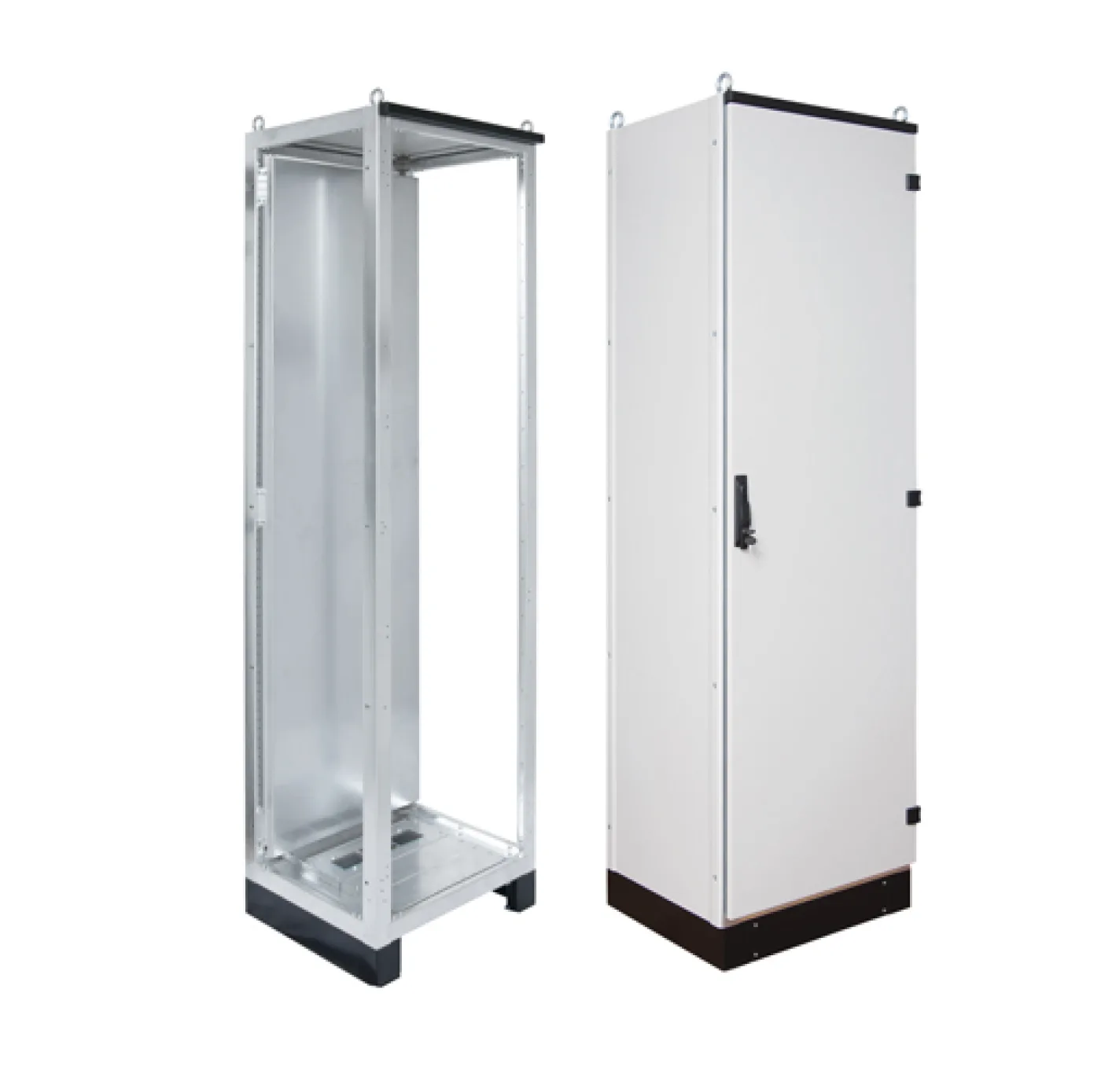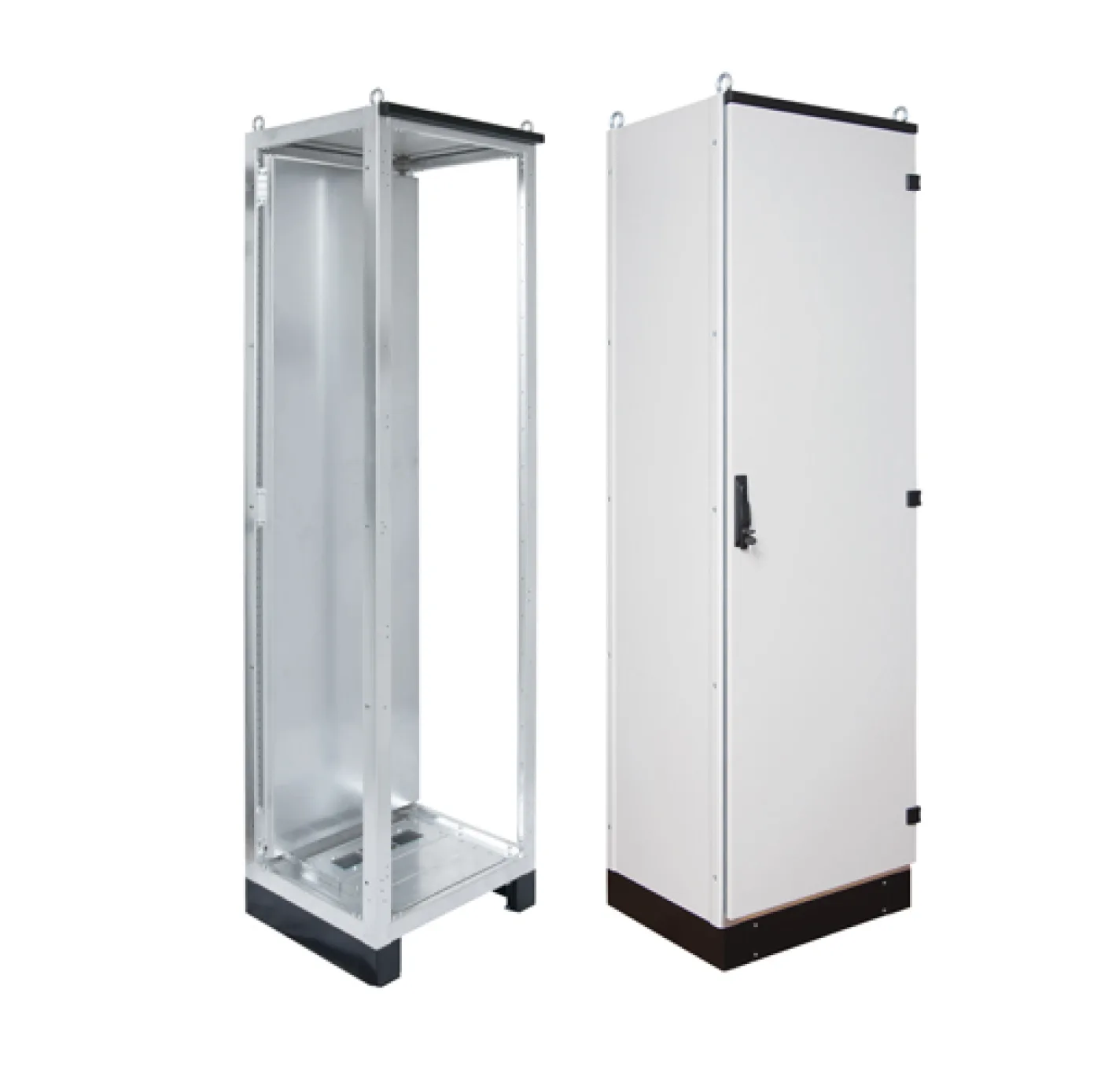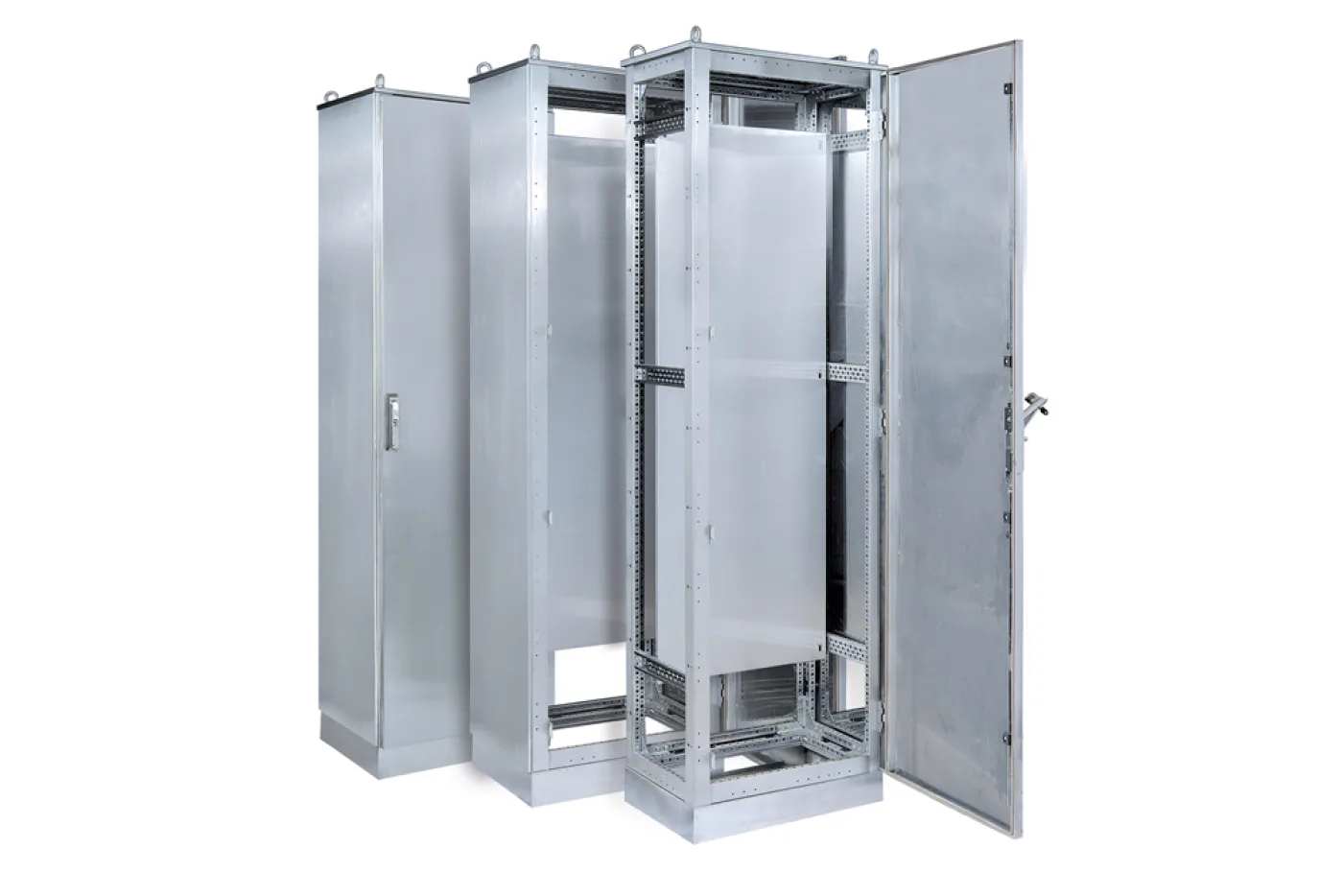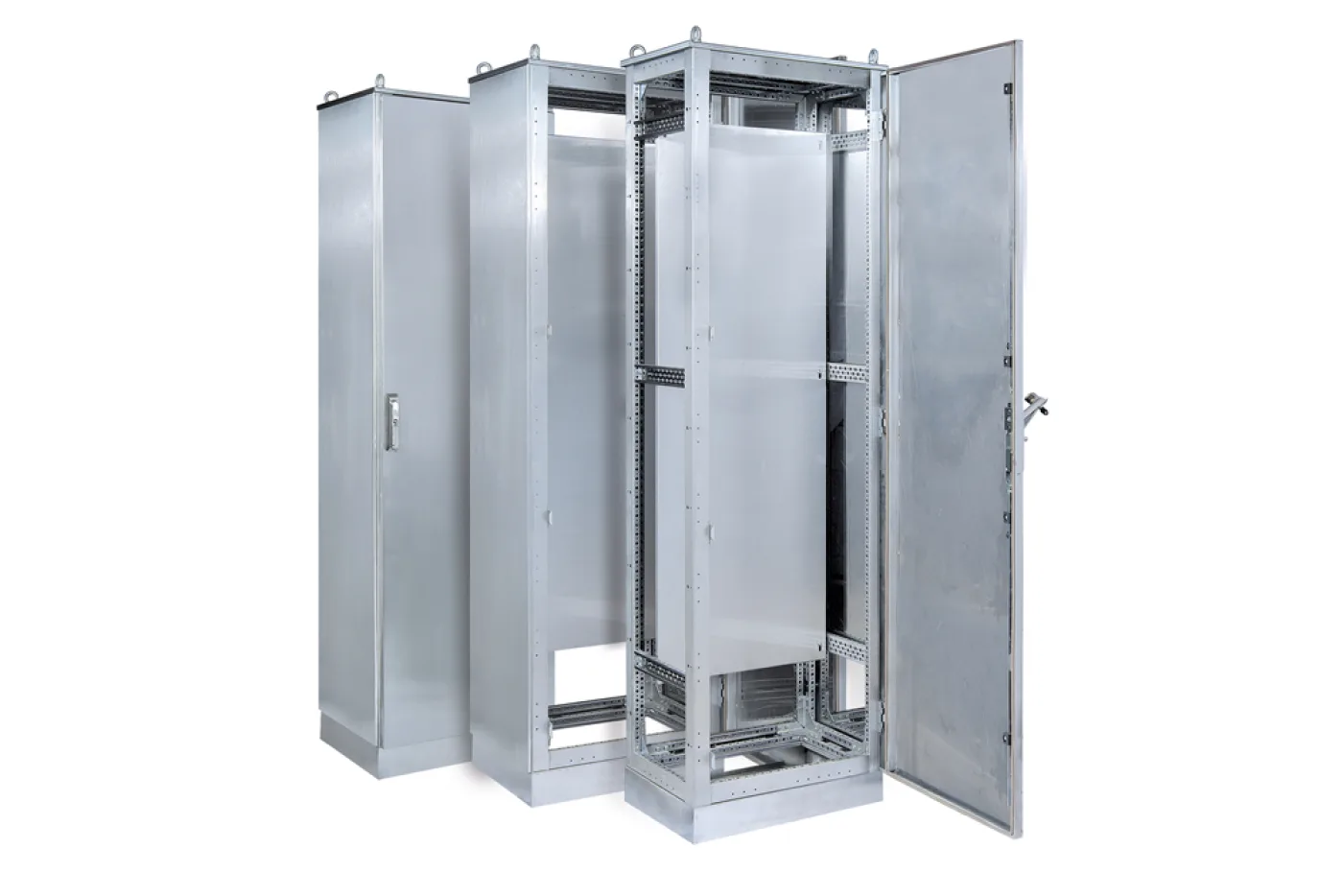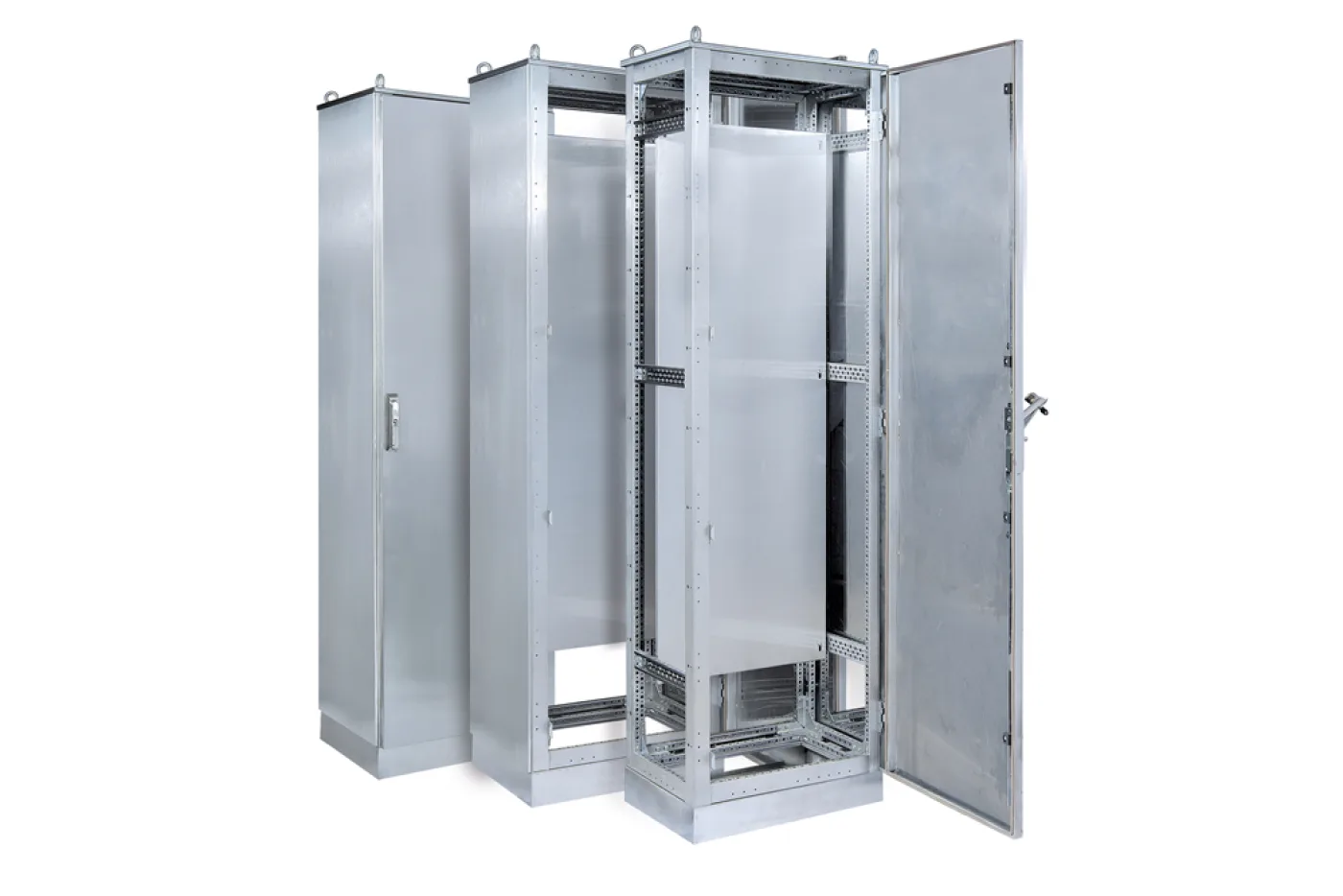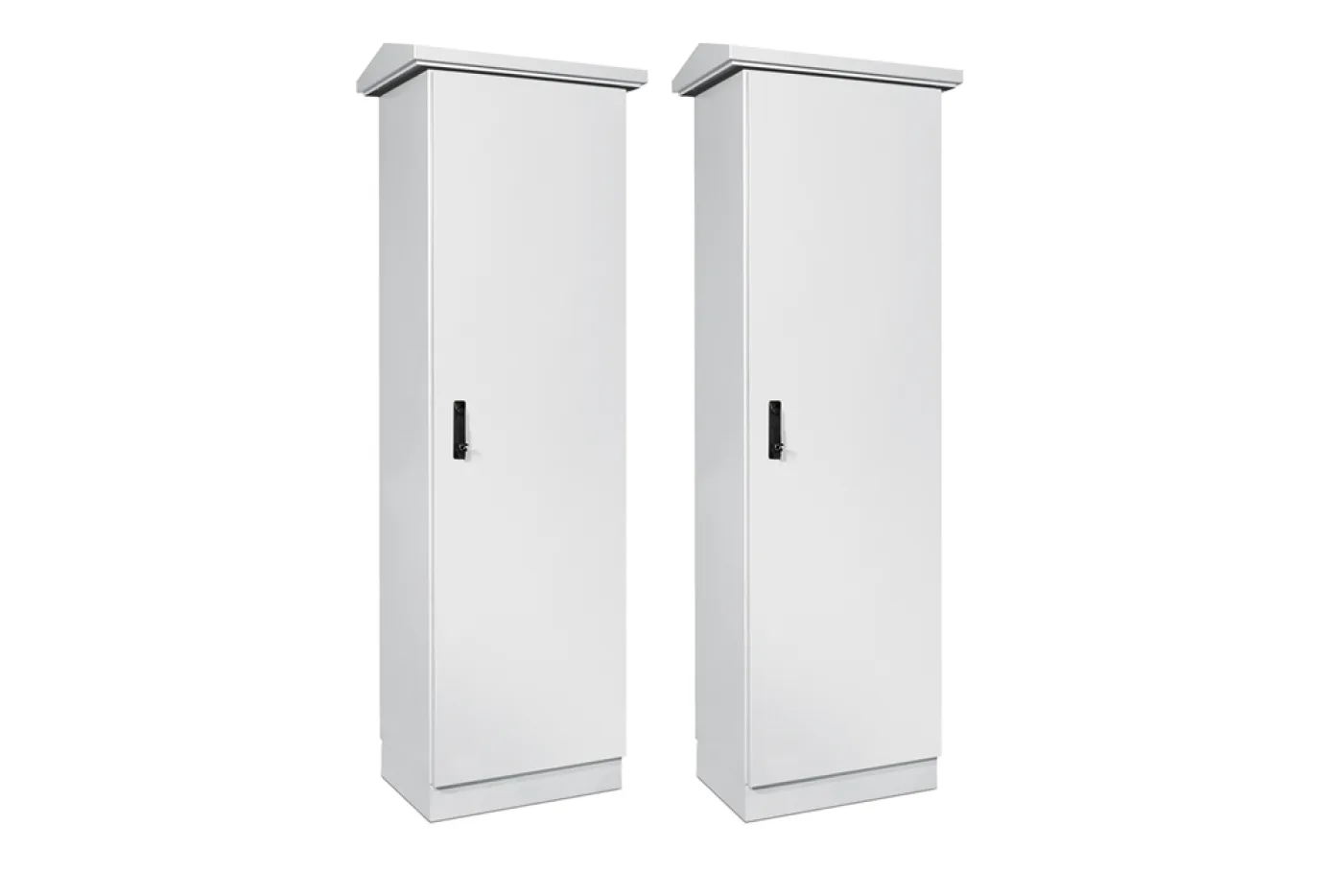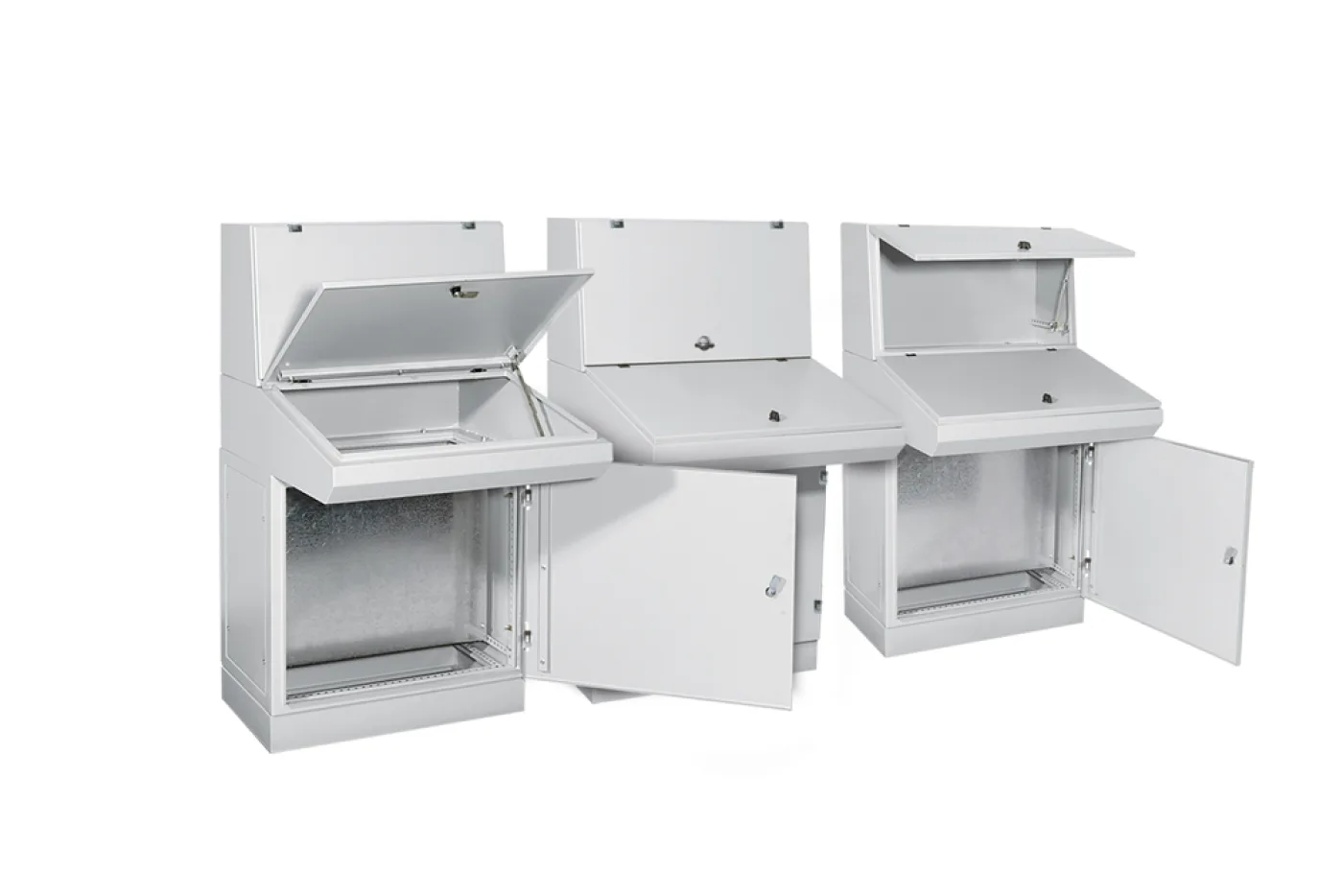
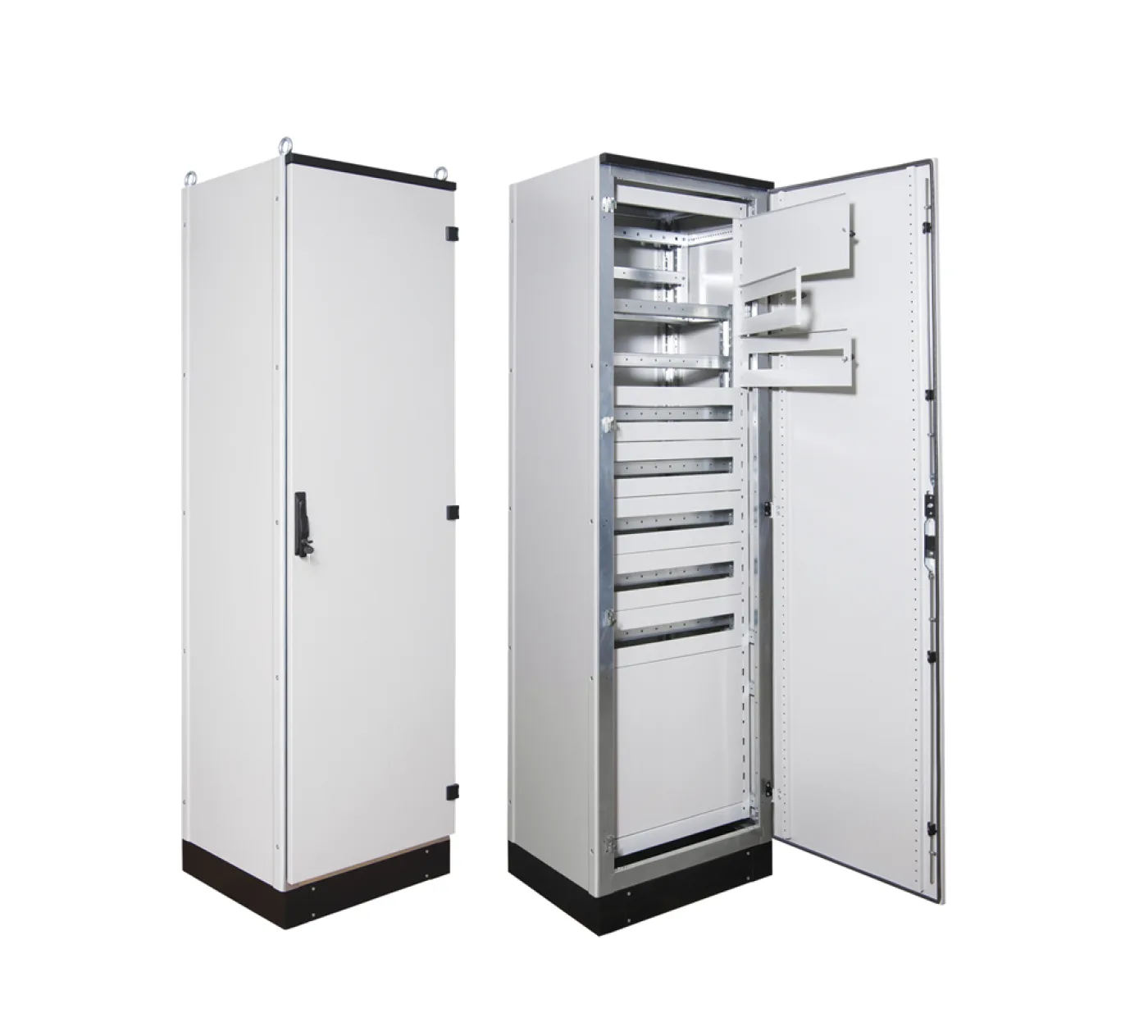
The first thing people look at when choosing a floor-standing industrial enclosure is usually the height. Height is the easy decision — it already runs from 1600 to 2200 mm in 100 mm steps. The real decision is which of the four bodies sharing that modular frame belongs in your environment.
What all four share
All of them are modular bodies: the doors, every load-bearing connector, the uprights and the horizontal members are made from 1.5 mm sheet. Being modular gives two things — the body can be taken apart to move it, and the internal layout is built to the project with a mounting plate, rails and dividers.
The heights are 1600, 1700, 1800, 1900, 2000, 2100 and 2200 mm. Choose with two constraints in mind together: the vertical requirement of what goes inside, and the ceiling height of the room. In a low transformer room, a 2100 mm body ends up stuck at the door.
1. The standard modular body (VMK)
Designed for general-purpose indoor use. It is rated IP54: dust-protected and resistant to dripping water.
Where it is right: an enclosed electrical room, a machine room, a switchroom — anywhere indoors where dust is ordinary and water is the exception. It is the most economical of the four, and indoors there is nothing to be gained by paying for more.
2. The closed sheet base body (VTK)
It differs from the standard body in one way, and in some plants that one way decides everything: it has a closed, full sheet base.
A standard floor-standing enclosure is open underneath — cables enter from below and air circulates. But that opening lets two other things in as well:
- Moisture rising from the floor. Basements, washed-down production floors, damp pump rooms. Moisture rises from below and corrodes from the lowest terminals upward.
- Rodents. Agricultural plants, food stores, rural sites. A rodent inside an enclosure means chewed insulation and a fault that takes days to find.
A closed base is a physical barrier against both. Cable entries are made through glands, so the cable gets in and the gap does not.
A closed base also restricts ventilation. If dissipating equipment is going inside — a drive, a transformer, a power supply — plan another route for the heat: a fan at the top or a heat exchanger. Choosing the sheet base means giving up the natural air intake from below.
3. The stainless body (VPK)
A 304-grade stainless body. It delivers a far longer service life than standard galvanised in:
- High-humidity plants
- Food production and cleaning areas
- Industrial environments exposed to chemical vapour
The limit of 304 is chlorides: seawater contact, pool plant and continuous chlorinated cleaning call for 316. We cover that distinction in detail in when is a stainless steel enclosure required.
4. The outdoor body (DHK)
The only series designed for outdoors, and the difference is not just that it is "weatherproof" — the protection rating is a step higher.
| Series | Rating | What it means |
|---|---|---|
| VMK / VTK / VPK (indoor) | IP54 | Dust-protected, resistant to dripping water |
| DHK (outdoor) | IP65 | Dust-tight, resistant to water jets from any direction |
Wind-driven dust and rain ingress are the real enemies of an outdoor enclosure; IP65 means a body closed against both. The outdoor series is produced from 1600 to 2200 mm.
Decision table
| Environment | Body |
|---|---|
| Enclosed electrical room, dry | Standard modular (IP54) |
| Basement, washed floor, damp | Closed sheet base |
| Agriculture, food store, rodent risk | Closed sheet base |
| Food production, high humidity, chemical vapour | 304 stainless |
| Coastal, chlorides | 316 is needed — talk to us |
| Open ground, rain and wind | Outdoor (IP65) |
Three measurements when choosing the height
- The vertical requirement of the equipment. Rail rows, terminal blocks, cable trunking and service room at the top.
- The room's ceiling height. An enclosure travels upright and is stood up into place; the clear height between door and ceiling has to exceed the body.
- Door swing. Leave enough space in front for the door to open fully — during maintenance, a door that only half opens turns a two-handed job into a one-handed one.
What comes next
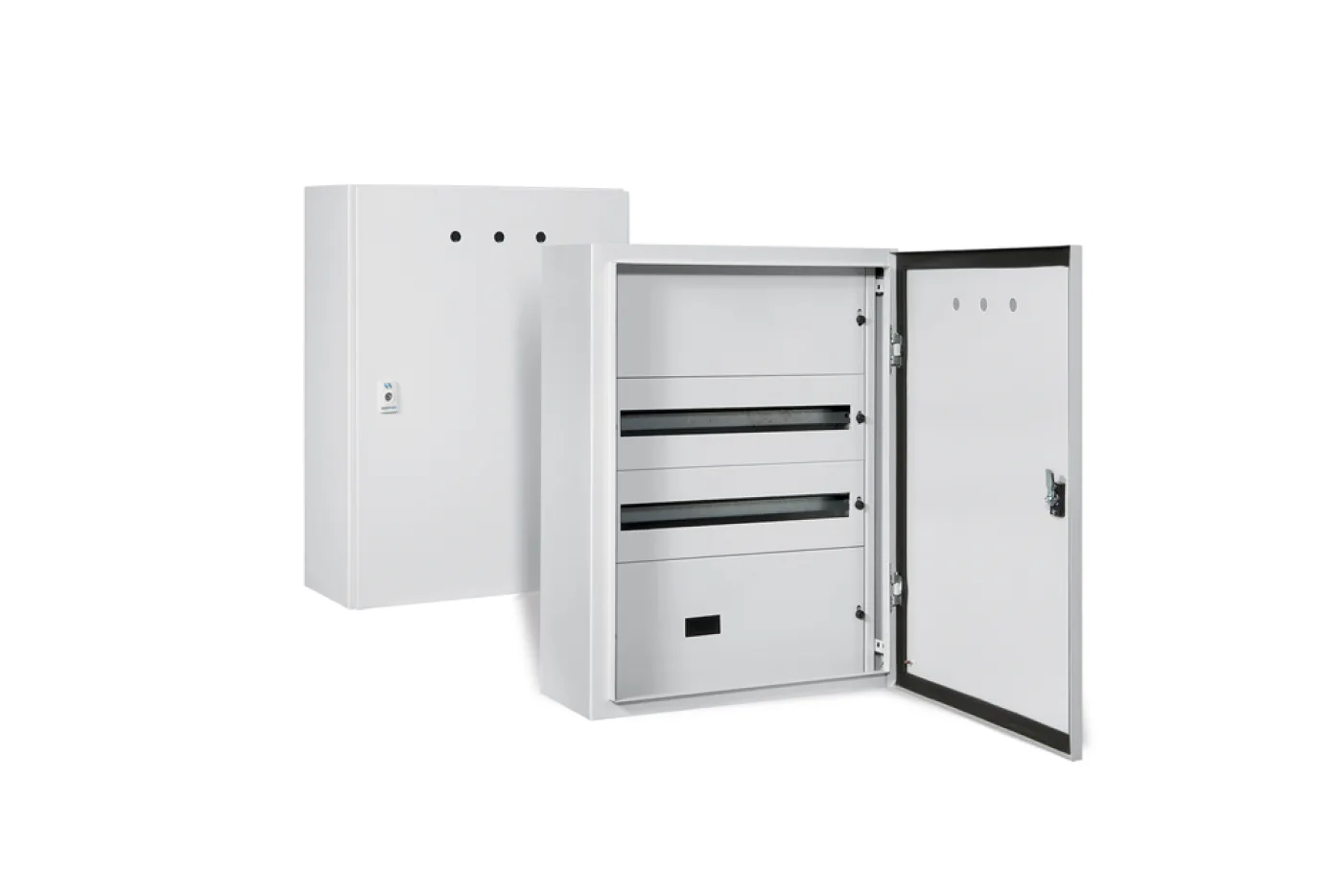
A floor-standing body is not needed for every job. For a distribution of a few circuits, a monoblock enclosure on the wall is both cheaper and sufficient — we draw the line between the two in this guide's monoblock or modular article. If an operator interface is going in, see our control console article.