Not every distribution job needs a floor-standing body. An enclosure for a few circuits hangs on a wall, takes no floor and costs markedly less. The question is where that limit ends.
What monoblock means
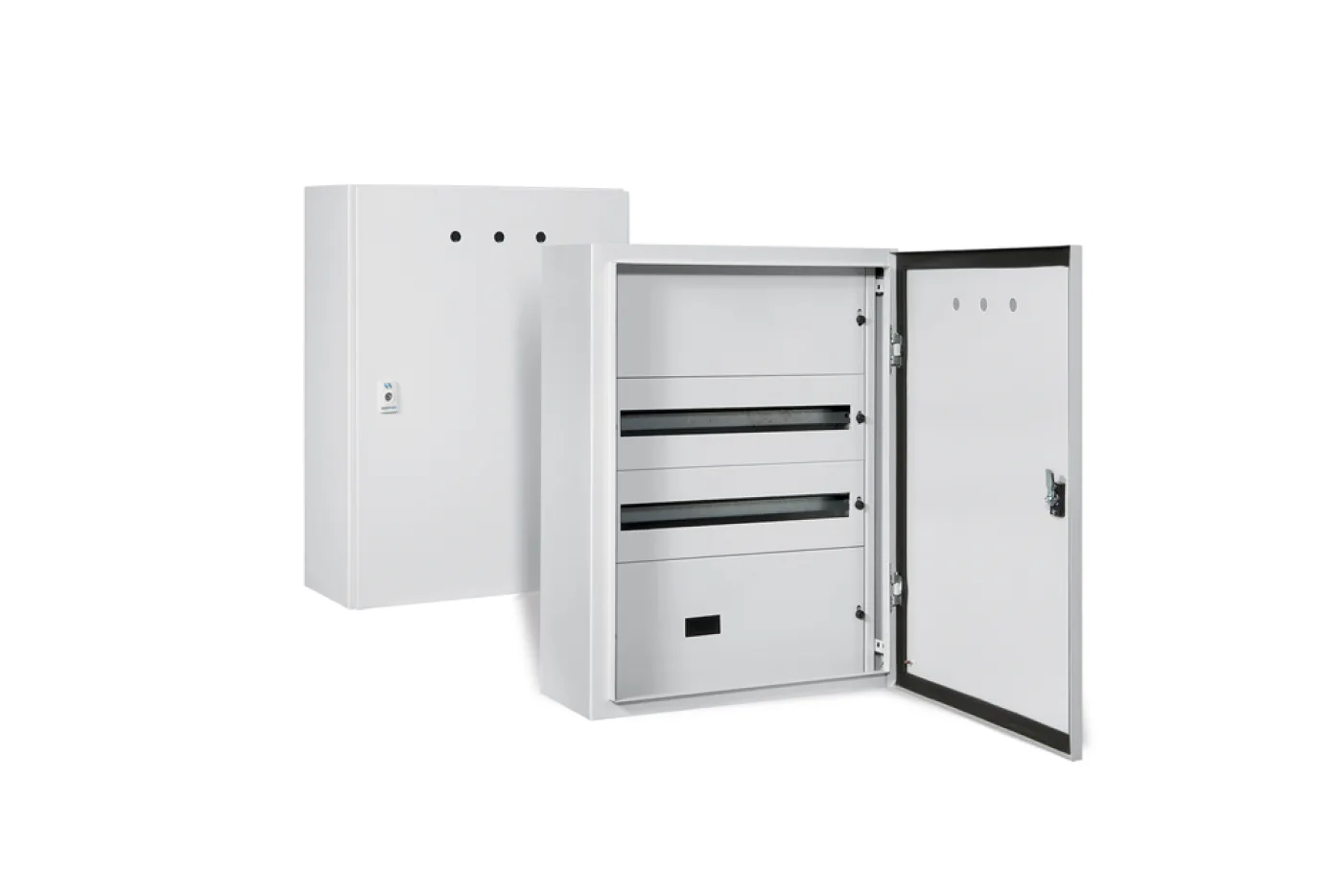
Let us settle the term first, because it is often confused with "cheap". Monoblock means the body is produced as one welded structure — the load-bearing upper and lower chassis — rather than bolted together from separate panels.
It has three concrete consequences:
- Torsional rigidity. A body hung on a wall keeps its shape over time; the door stays aligned and the gasket keeps seating.
- Fewer corrosion starting points. Every bolt hole and every overlap is a place where moisture enters by capillary action. A welded body has none of them.
- Cleanability. No dirt-holding gaps between panels — which is what decides it in food and pharmaceutical environments.
The body is 1.2 mm sheet, the covers 1.5 mm, and the rating is IP65.
How far does monoblock go?
There are four constraints, and crossing any one of them moves you to a floor-standing body:
| Constraint | Monoblock surface-mount | Floor-standing modular |
|---|---|---|
| Depth | 200 mm | 400 mm and above |
| Weight | As much as the wall carries | Transferred to the floor |
| Service access | Front only | Front, rear, sides |
| Growth | The body is fixed | Modules add side by side |
The constraint hit most often is depth. 200 mm is comfortable for breakers and terminals; it is not for contactors, drives, transformers or the bend allowance of heavy-gauge cable. If the project has any of those, the monoblock discussion is over.
Second comes service access, and it is usually noticed late. The back of a surface-mount enclosure is the wall; nothing can be reached from behind. In a panel that is worked on often and rewired, that turns every maintenance visit into a longer job.
Empty body or factory-fitted rails?
Our monoblock family offers the same body in two forms, and the difference between them is not money but labour on site.
Unfused / empty body
You get the body, the cover and the mounting space; you fit whatever brand and type of fuse, breaker and contactor you choose. It is the right choice on projects built to your own standard, where a particular brand is specified, or where the layout is unusual.
Factory-fitted rails (the fused series)
The fuse and breaker mounting rails are mounted at the factory; on site only the wiring is left. If you are building a standard distribution, this removes hours of workshop time and the rail alignment is right from the start.
The decision is simple: a bespoke layout wants the empty body; a standard distribution wants the factory-railed one.
Monoblock in stainless
The same monoblock construction is also produced with a 304-grade stainless body, in 600×1000×200, 700×1000×200 and 800×1000×200 mm. In food production, high humidity and chemical vapour it gives a life a galvanised body cannot.
The grade limit is the same as always: chloride-rich environments want 316. The detail is in when is a stainless steel enclosure required.
The outdoor economy series
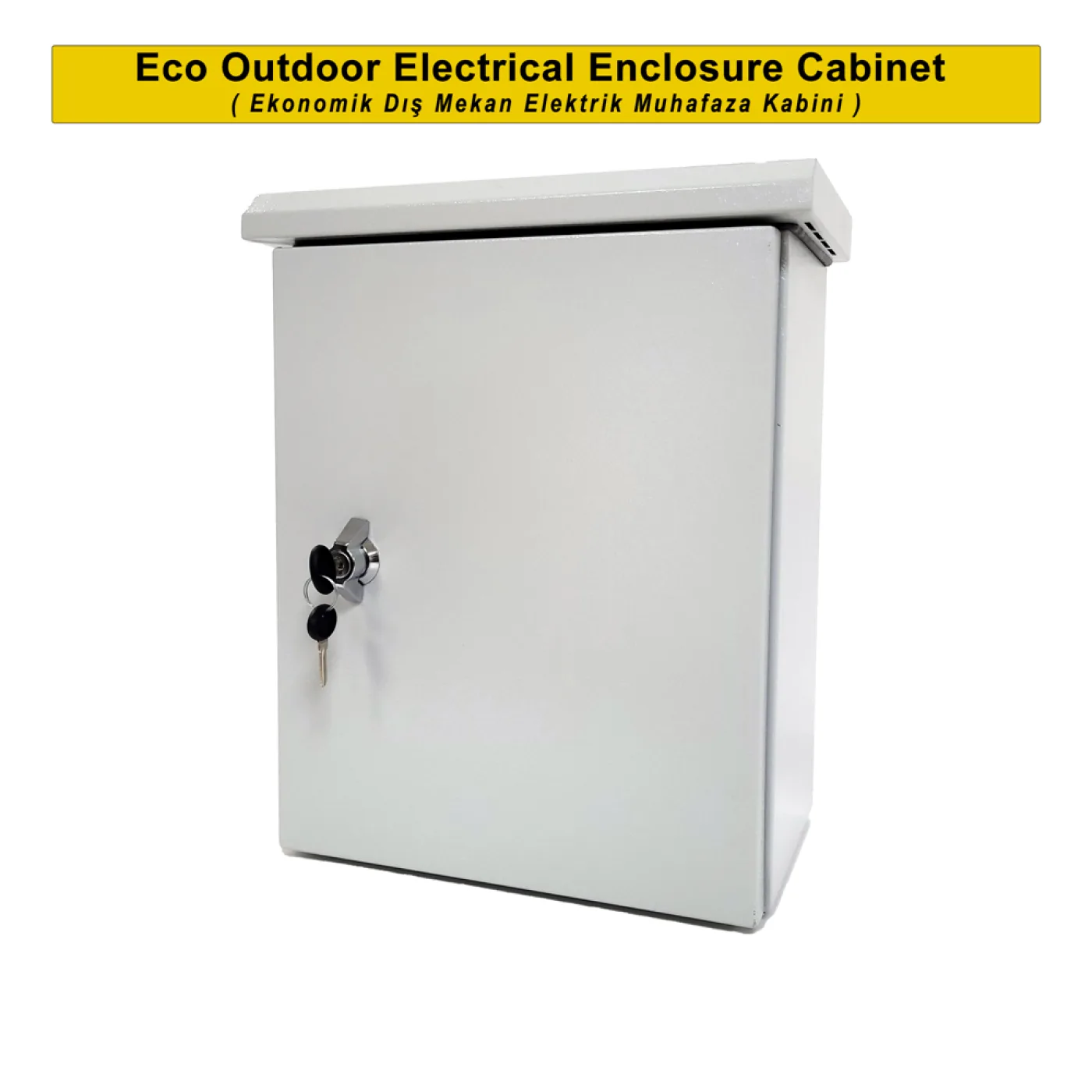
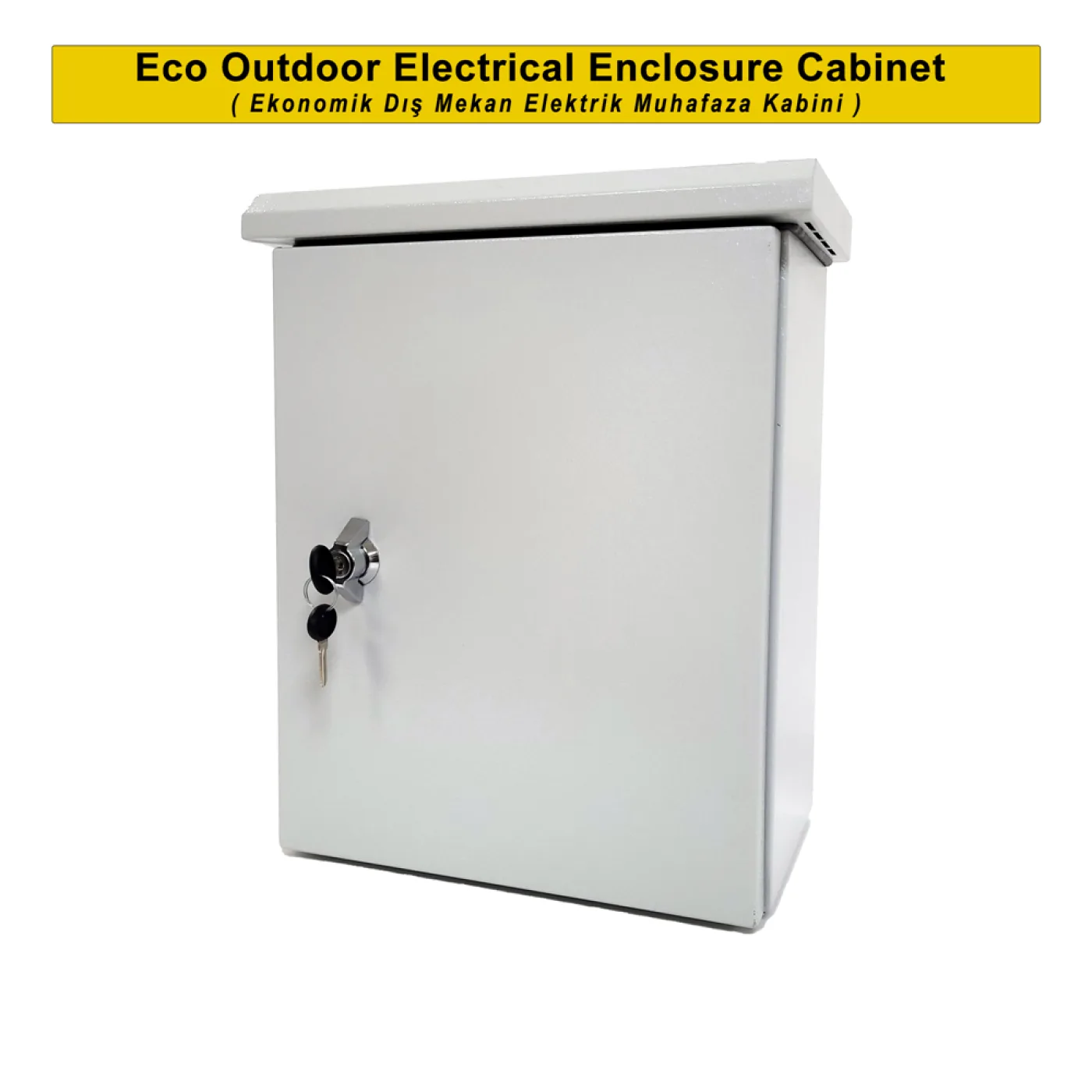
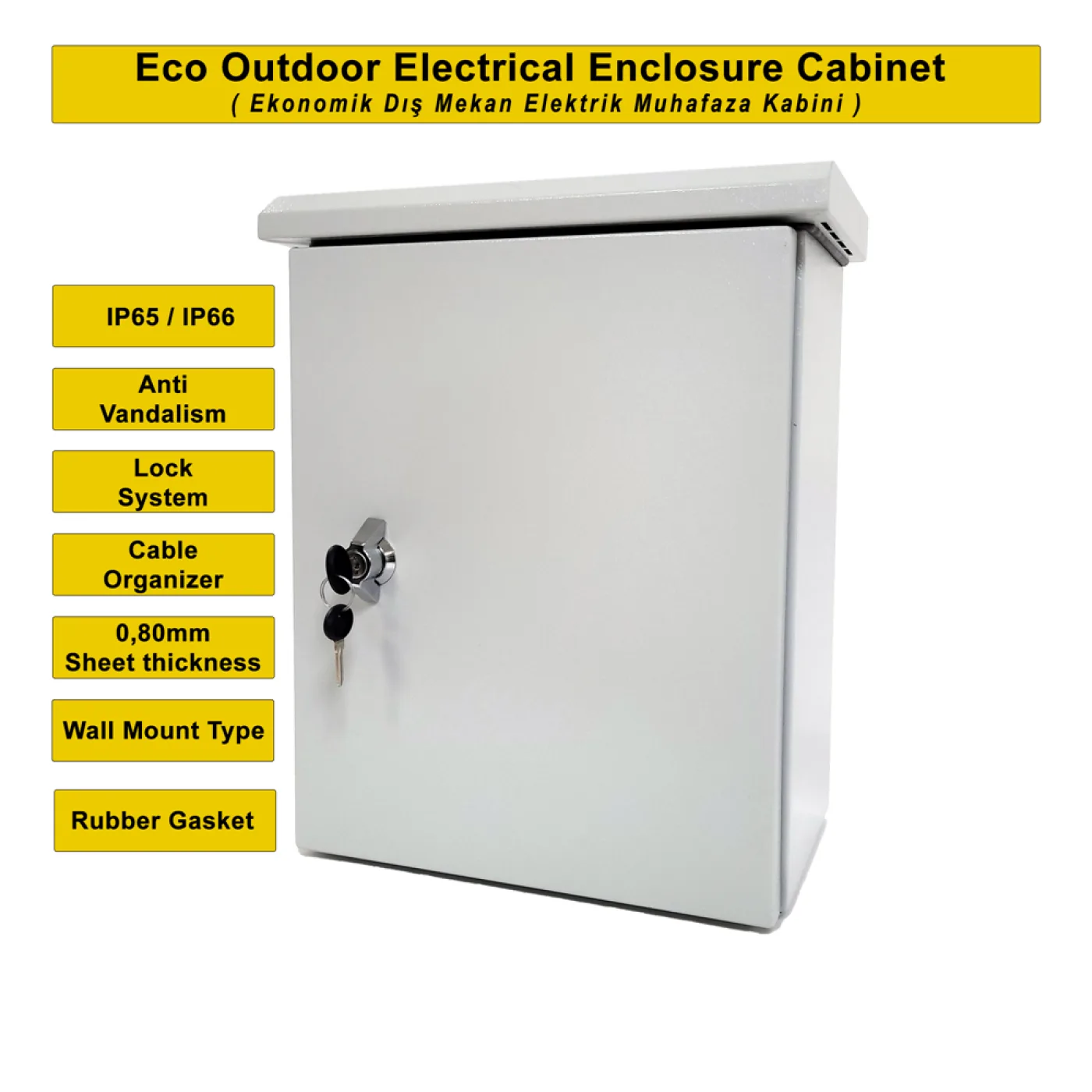
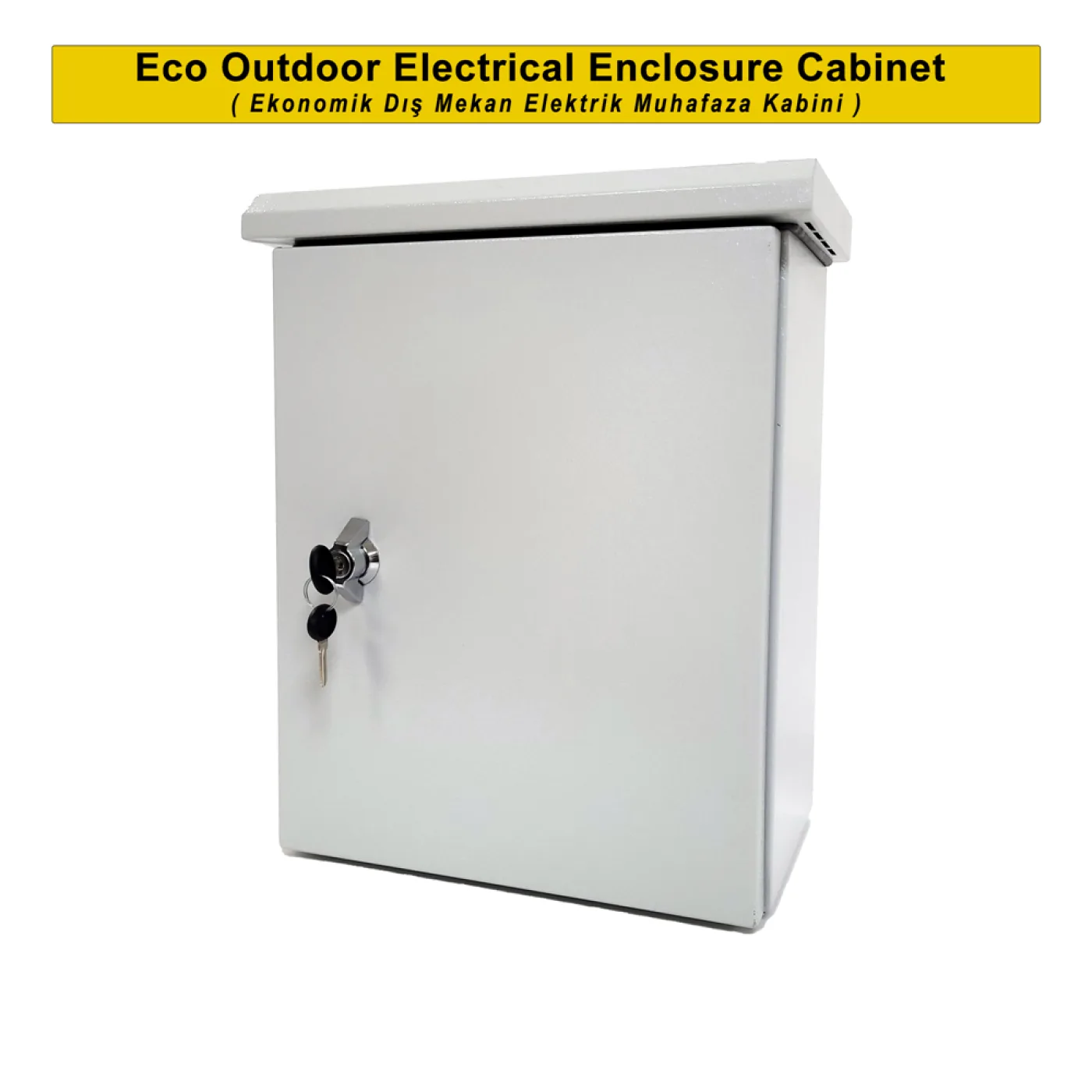
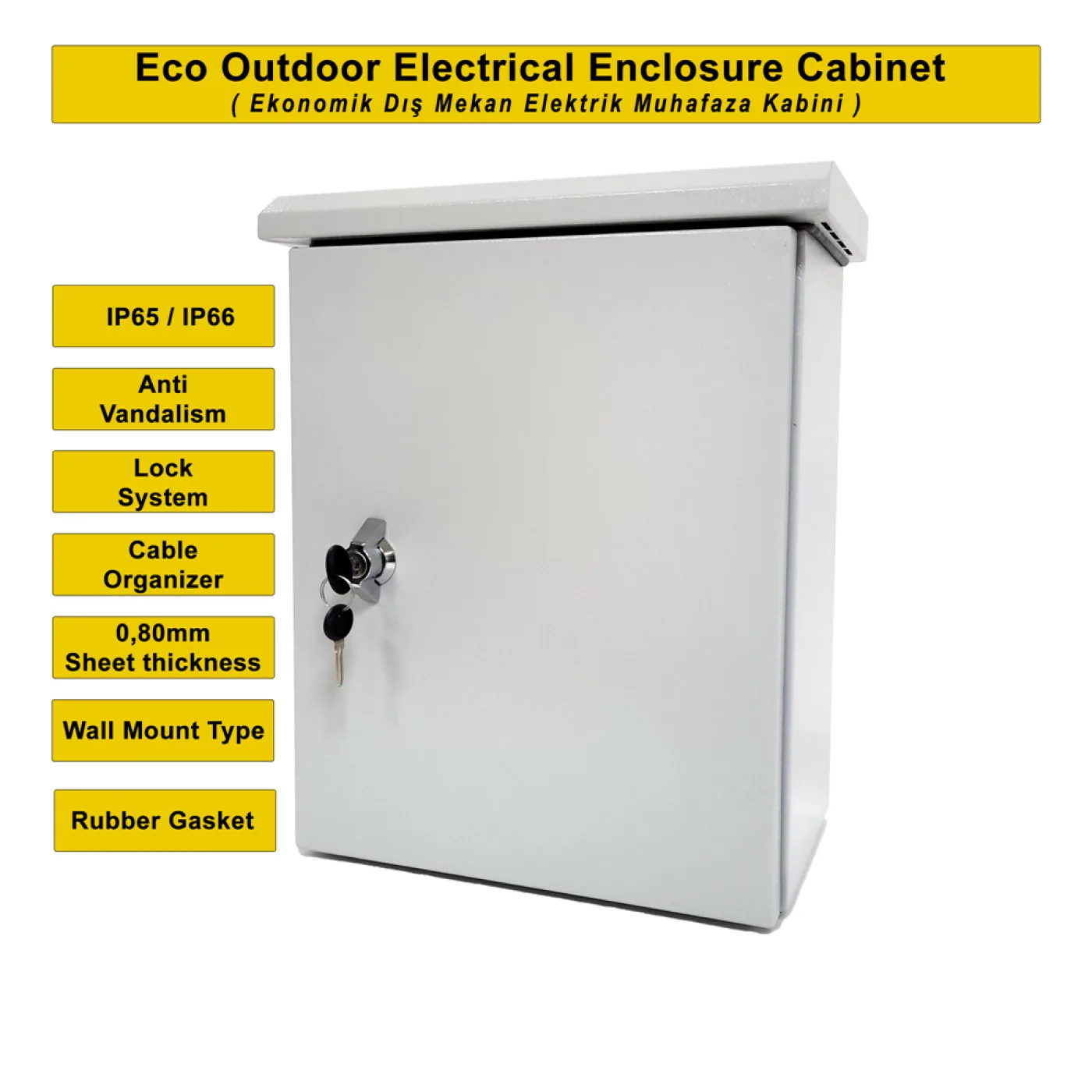
There is also a more economical wall-mounted series designed for outdoors: from 300×400×200 mm to 500×700×250 mm, rated IP65/IP66.
The family's own caveat applies here: fitting a fan and filter lowers the rating. Outdoors, a sealed body's IP65 drops to IP54 the moment it is ventilated. We cover that trade-off and the alternatives in thermal management in an outdoor cabinet.
Order of decisions
- Find the depth of the deepest device going in. Over 200 mm means floor-standing.
- Count the modules and add 20% spare.
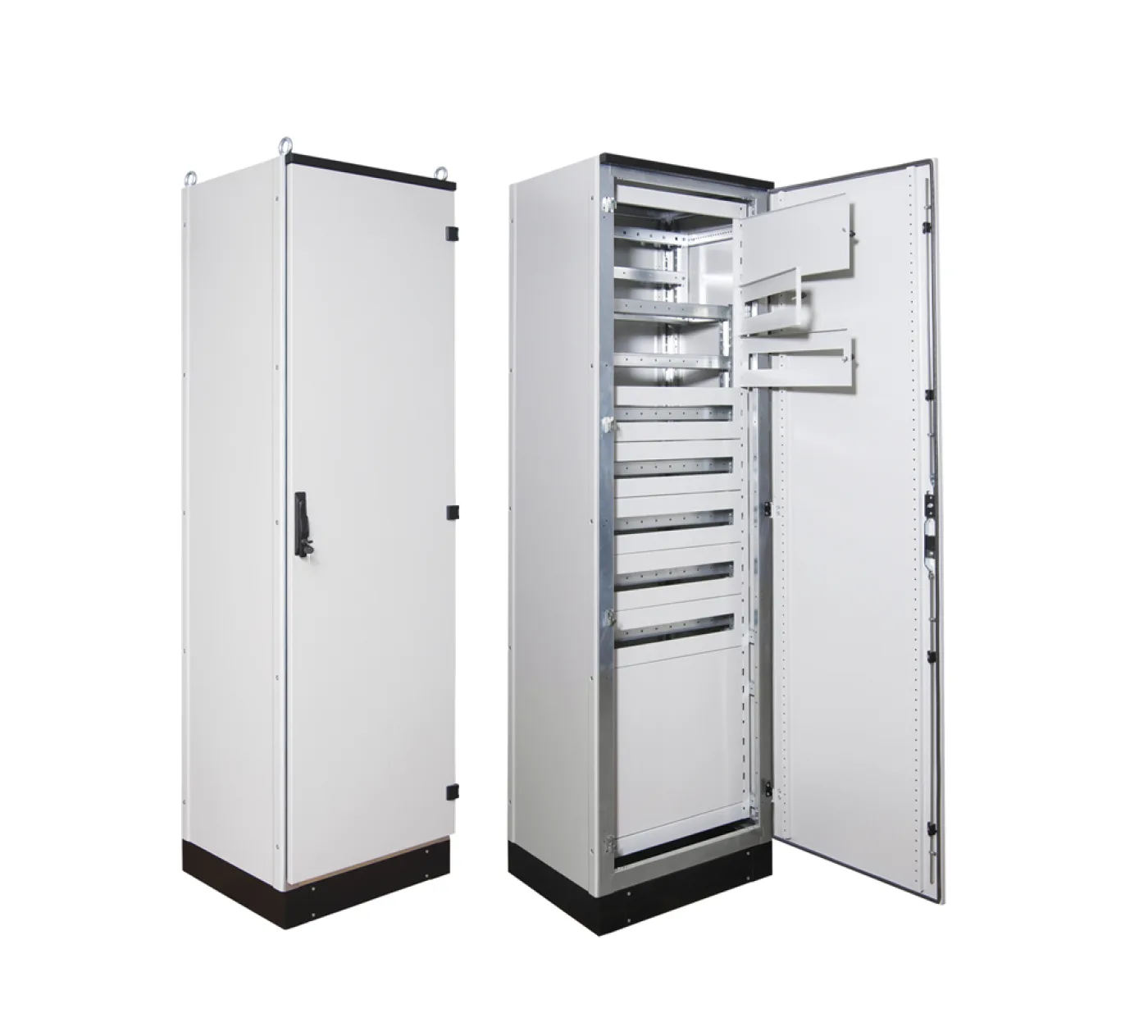
- Will rear access be needed? If so, floor-standing.
- Check that the wall will carry the loaded weight.
- Standard distribution: factory-railed. Bespoke layout: empty body.
- Decide galvanised versus stainless separately, on corrosion risk.
- Outdoors, allow for what ventilation does to the IP rating.
If you have decided on floor-standing, we cover the difference between the four bodies in choosing a floor-standing industrial enclosure.