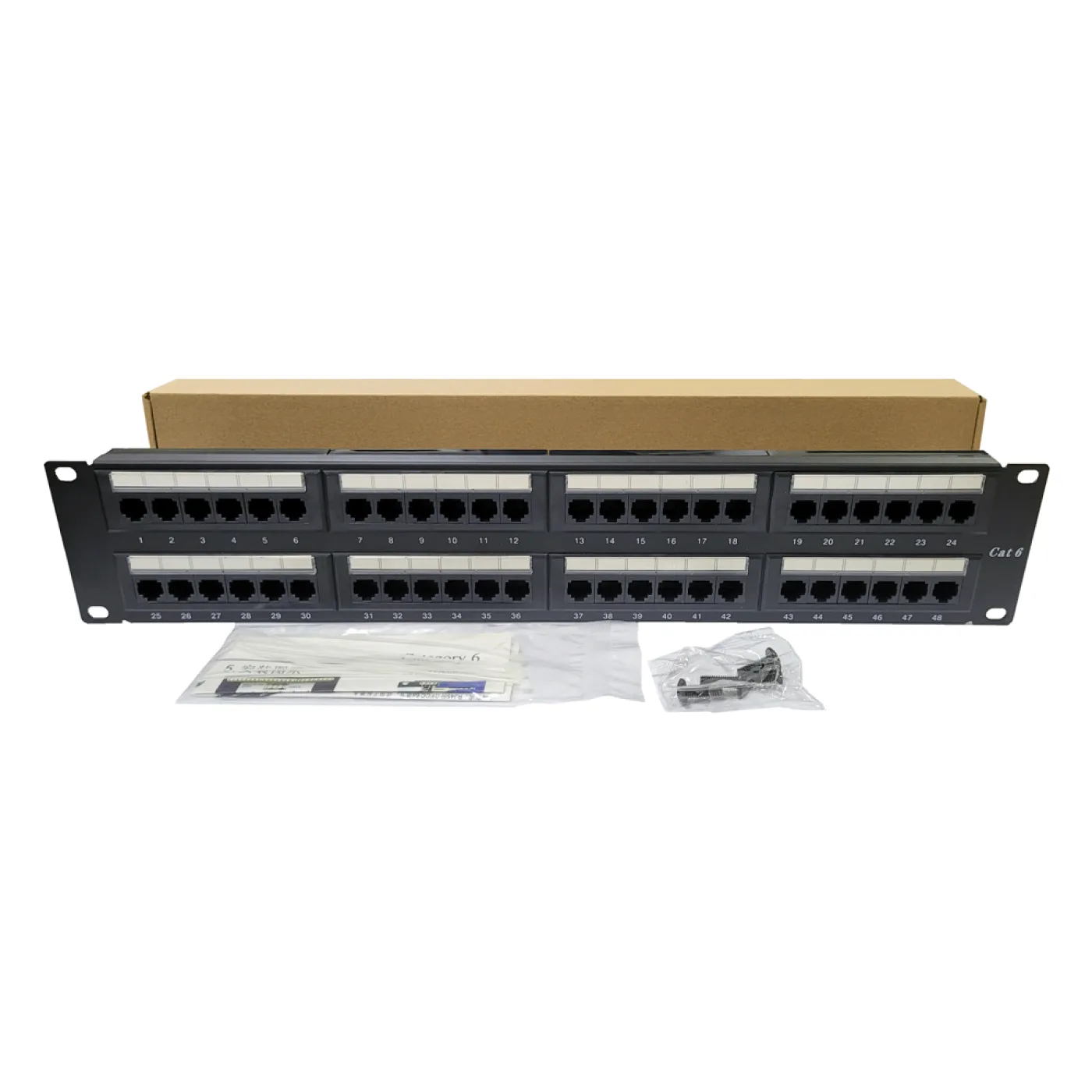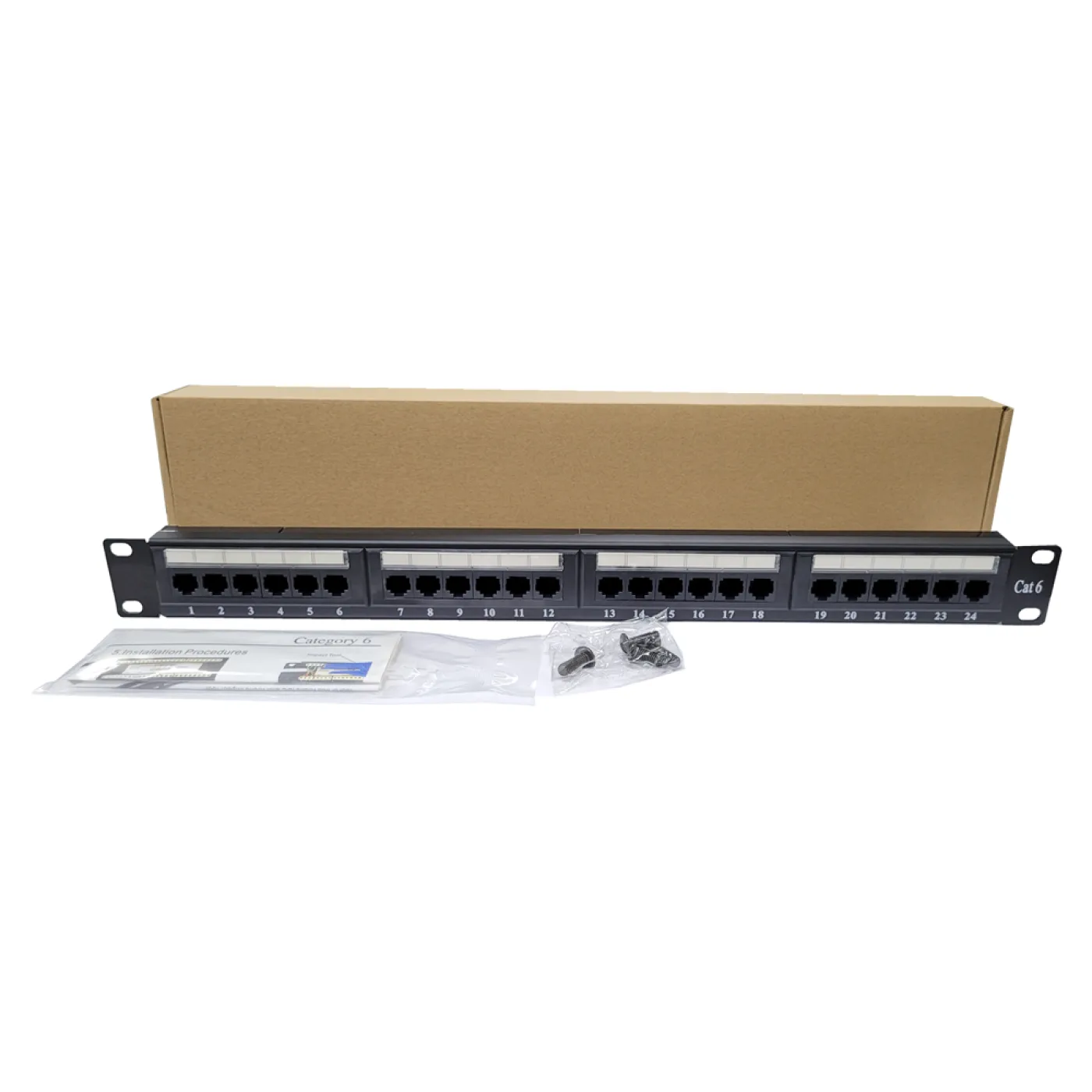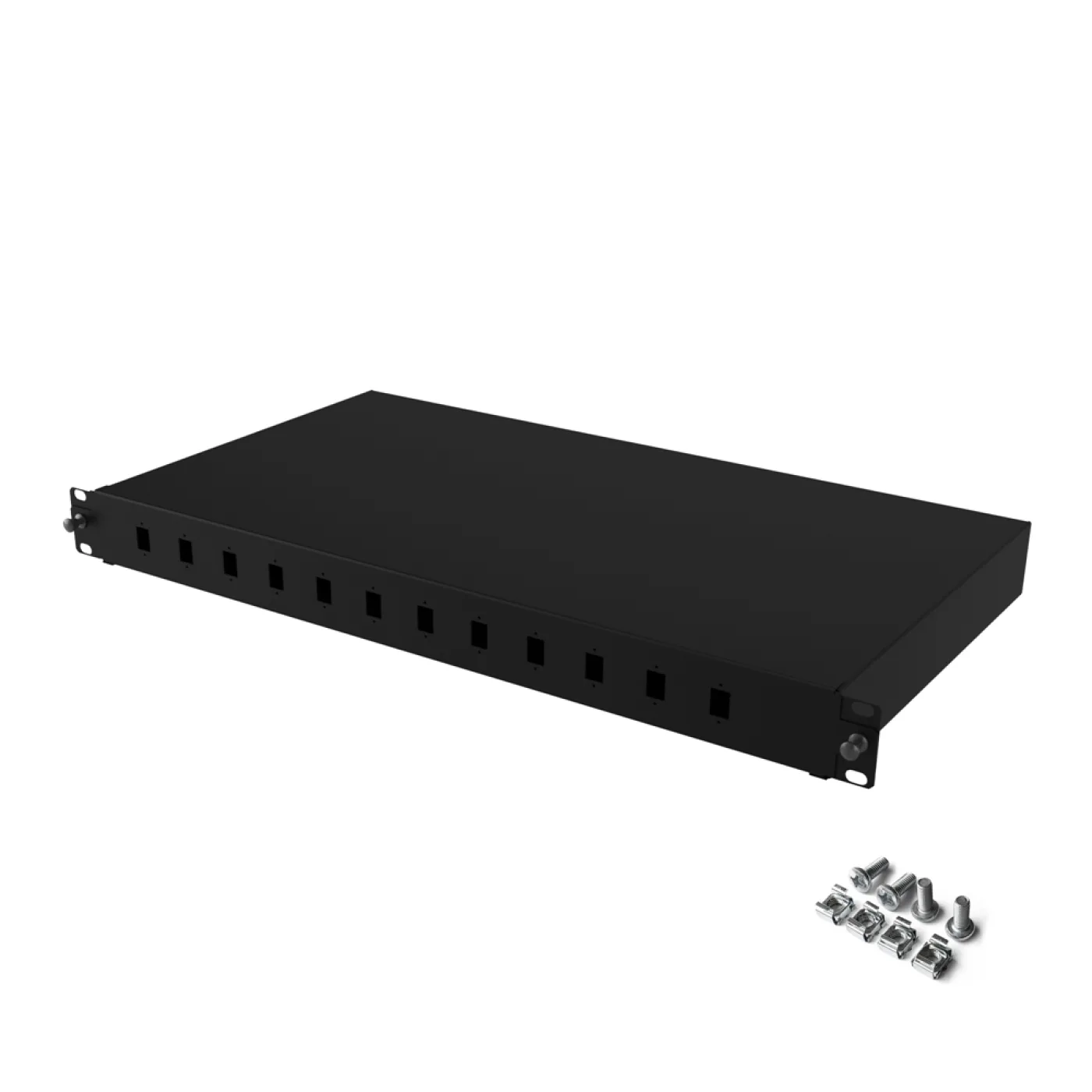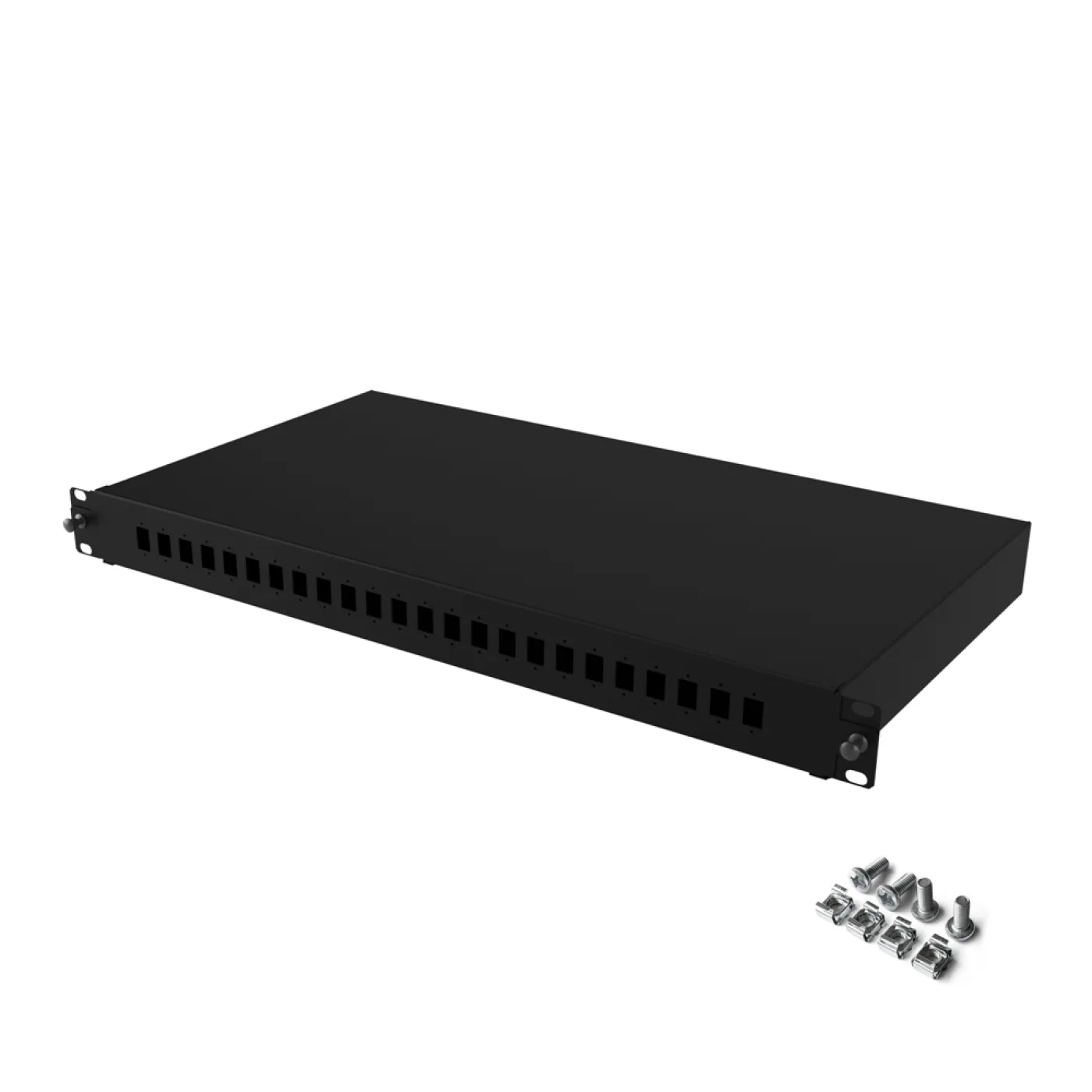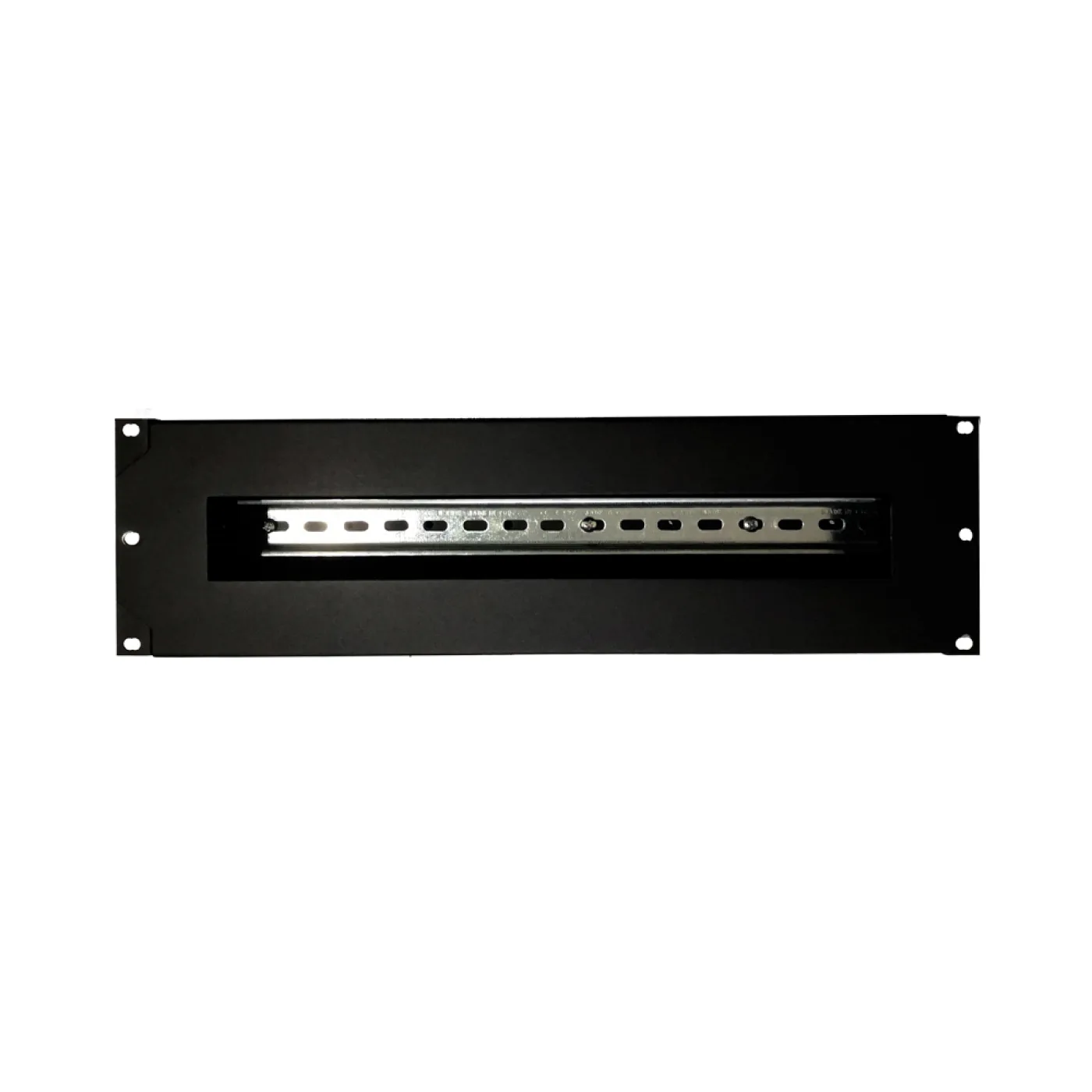
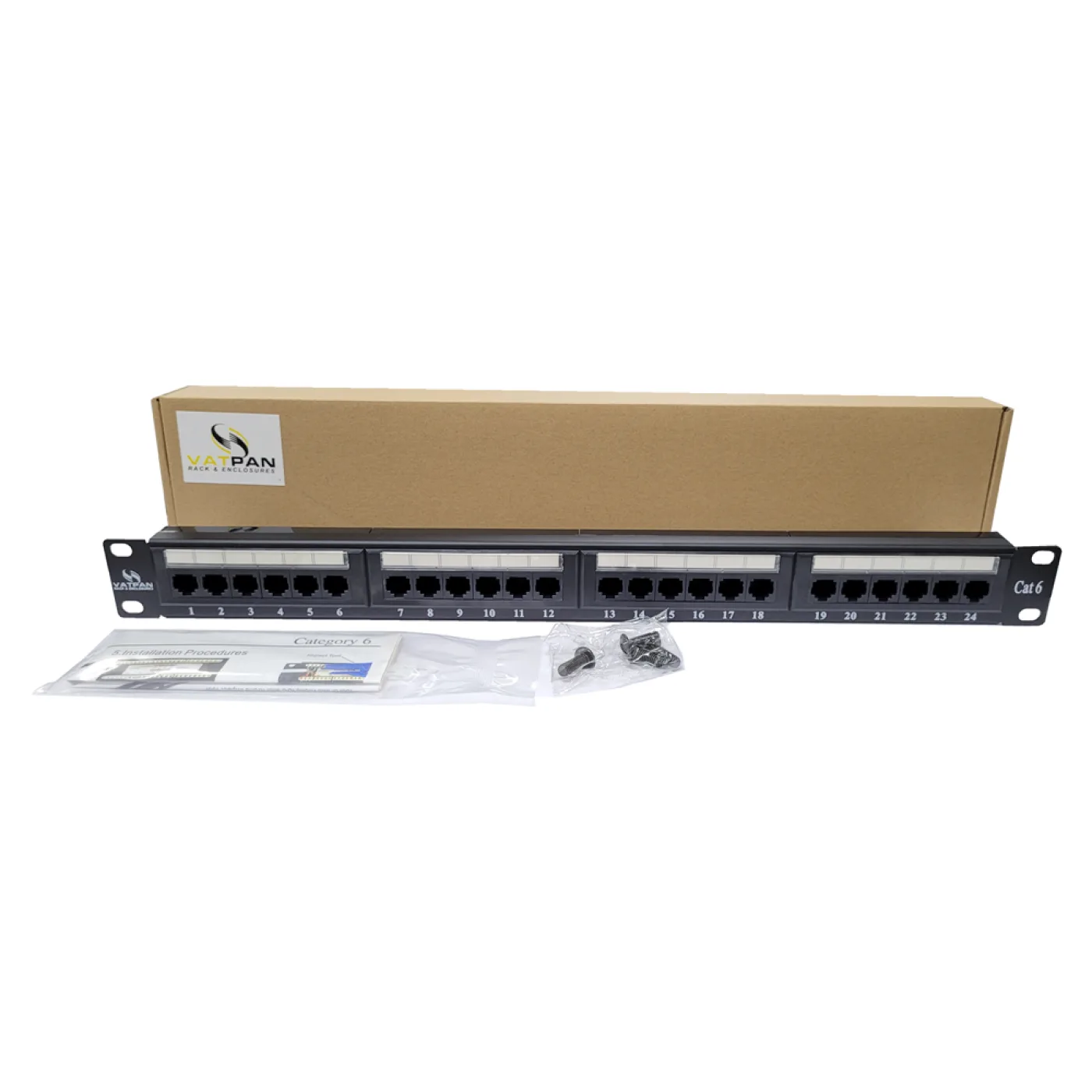
A patch panel is where the cabling meets the cabinet. The commonest ordering mistake is not the port count but the question most people never ask: does the panel come loaded, or empty? An empty fibre enclosure arrives with no adapters in the box, and installation day stops.
First decision: copper or fibre?
This is not a preference; it follows from the cabling itself:
- Copper (Cat6): horizontal cabling within a floor, workstations, cameras, access points. Terminated with RJ45.
- Fibre: backbone between buildings and between floors, and long runs. Terminated with connectors such as SC and LC.
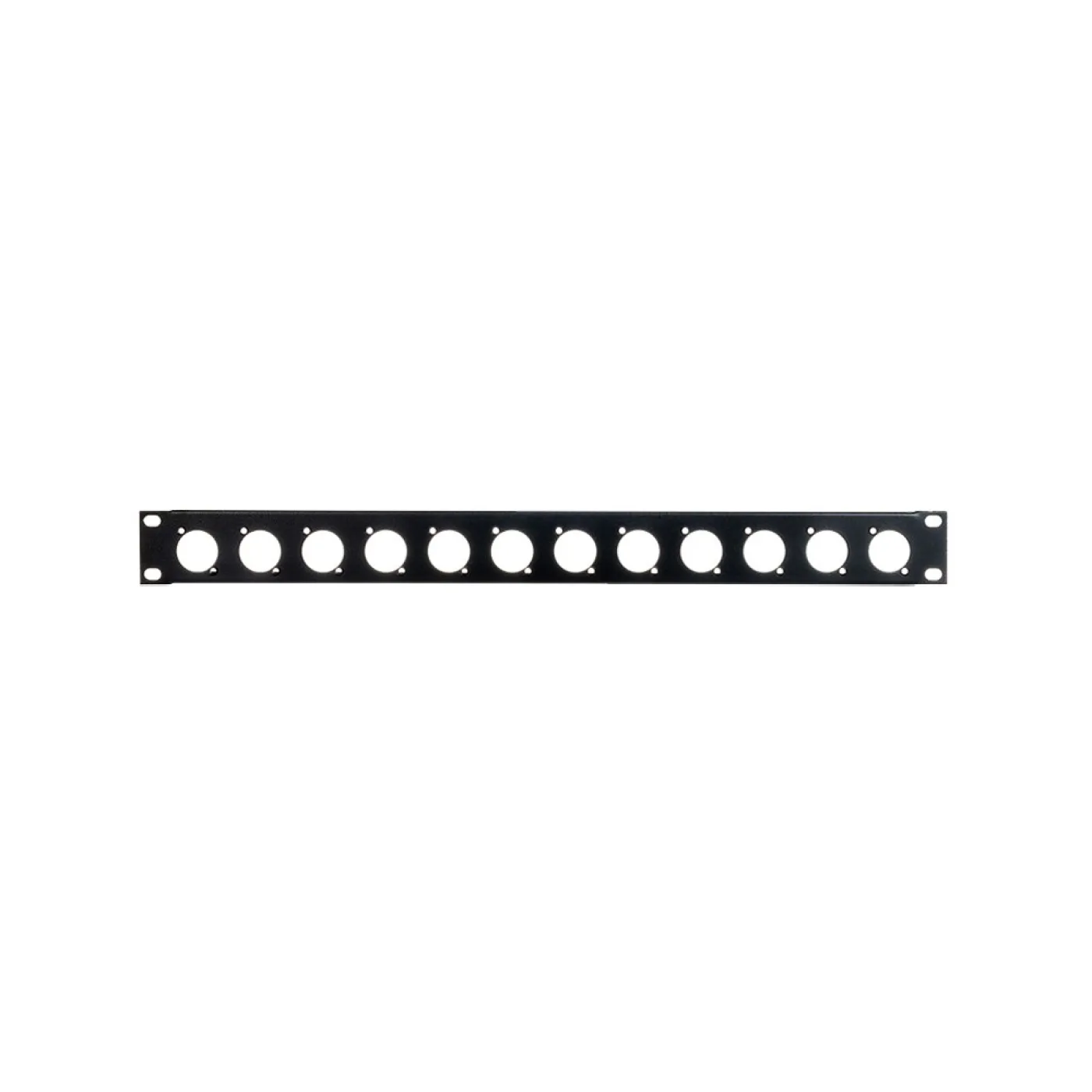
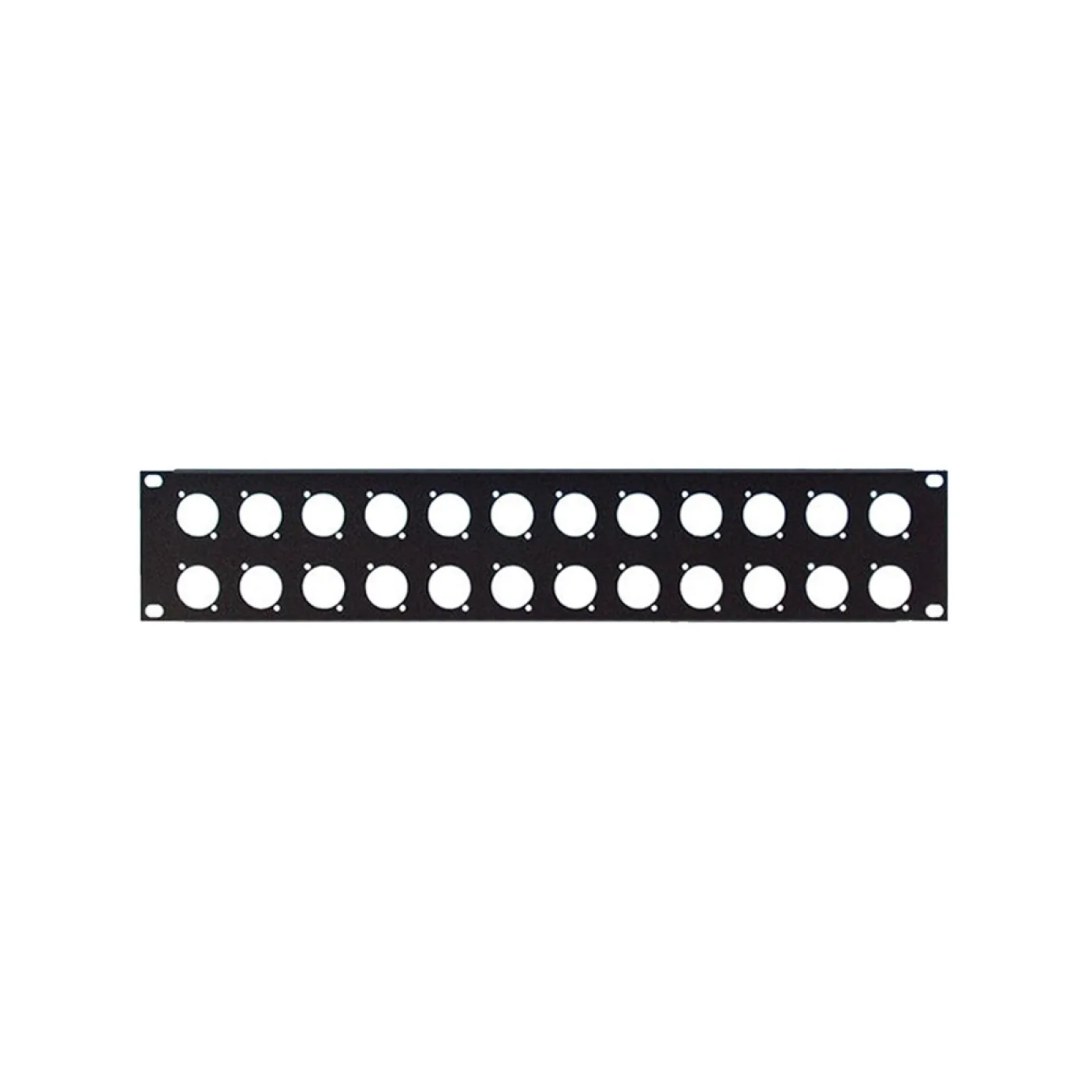
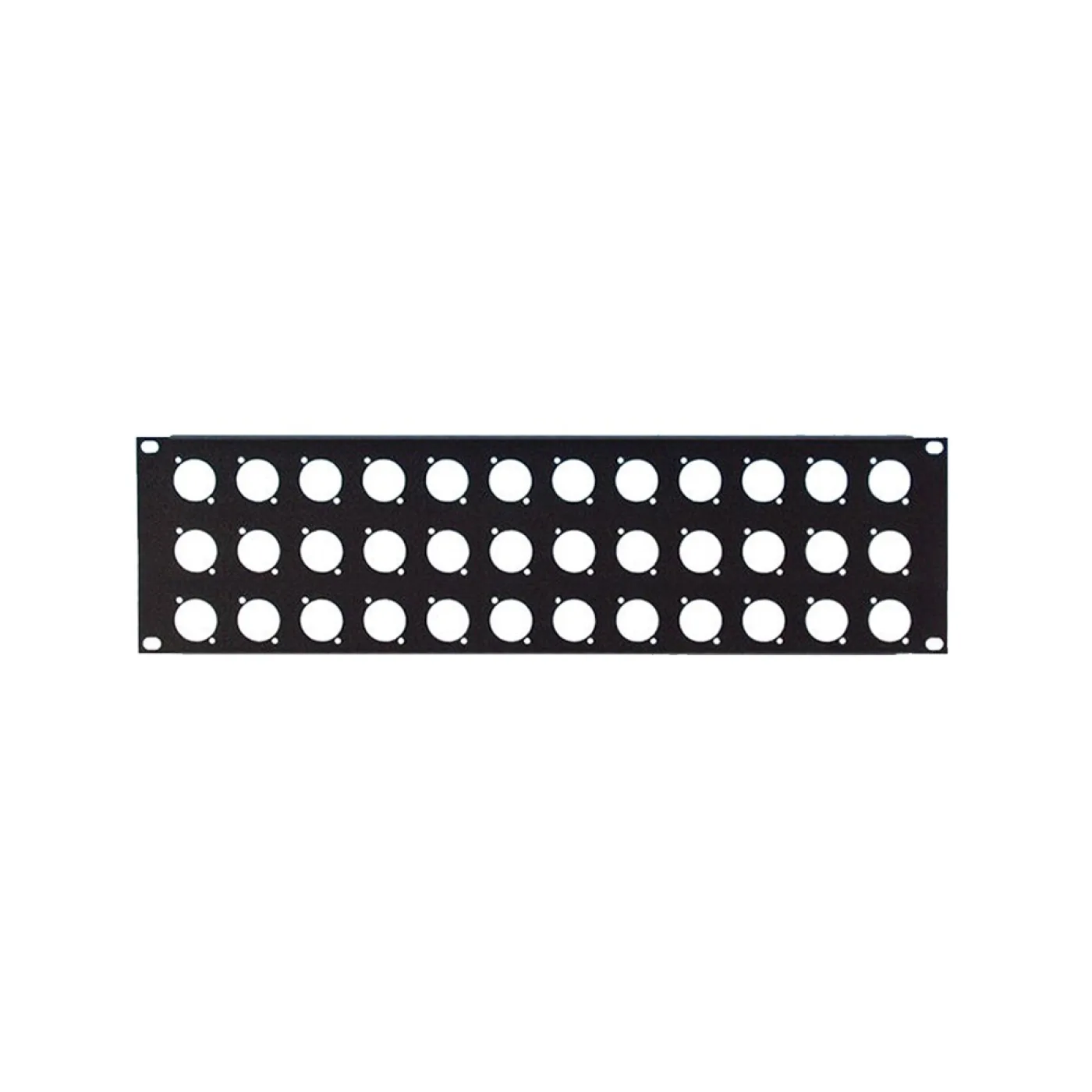
- XLR: audio and video signal distribution — studios, conference rooms, stages. Nothing to do with the network world, but it mounts in the same 19-inch rack.
Port count and the cost in U
How many ports to buy is not the number of cables you are pulling today but the number that will be pulled over that panel's lifetime. Every new outlet in a wall consumes a port; opening a wall later is easy, fitting another panel into a full cabinet is not.
A practical rule: add 25–30% to today's port count and round up to the next standard size. For 36 cables you buy a 48-port panel, not 24+24 — two panels mean two cable managers and 2U more.
| Cable count | Panel |
|---|---|
| Up to 12 | 24 port (half spare) |
| 13–30 | 48 port |
| 31–40 | 48 port, with a second one coming soon |
| 40+ | Several 48-port panels with managers between them |
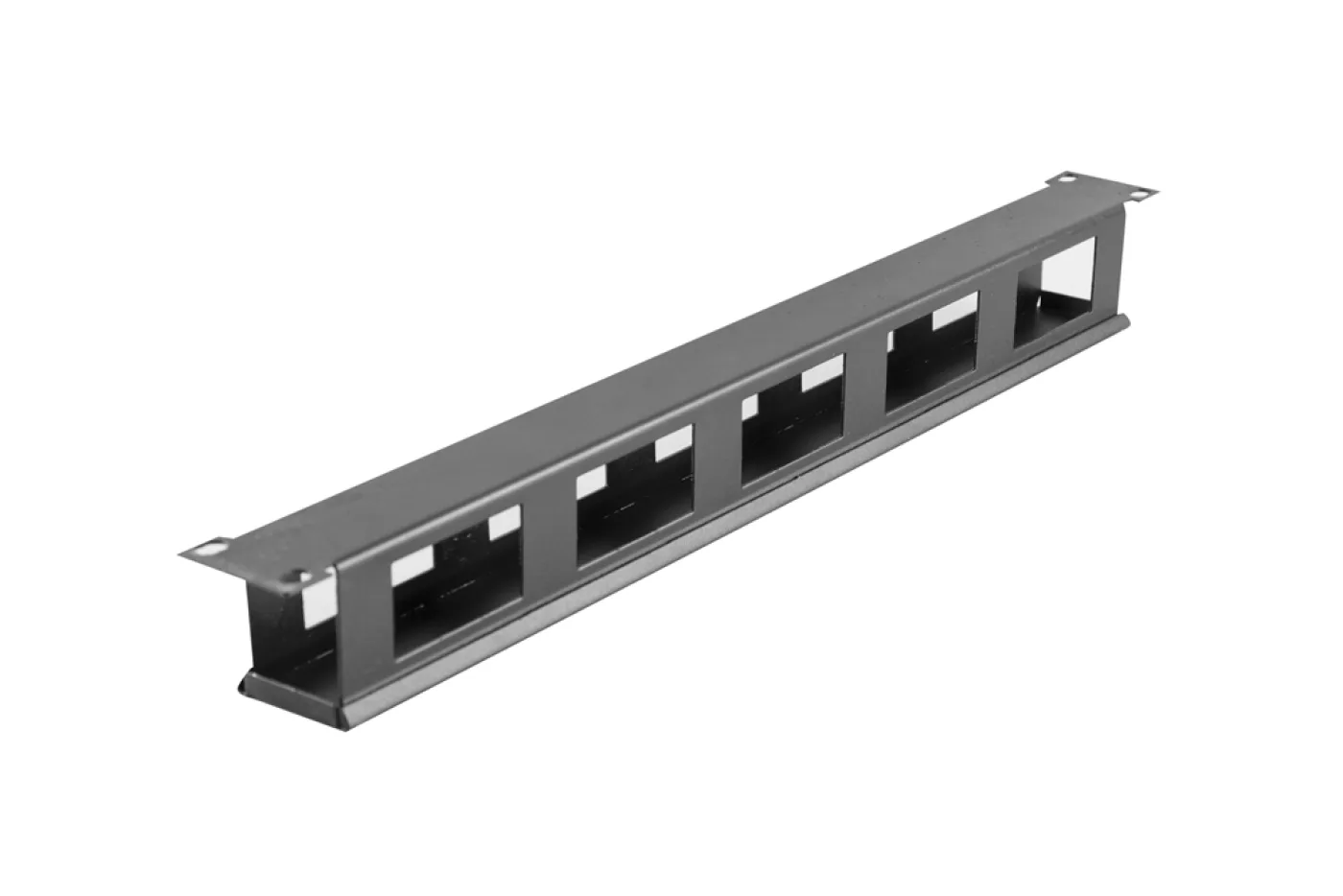
Plan a cable manager beside every panel. A 1U horizontal manager under each patch panel keeps the cable in the channel rather than across the face of the panel. That is the difference between finding a cable a year later and not finding it. Do not forget those 1U in your cabinet height calculation.
Loaded or empty — the critical distinction
Our catalogue carries both approaches, and each is for a different job:
Loaded panel
The ports come fitted from the factory. Our Cat6 copper panels are produced loaded — out of the box, into the rack, cables punched down at the rear. On projects with one uniform cabling type this is faster and cheaper.
Empty panel
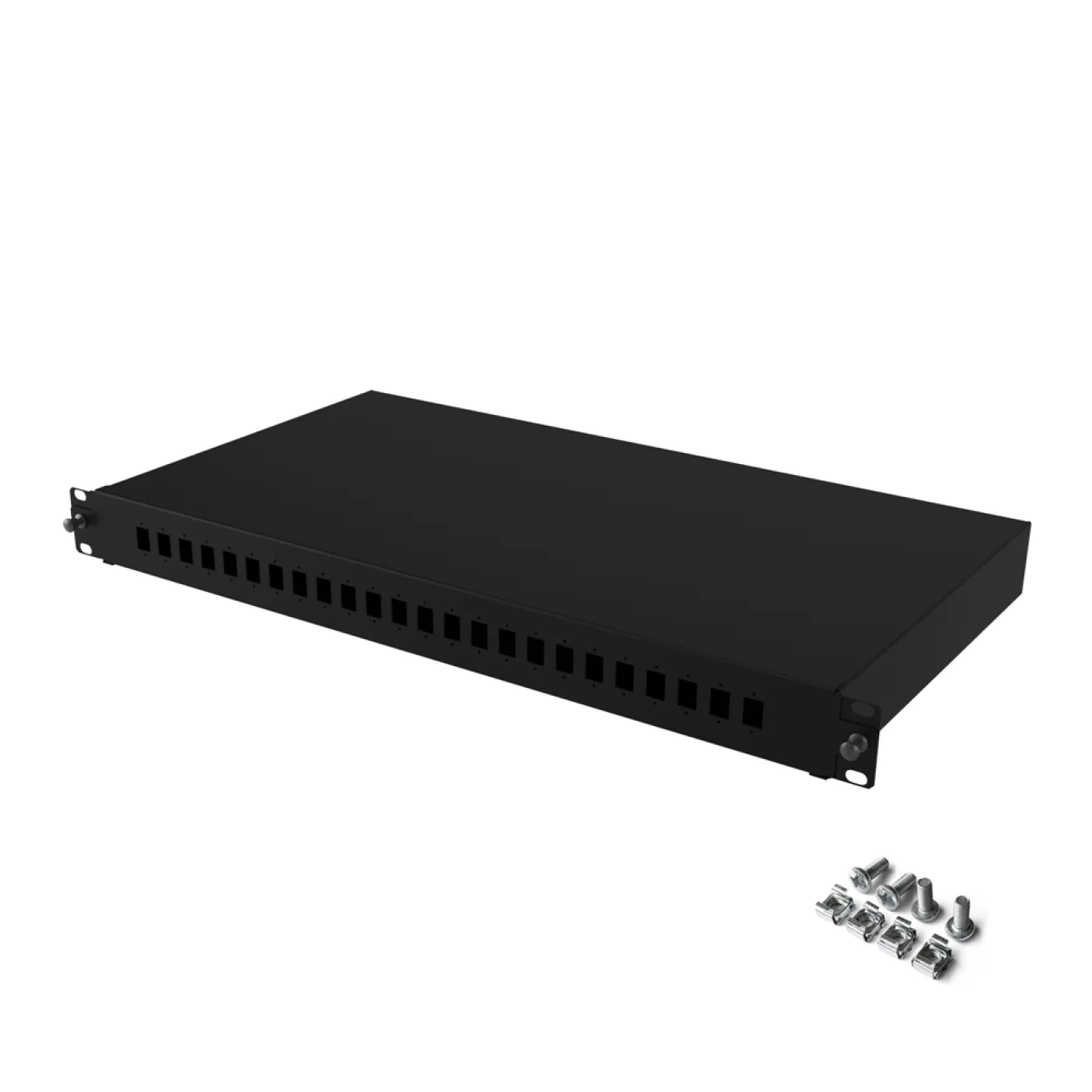
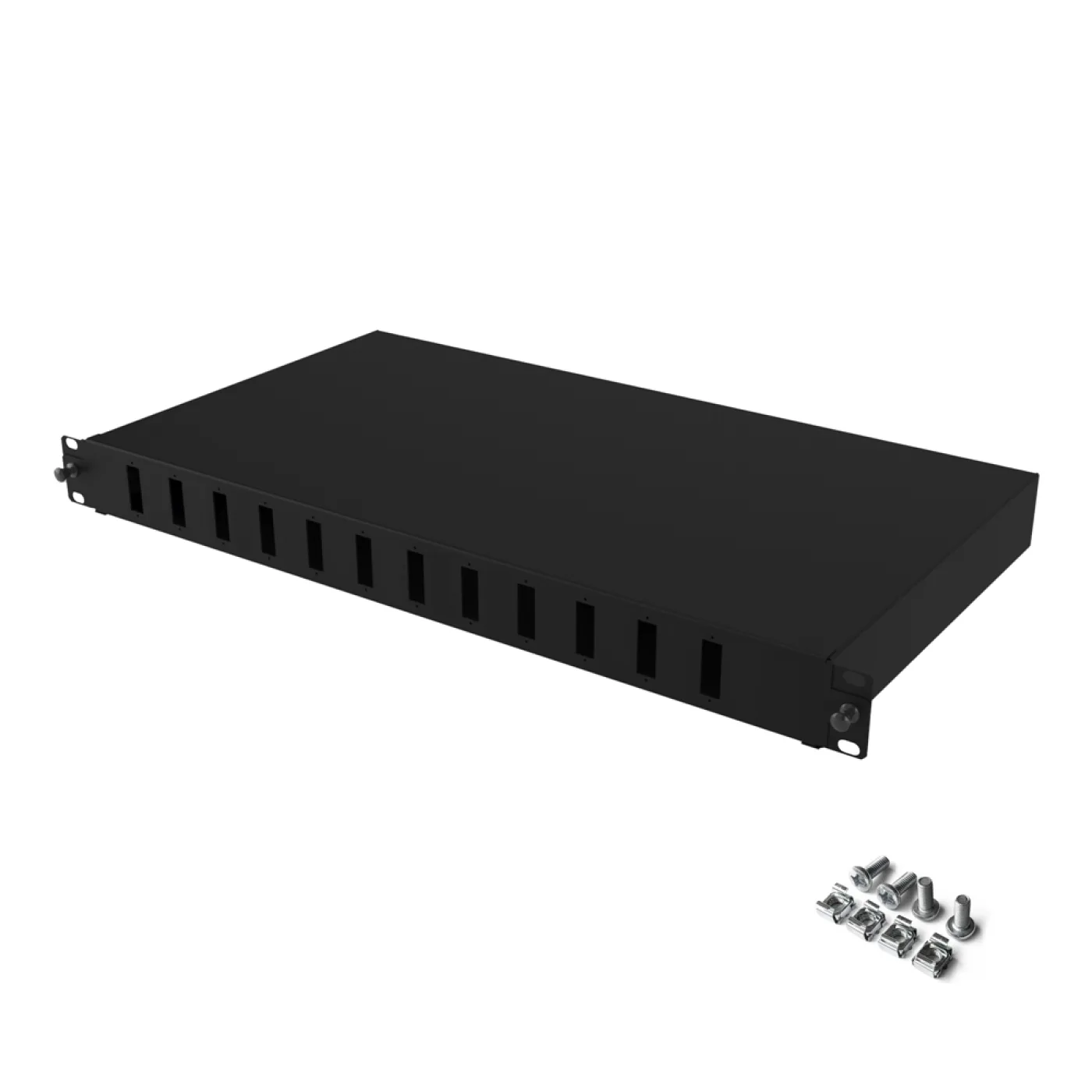
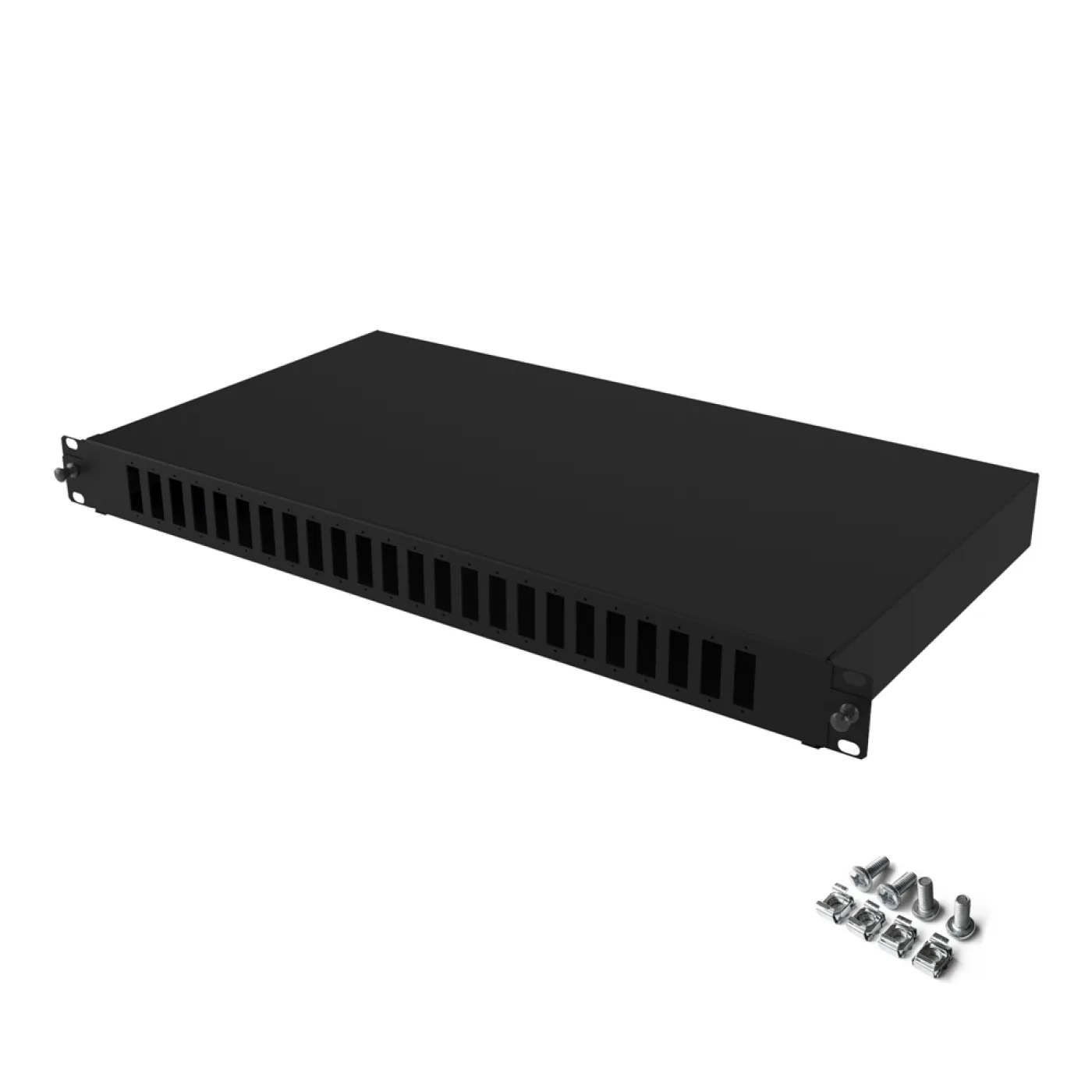
Only the body and the openings arrive; you choose the modules. Our fibre optic panels are produced as empty enclosures, because in fibre the connector type varies by project: SC, LC, ST and E2000 can all go into the same body with different adapters.
The practical consequence: when you order a fibre panel, order the adapters separately. They are not in the panel's box.
What simplex and duplex mean in fibre
This is the distinction most often confused at order time, and it changes the port count directly.
- Simplex: one fibre per adapter. A 24-port simplex panel terminates 24 fibres.
- Duplex: two fibres side by side per adapter. Most network devices use one transmit and one receive fibre, so one duplex port = one link.
So "24 port" means 24 fibres in simplex and 24 links (48 fibres) in duplex. Be clear which you are counting before you order. Our catalogue holds both: SC simplex in 12, 24 and 48 port, and SC duplex in 12 and 24 port.
In a fibre panel, the inside of the body matters too
A fibre patch panel does not only hold adapters; it contains a splice tray, a spool area for the slack fibre, and guides that preserve the bend radius. Violate a fibre's bend radius and loss begins — and because the cable looks perfectly sound, it is among the hardest faults to find. Check on the datasheet that the body has tray and spool space.
XLR panels: same rack, different world
Used for signal distribution in audio and video installations. Our catalogue offers 1U 12-port, 2U 24-port and 3U 36-port versions — the U count rises with the port count, because an XLR connector is far larger than an RJ45. Do not expect the density of a copper network panel.
Three details at installation
- Label on the same day you install. A label left for "later" is never made, and that panel is used by guesswork for ten years.
- Use the rear cable support. Without a bar carrying the cable behind the panel, the whole weight of the cable hangs on the punch-down terminations.
- Leave patch cord room in front. The distance between the front door and the panel has to let the patch cord bend and the door still close — which loops back to the cabinet depth decision.
The decision in short
- Copper cabling: a loaded Cat6 panel. Fibre: an empty body plus adapters.
- In fibre, be clear whether you are counting simplex or duplex.
- Add 25–30% to today's port count and round up.
- Plan a 1U cable manager under every panel.
- Add the total U to your cabinet height calculation.