The quietest design mistake inside a cabinet is usually on the power side. One faulty adapter taking the whole cabinet down is not bad luck; it is the natural result of distribution nobody planned. And planning it costs about one fused power strip.
Start with the supply: how much load can you carry?
Before counting sockets, know the circuit. On a 230 V supply, a 16 A circuit carries roughly 3.6 kW (230 × 16 = 3,680 W). The total draw in the cabinet has to stay below that, and with real margin — not exceeding 80% of the circuit (≈2.9 kW) for continuous load is established practice.
Three items are easy to forget in the total:
- Peak draw, not average. Servers pull hardest at power-up.
- Cooling. If the air conditioner is on the same circuit, the compressor is inside that 3.6 kW too.
- Headroom. If the circuit is full the day one more device arrives, the fix is expensive.
Socket type: schuko or C13?
This depends on what the cabinet feeds, and in practice it sets the density.
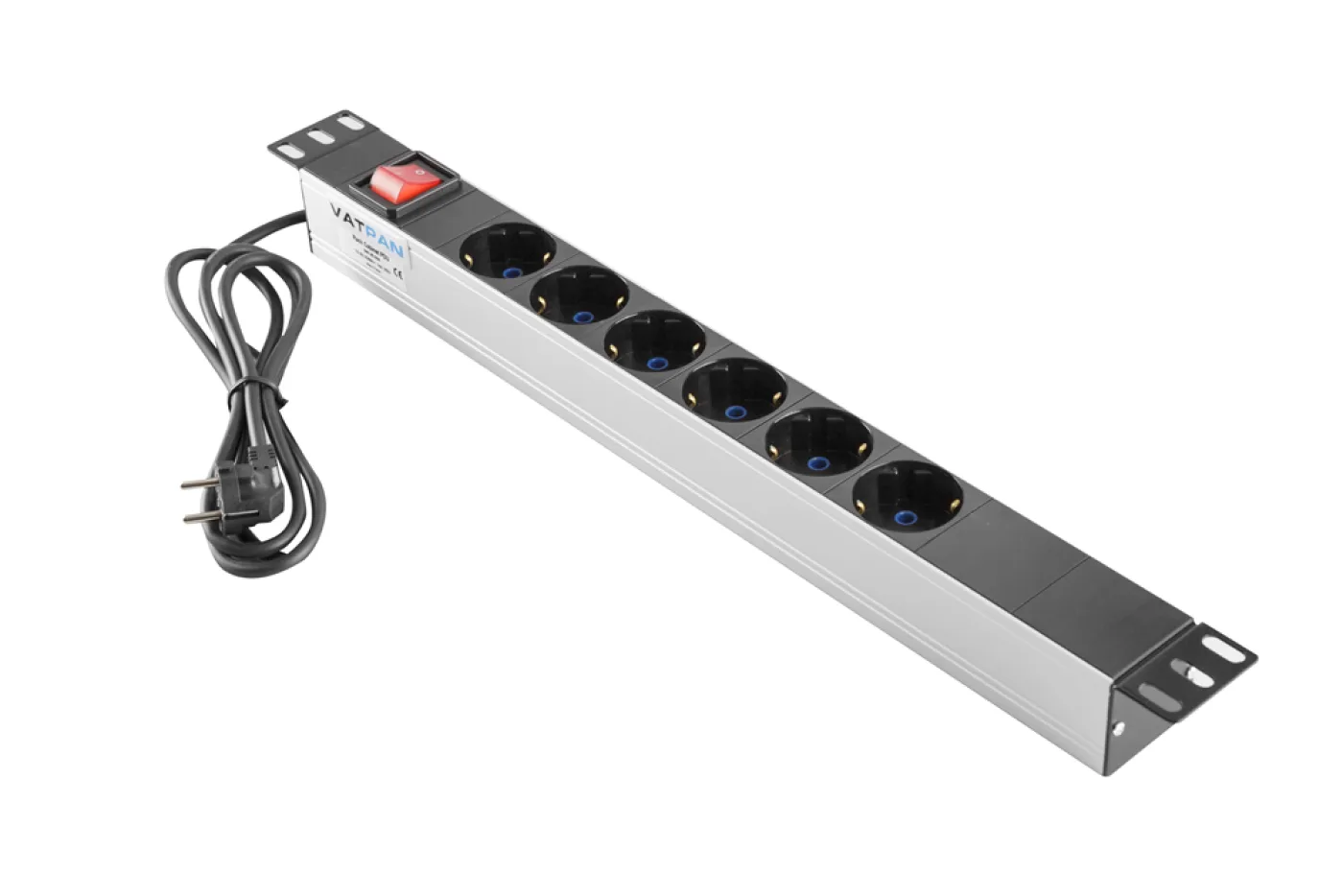
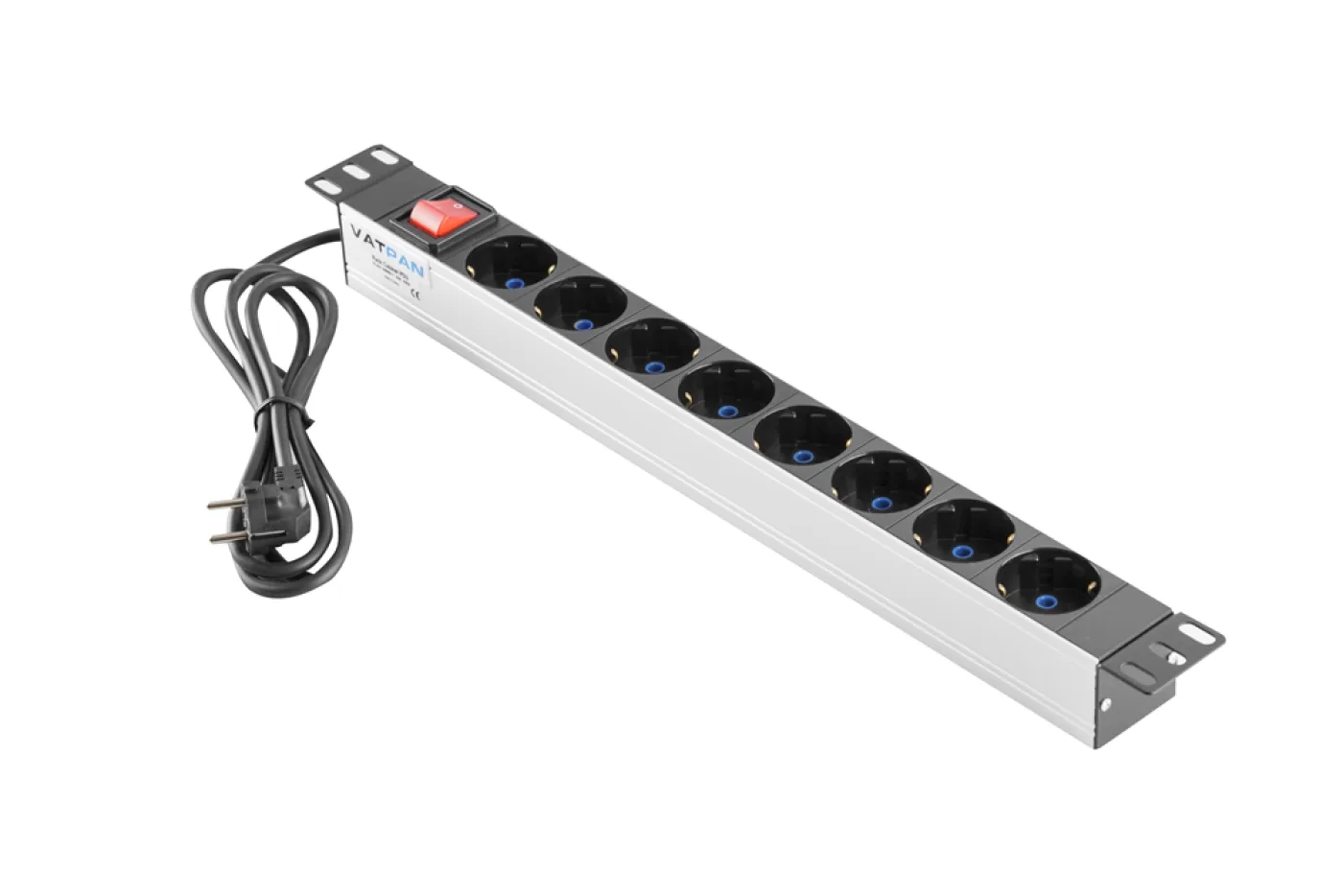
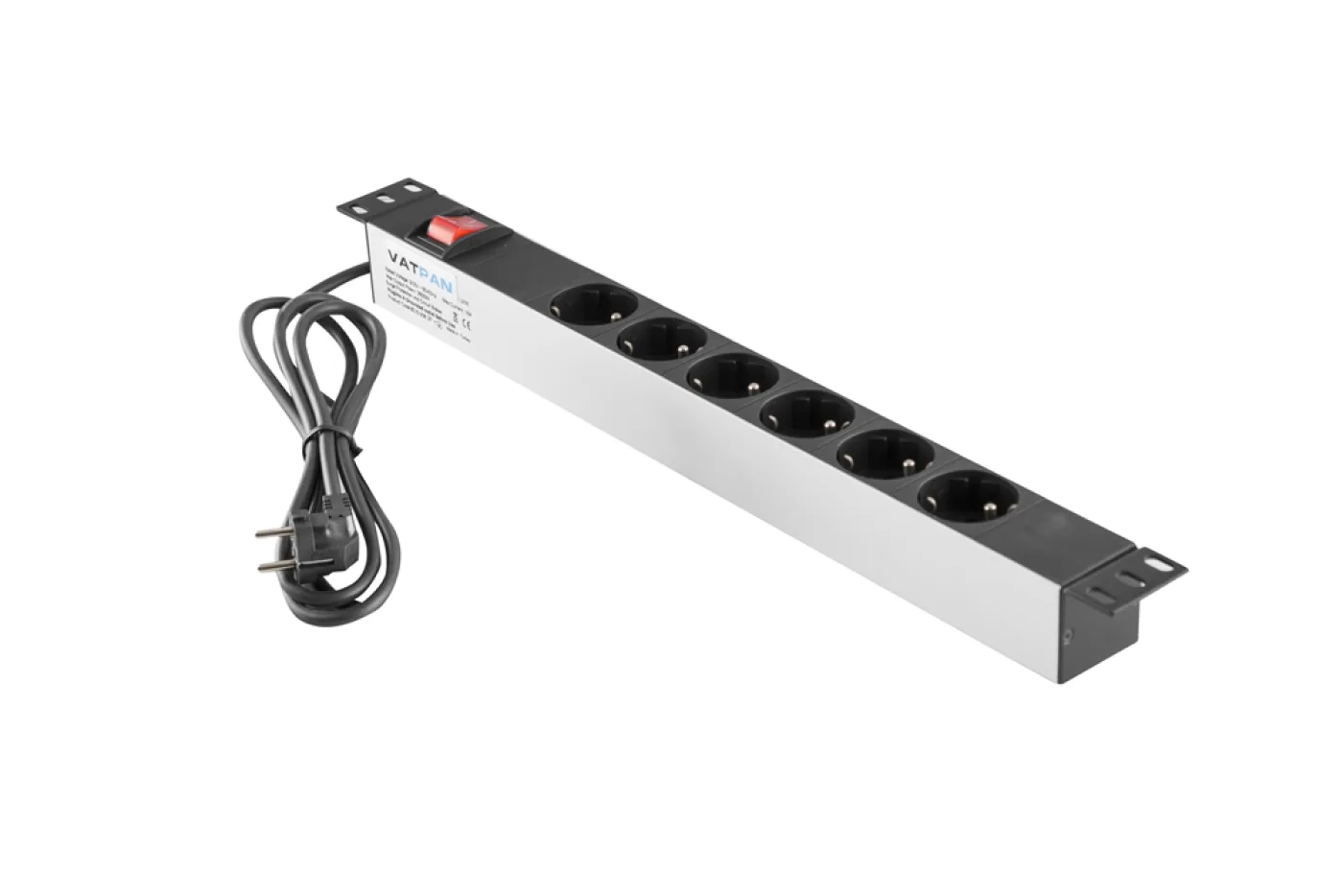
- Schuko (standard earthed socket): devices with power adapters, NVRs, modems, small switches, laptop supplies. It accepts everything, but it takes space.
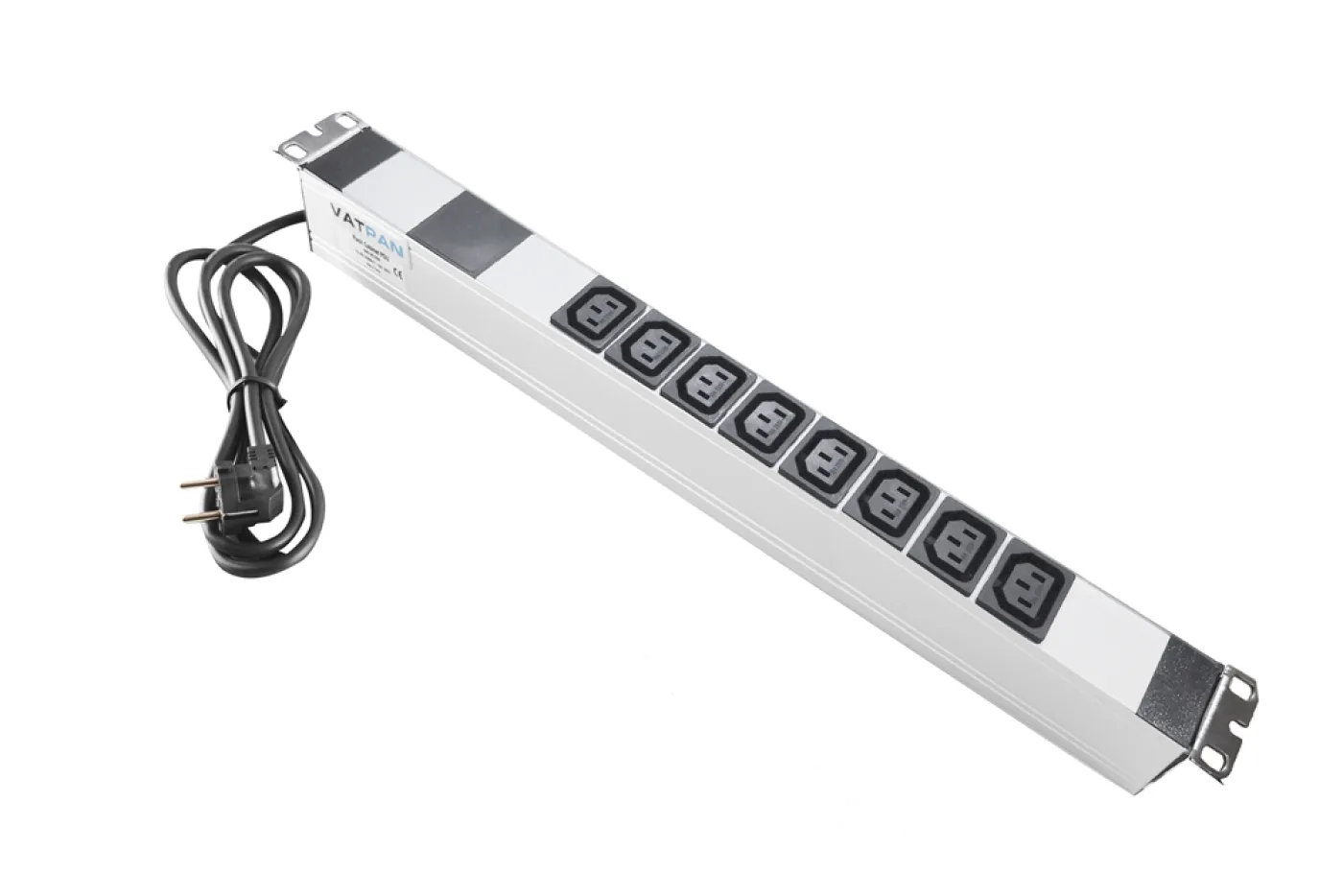
- C13: the IEC cord socket used by servers, enterprise switches and UPSs. More outlets fit in the same length, and the cord does not pull out easily.
In mixed cabinets, one of each is a common and sensible answer. Our catalogue carries both aluminium-bodied schuko strips and an 8-way C13 strip.
Fused or switched?
This section is the most important in the article.
- Switched strip: a single on/off switch. If one device shorts, the breaker upstream trips and everything in the cabinet goes with it.
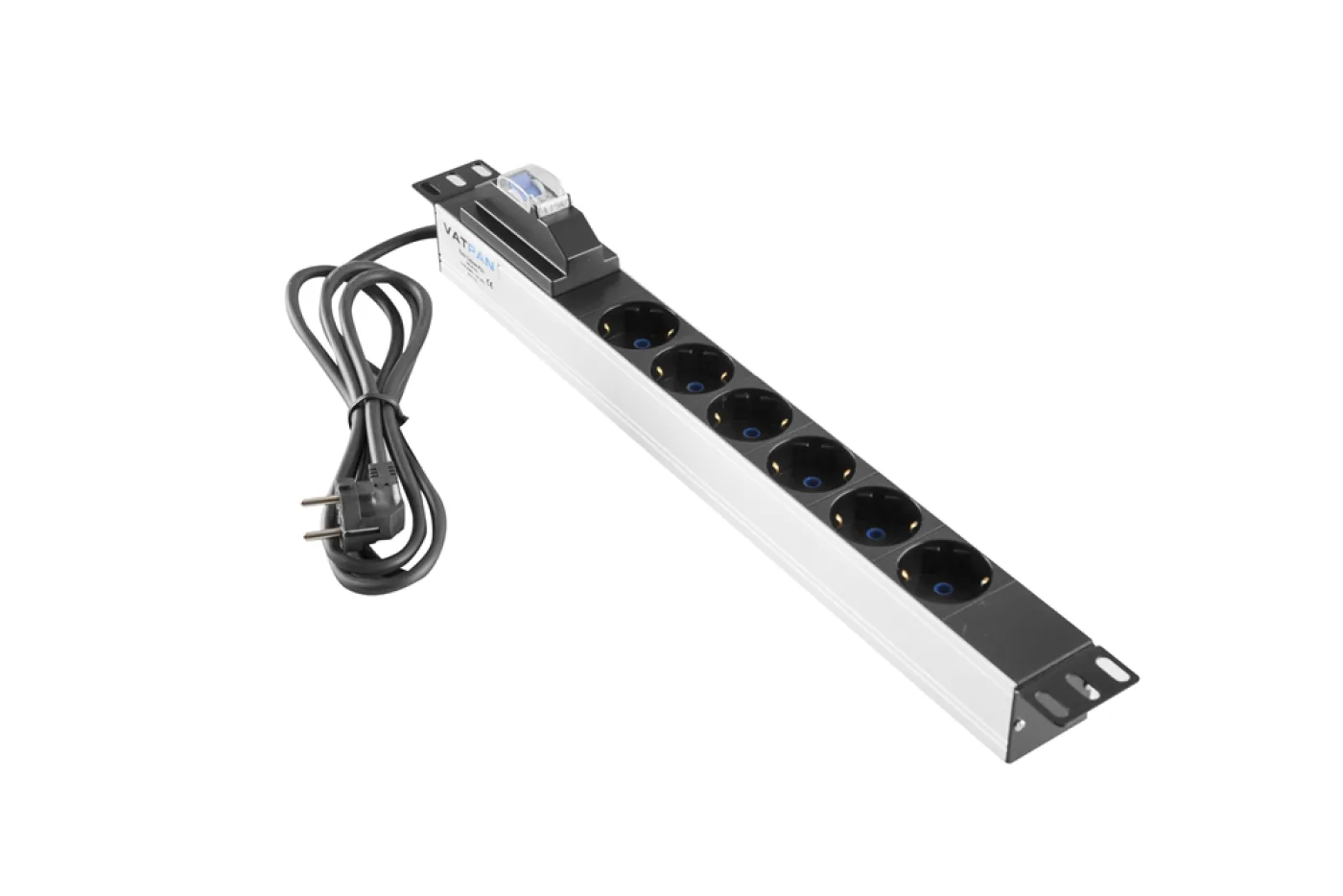
- Fused strip: the outlets sit behind fuses. The faulty device trips its own, and the rest of the cabinet keeps running.
The price difference is small; the return during one midnight outage is not. If the load is critical, buy fused.
A step further: a DIN-rail distribution unit
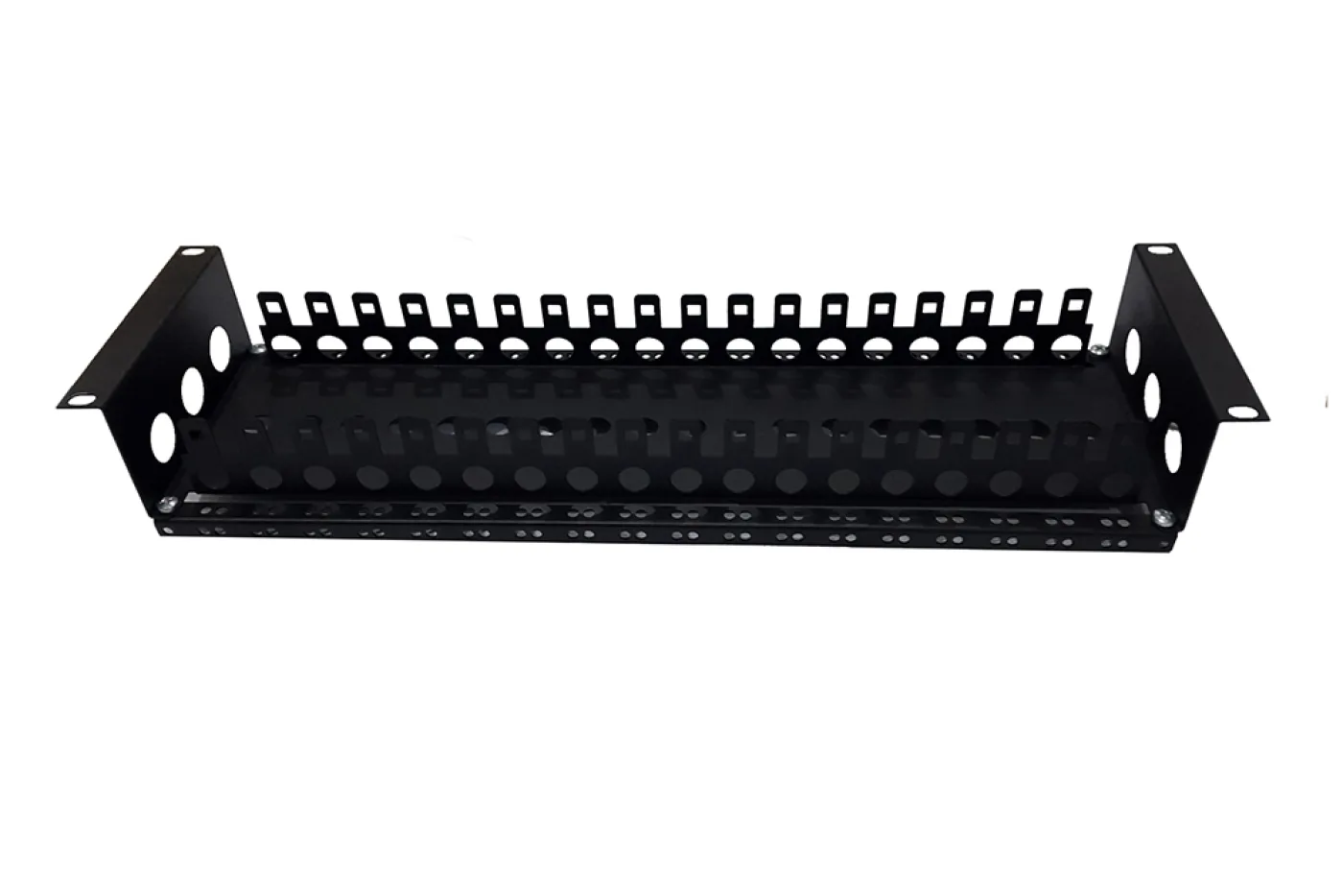
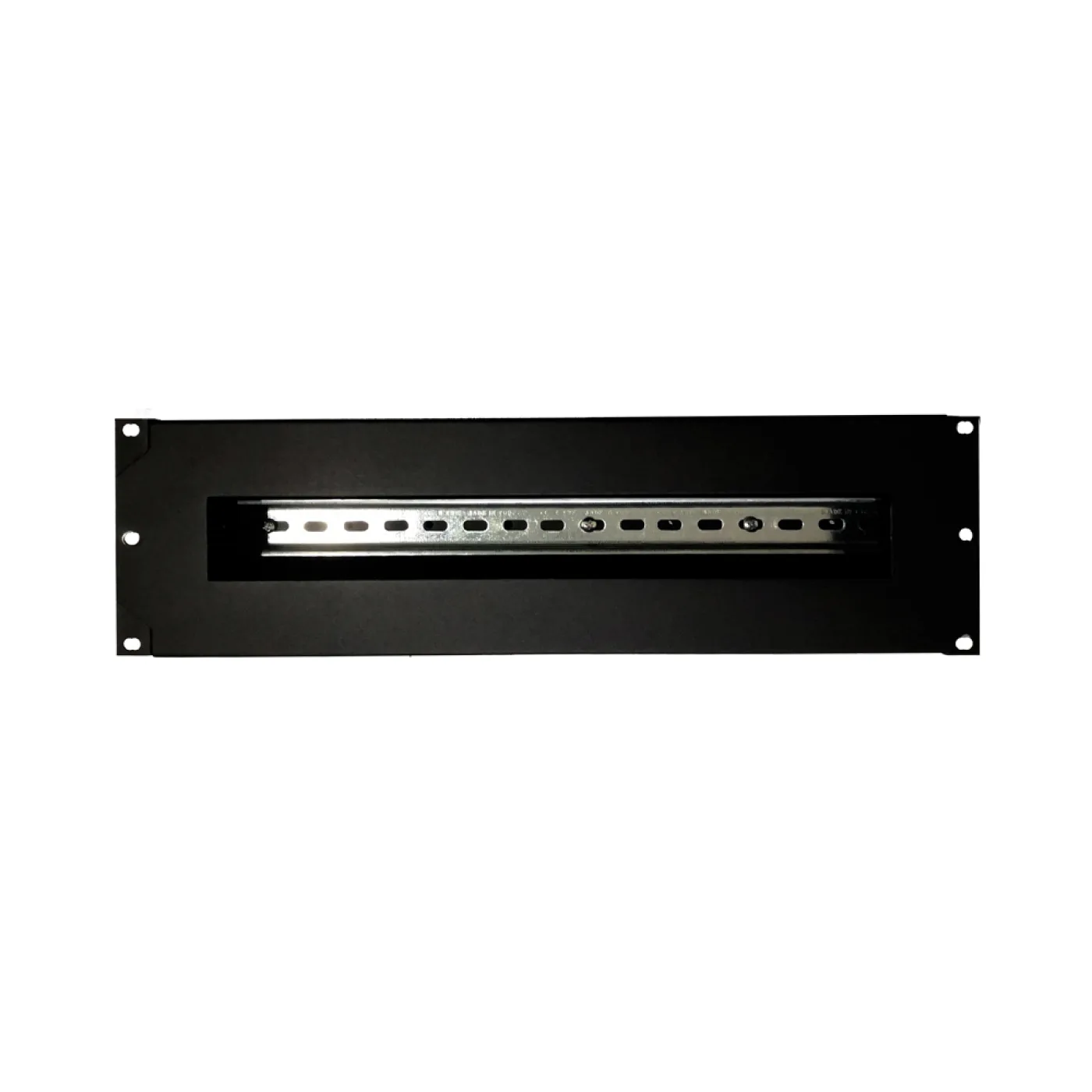
As the number of devices to feed grows, you may want each one protected separately. For that, our 3U fused power distribution unit carries a DIN rail and takes up to 21 single MCBs. It measures 480 × 140 × 60 mm and is made from galvanised steel.
It is a practical way to put every low-current element — camera power supplies, door controllers, sensor feeds — behind its own breaker. A fault on one camera circuit does not drop the other thirty.
Separate the UPS feed from the mains feed
Where a cabinet has both a UPS-backed and a mains supply, they belong on separate strips. For two reasons:
- Which device stays up during an outage is a design decision, not a function of which socket somebody reached.
- UPS capacity is finite. Plugging a heater into a UPS outlet by mistake turns minutes of runtime into seconds.
Our catalogue includes a strip dedicated to a UPS feed. Label them, and use different colours where you can — six months later nobody remembers which is which.
Horizontal or vertical mounting?
| Mounting | When | What it costs |
|---|---|---|
| Horizontal (1U, on the rails) | Few outlets, shallow cabinet | Consumes 1U |
| Vertical (0U, in the side channel) | Many outlets, high density | No U, but needs a side channel |
Vertical mounting has a precondition: there has to be a channel beside the cabinet's rails. In practice that means an 800 mm wide body — at 600 mm wide, that space does not exist. If you are planning vertical PDUs, this is a decision made when the cabinet is ordered, not added later.
Power and data do not travel together
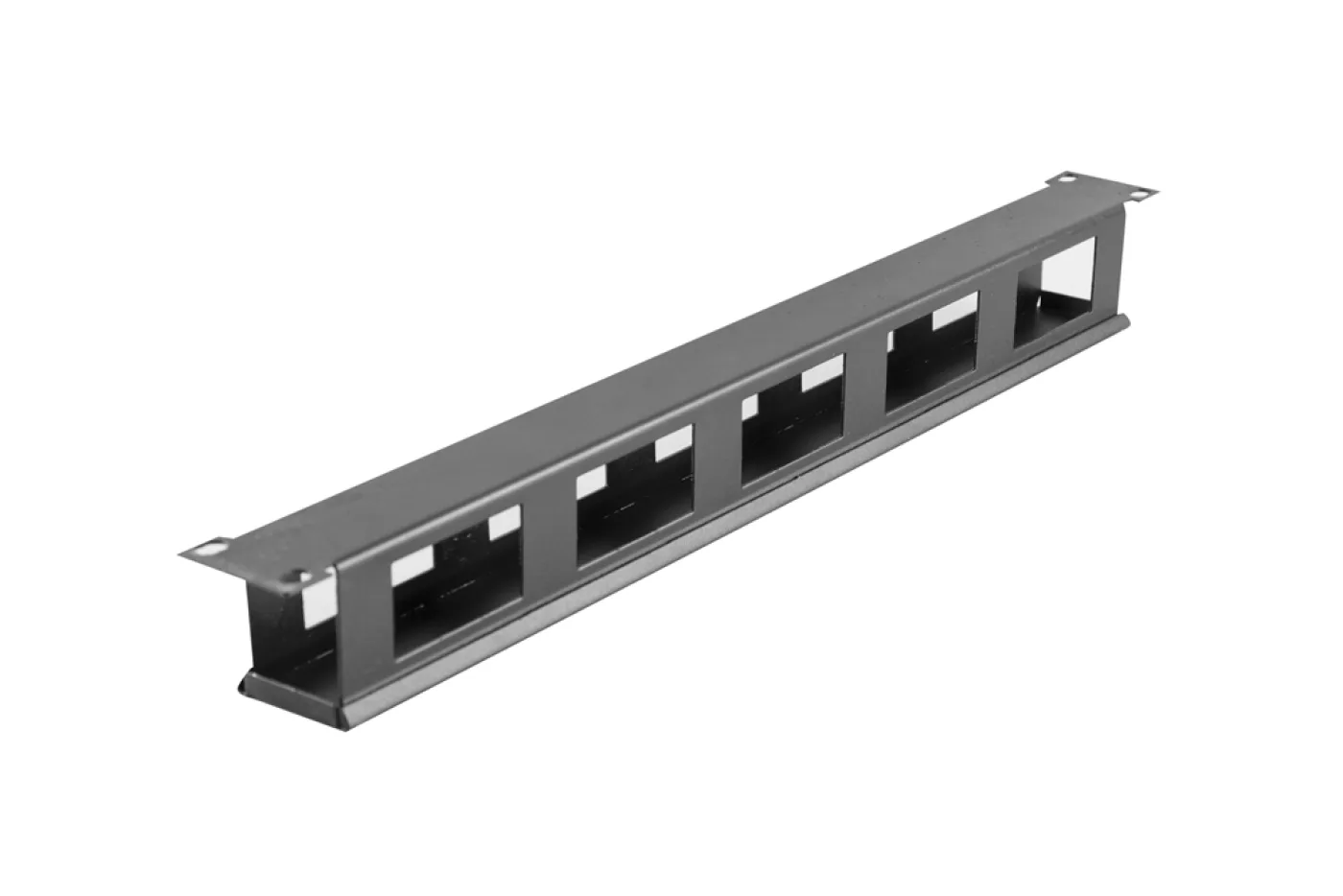
Inside the cabinet, run power and data on opposite sides as far as possible. A long parallel run in the same channel creates an interference risk on copper data links. If you use vertical cable managers, dedicating one side to power and the other to data is the simplest answer.
One warning: a "socket reglet" is not a power strip
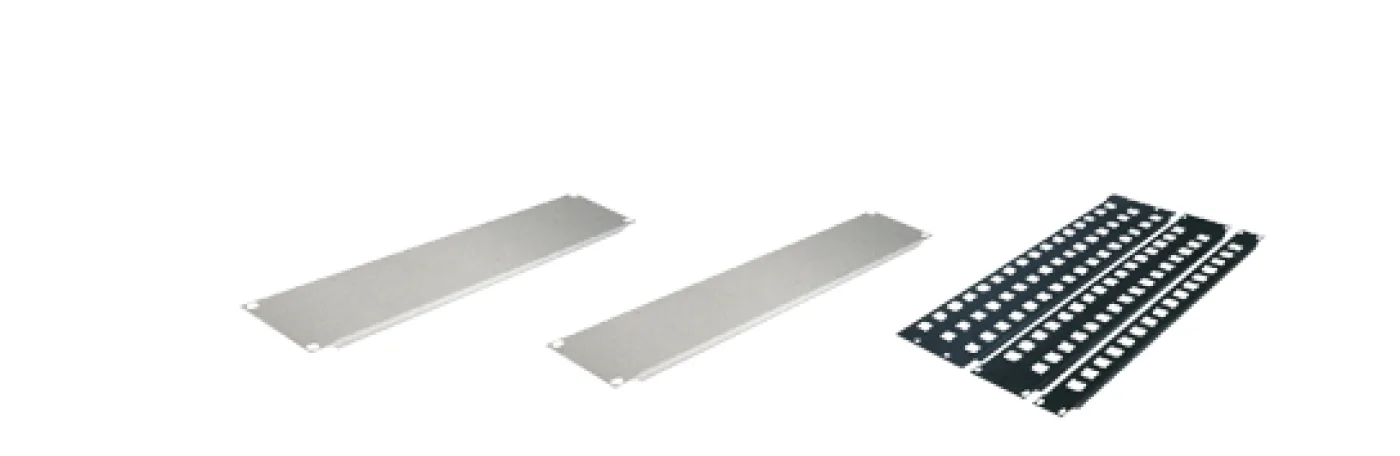
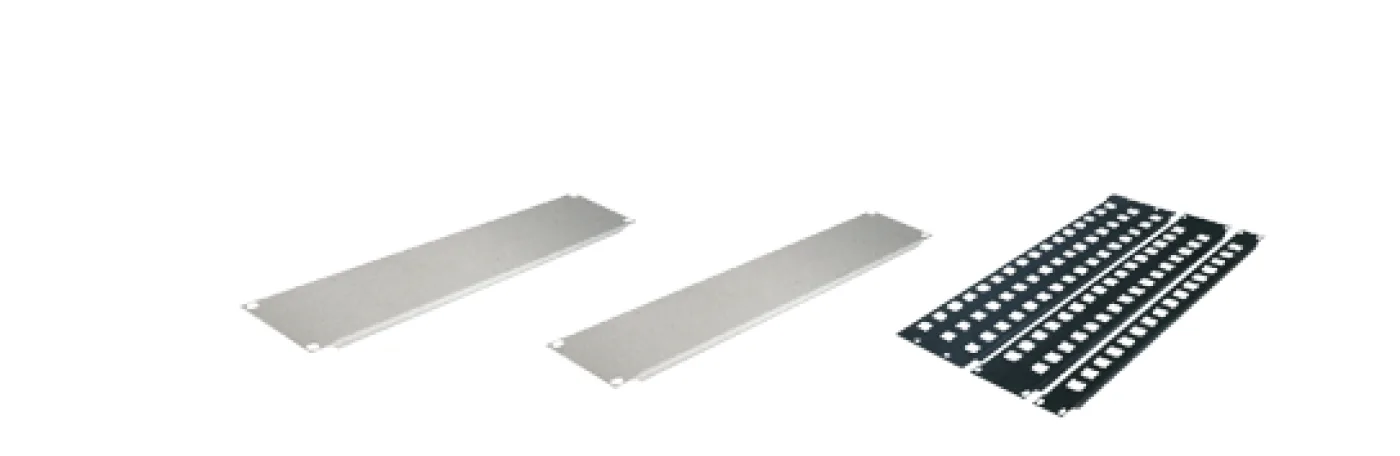
Our catalogue carries reglets with 60, 120 and 180 sockets. Those are terminal reglets — used to distribute low-current and signal lines, not mains outlets. Taking the socket count in the name for a number of power outlets is a common confusion; for plugging equipment in, look at the power strips.
The decision in short
- Work out the total peak draw; do not exceed 80% of the circuit.
- IEC-corded equipment: C13. Adapter-fed equipment: schuko. Mixed cabinet: one of each.
- Buy a fused strip wherever the load is critical.
- If many separately protected circuits are needed, move to a DIN-rail distribution unit.
- Separate and label the UPS and mains feeds.
- If you are considering vertical PDUs, order the cabinet 800 mm wide.