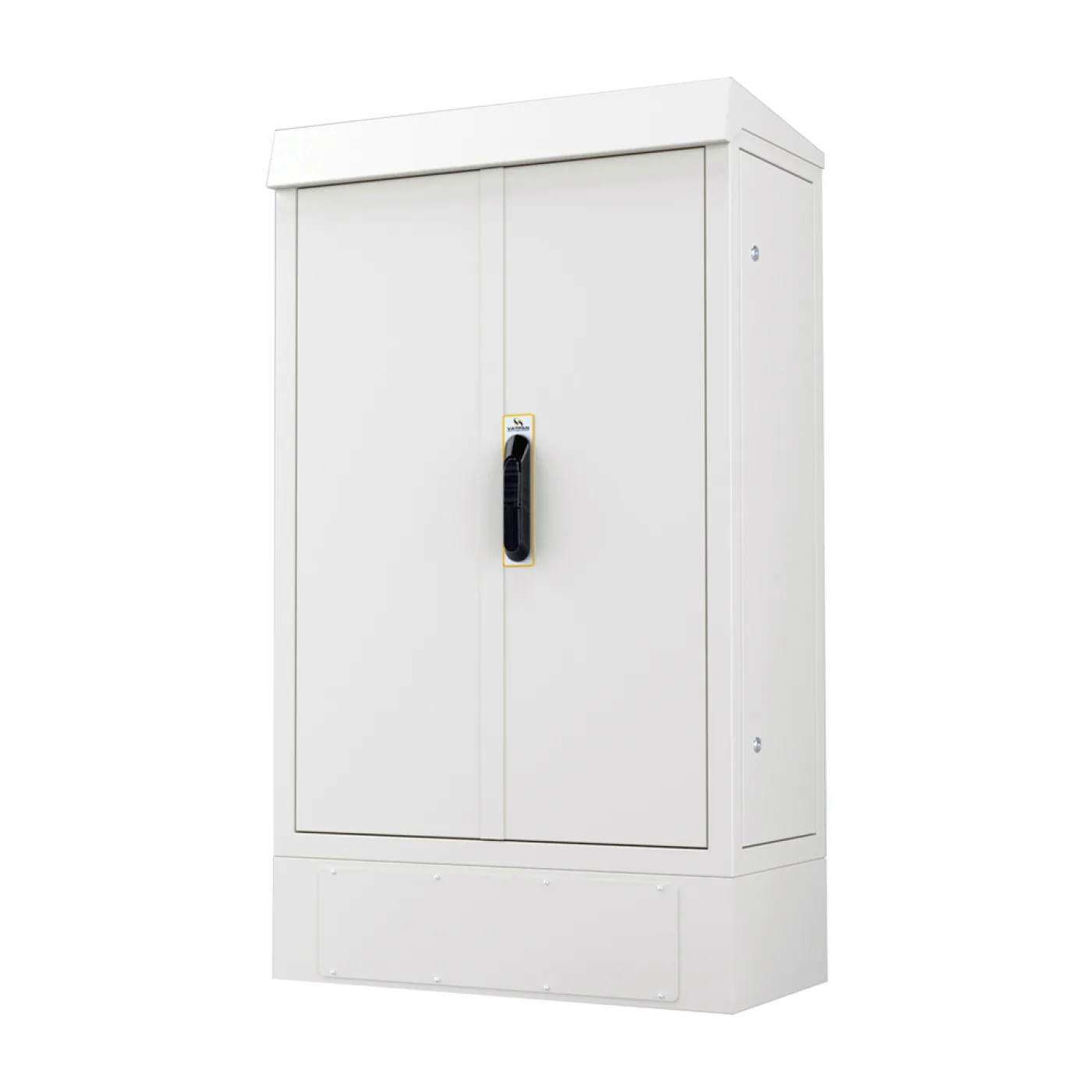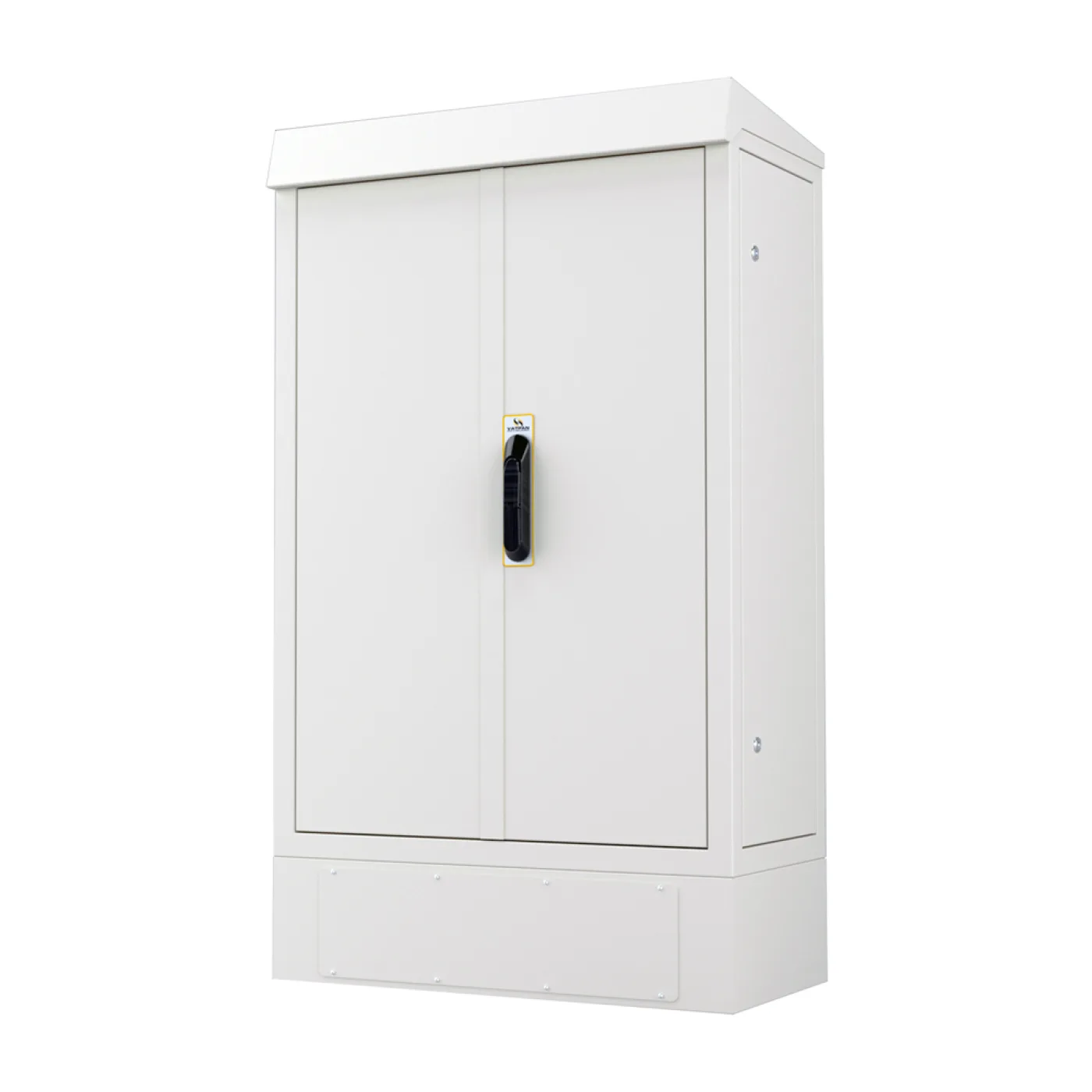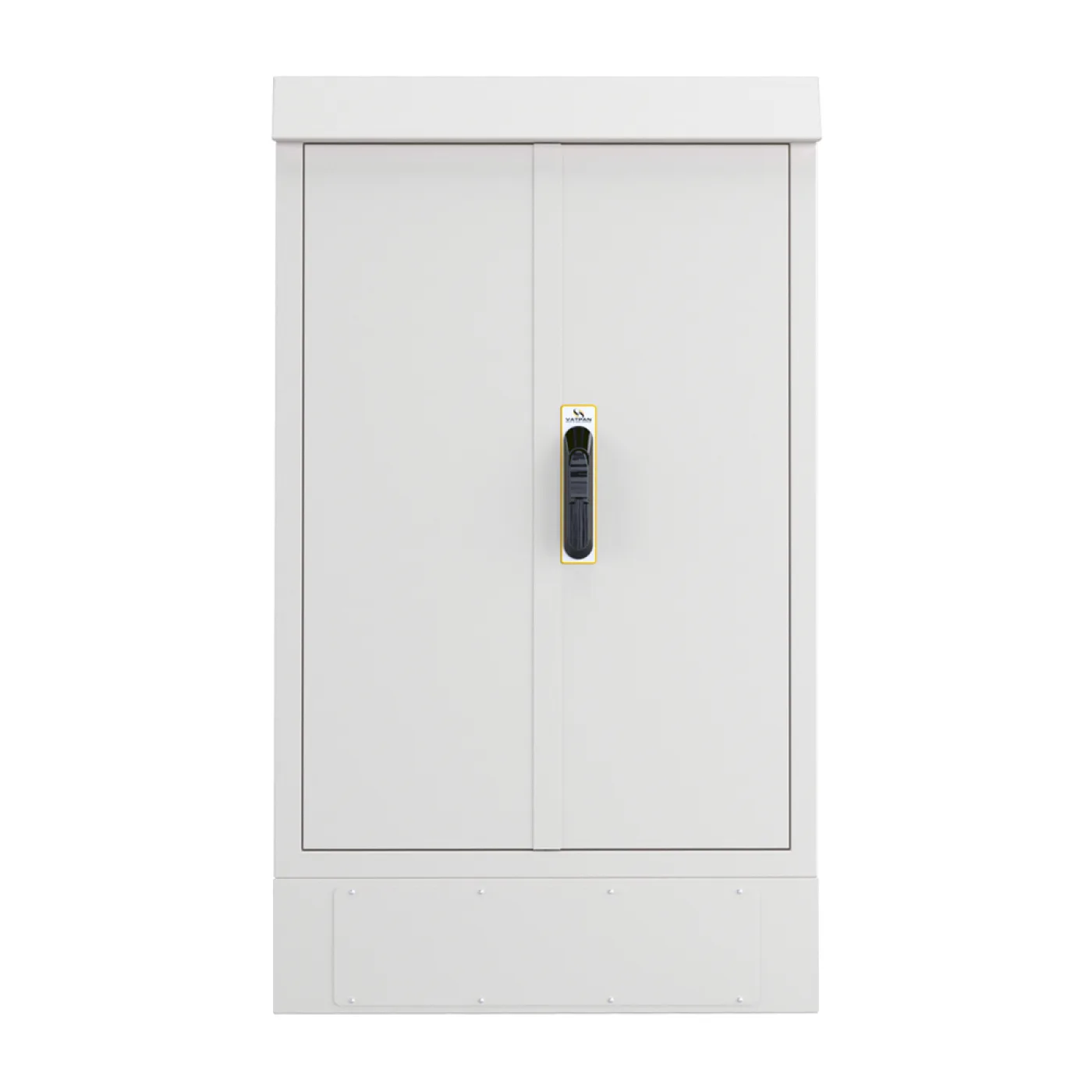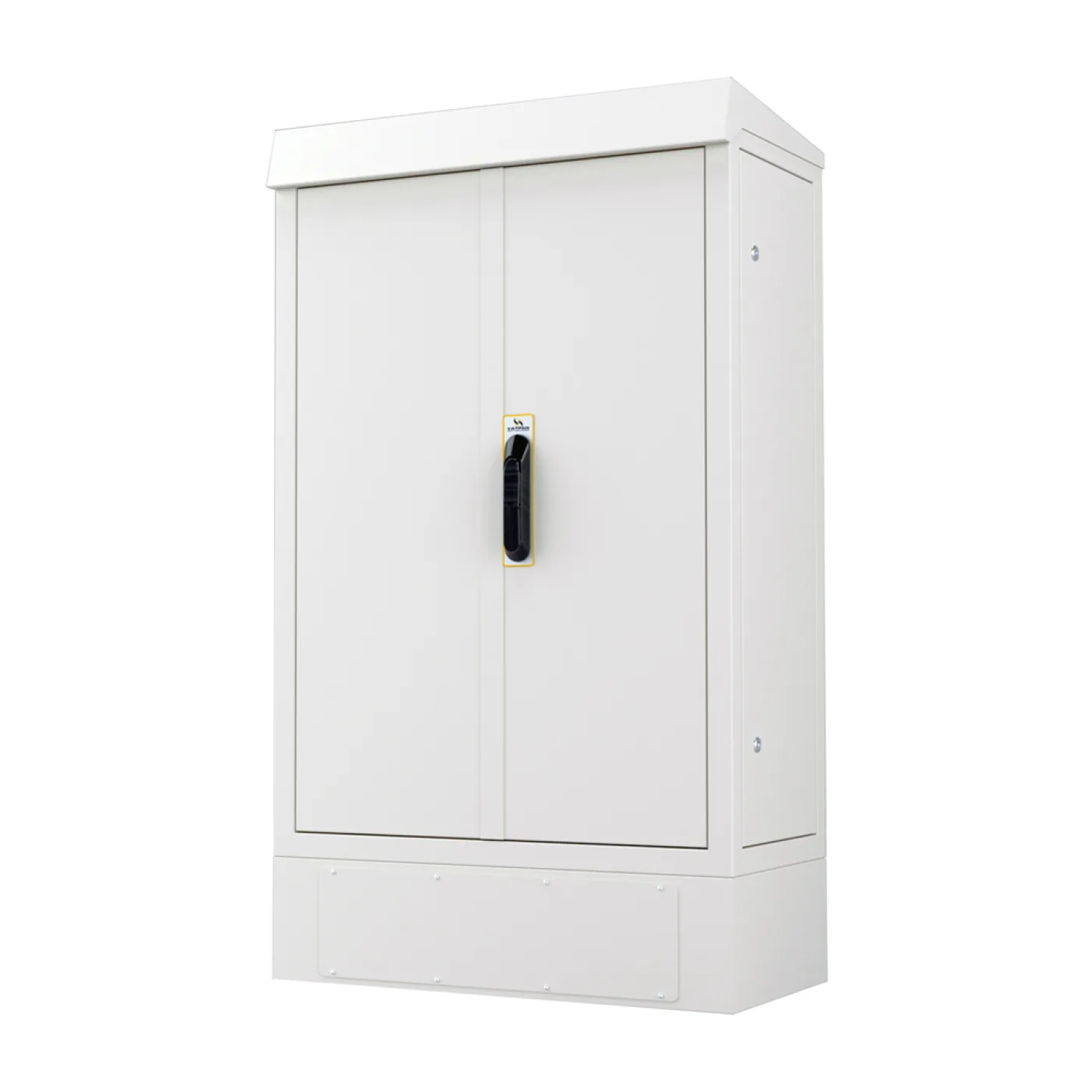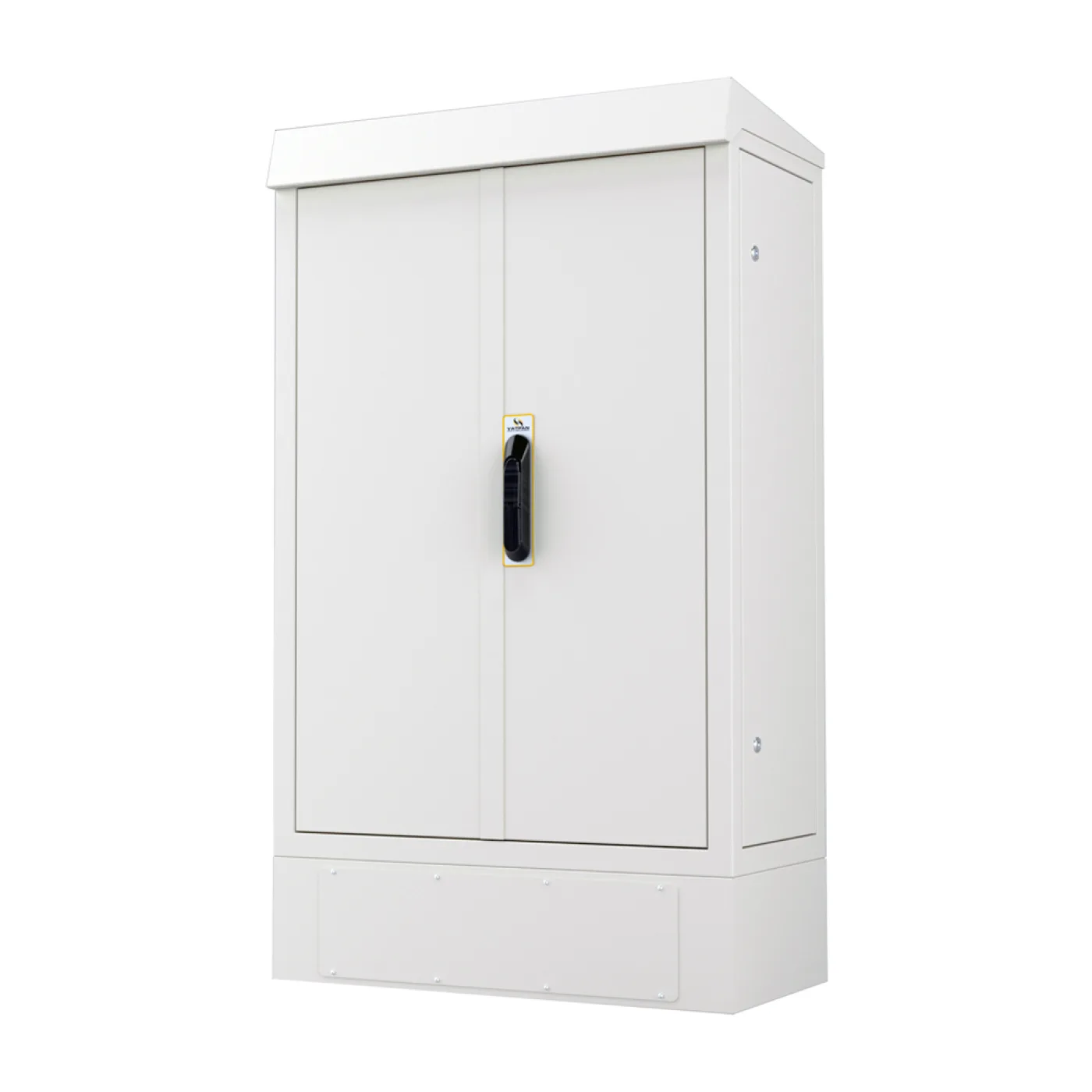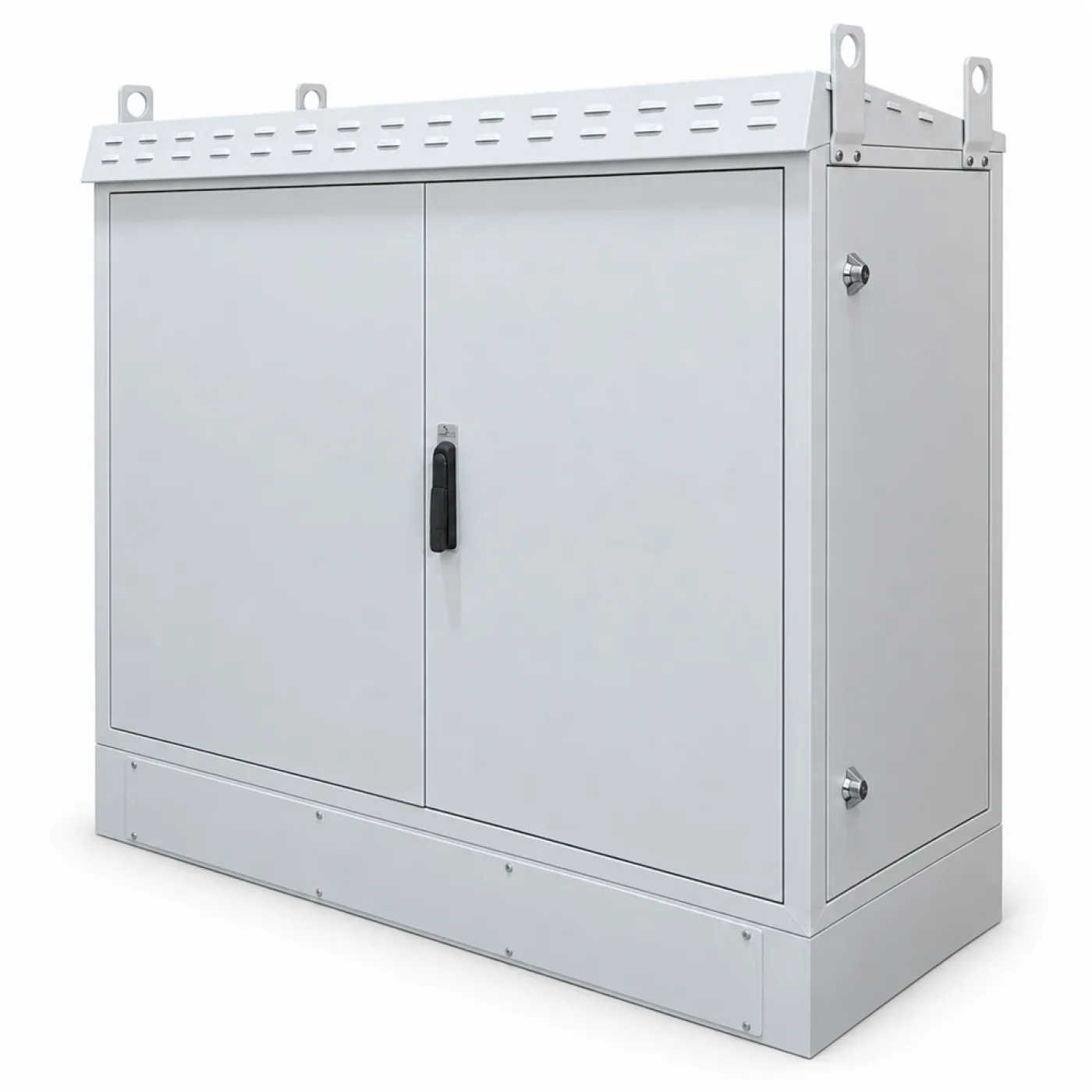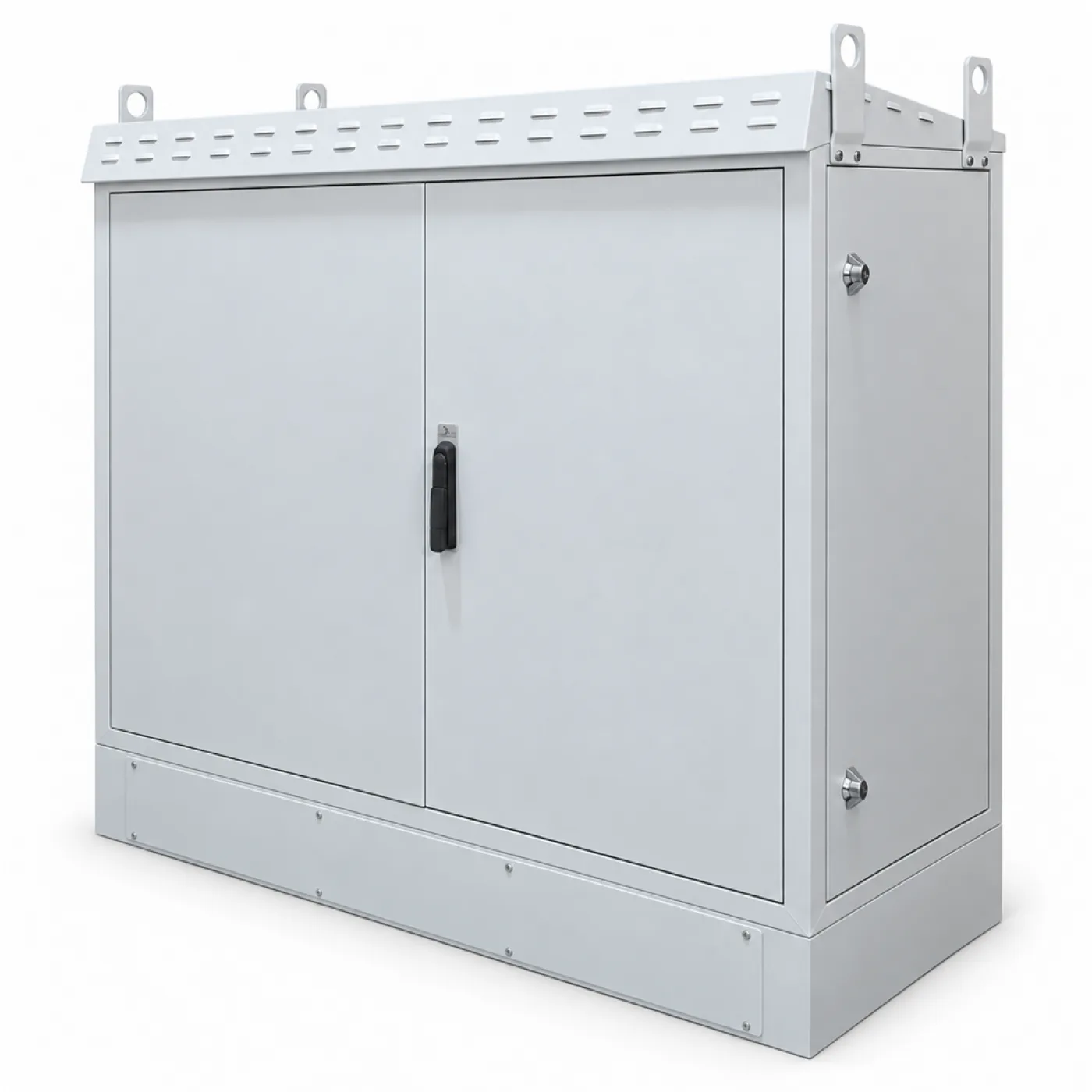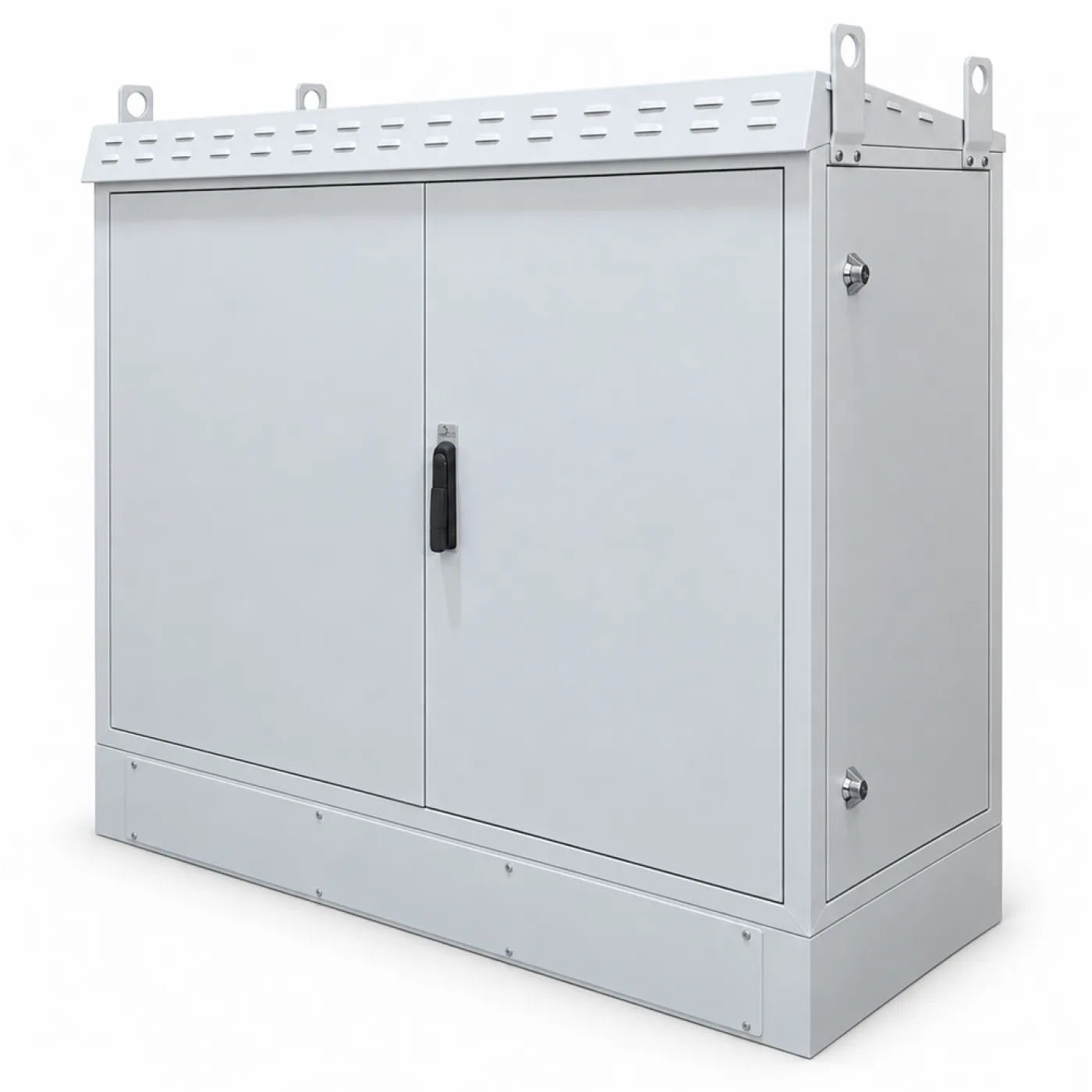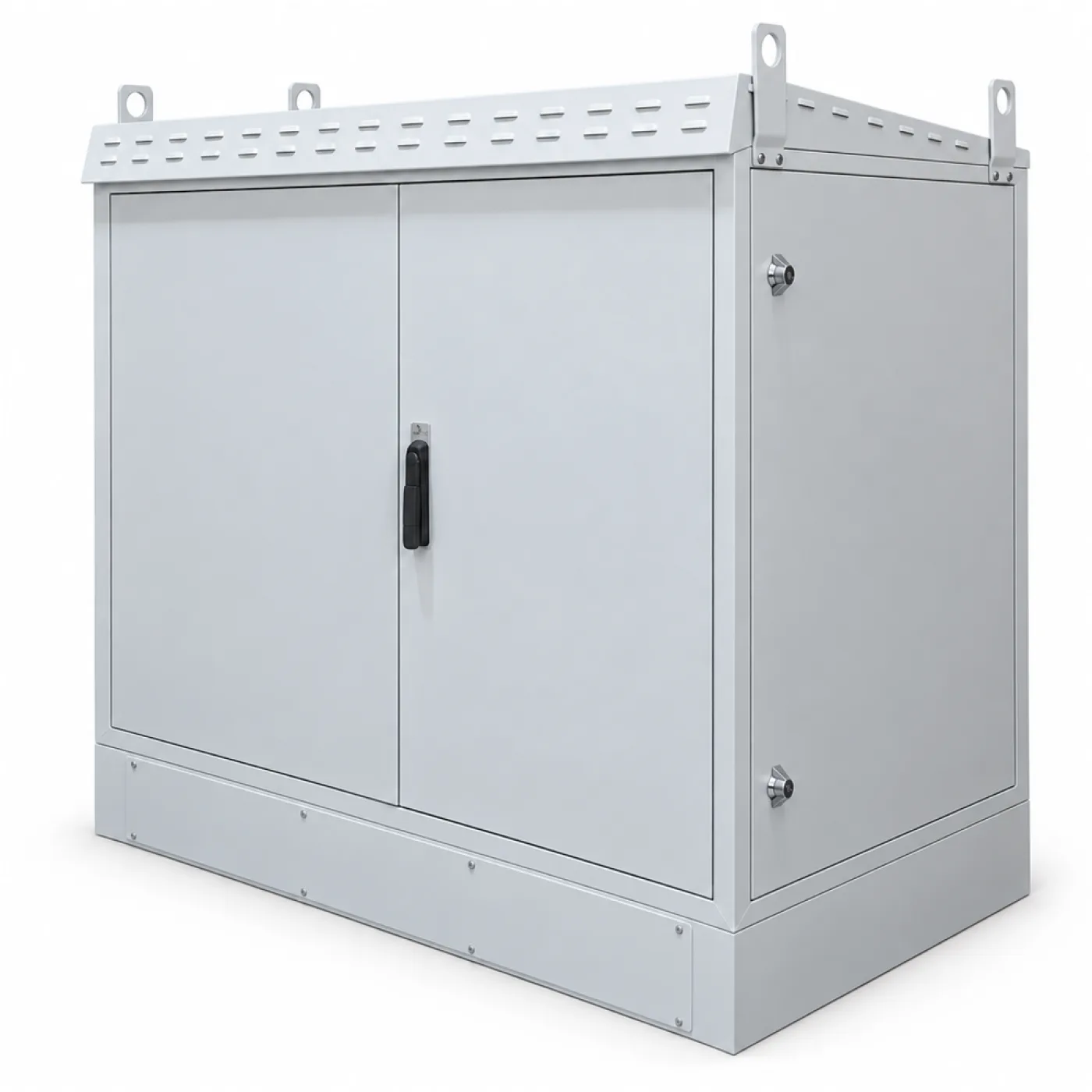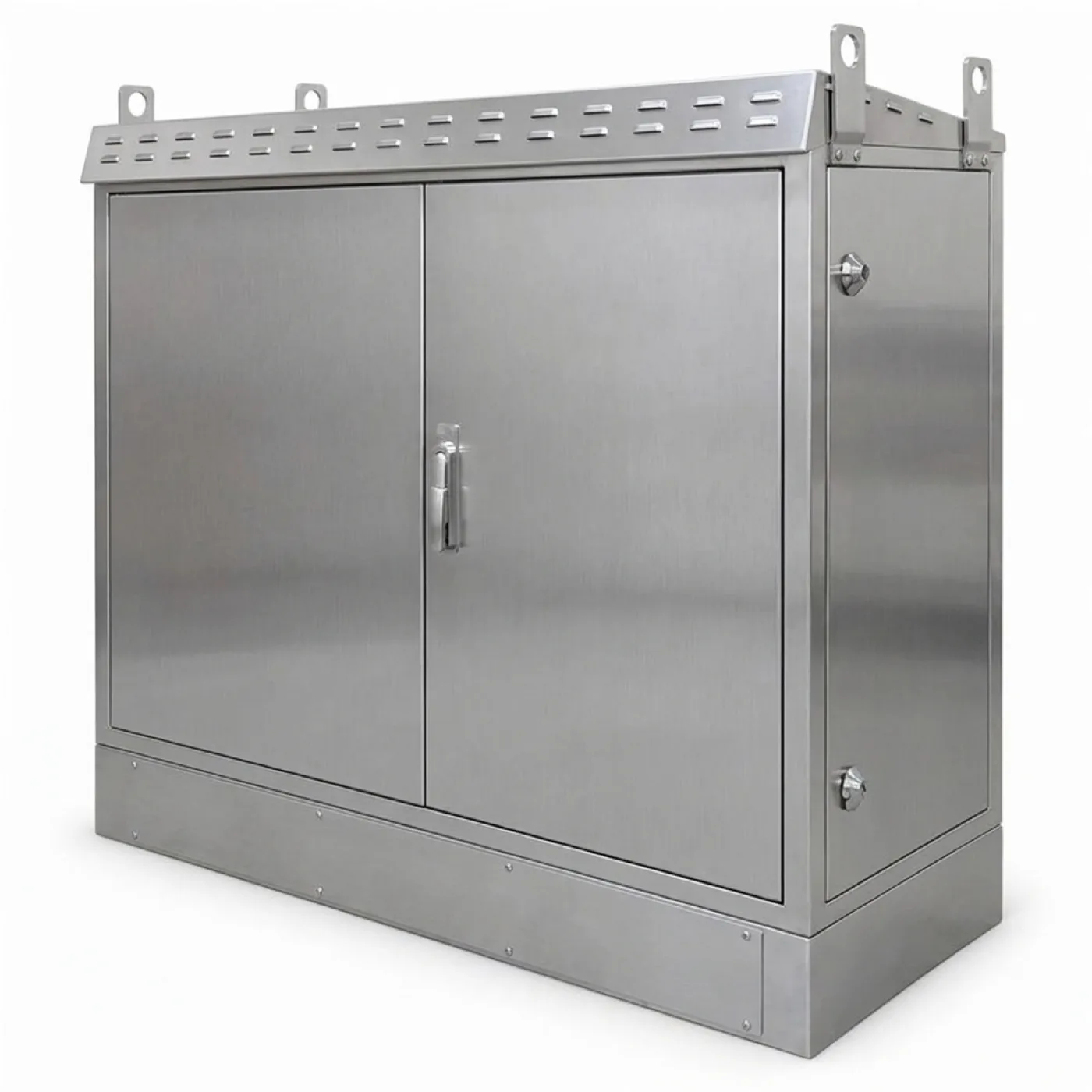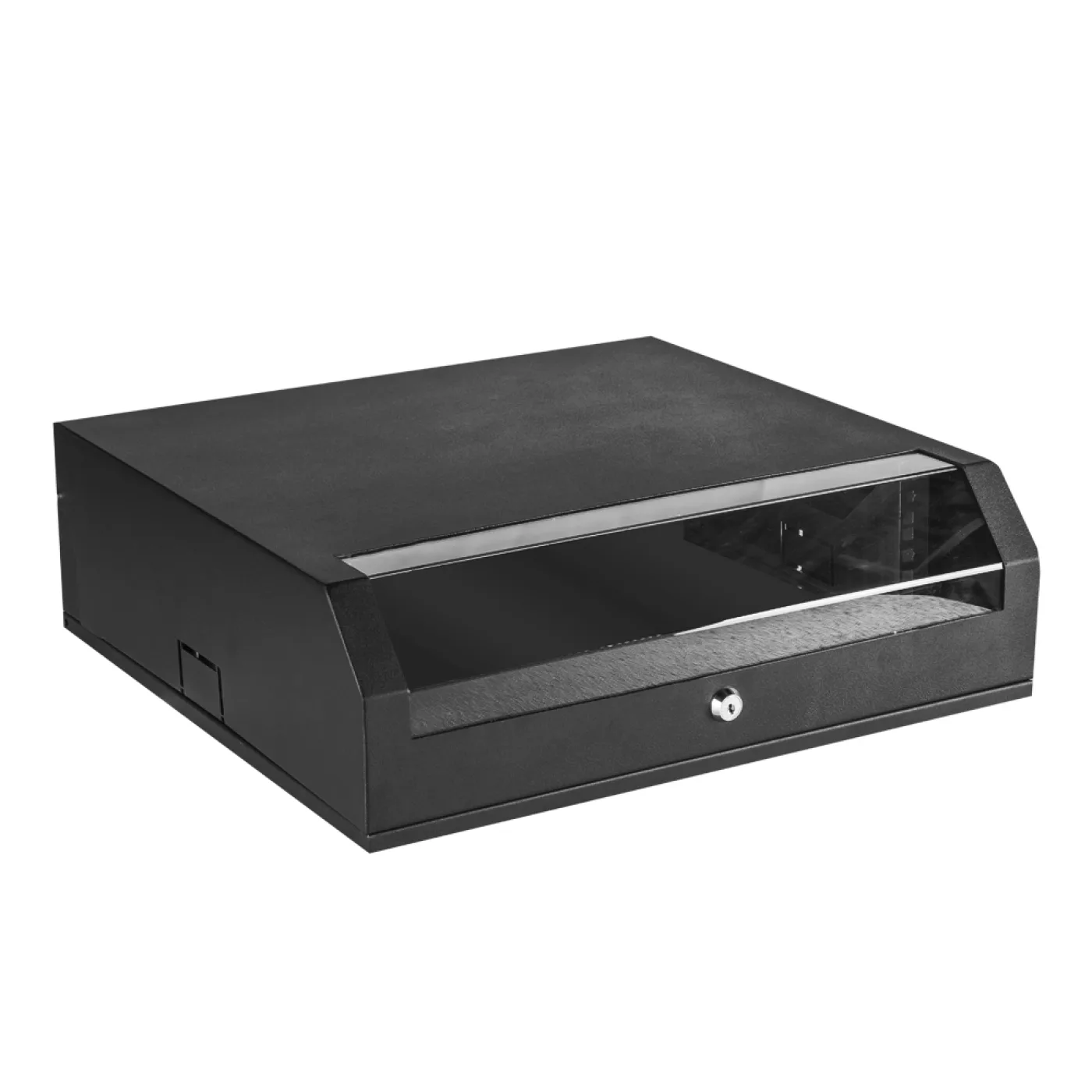
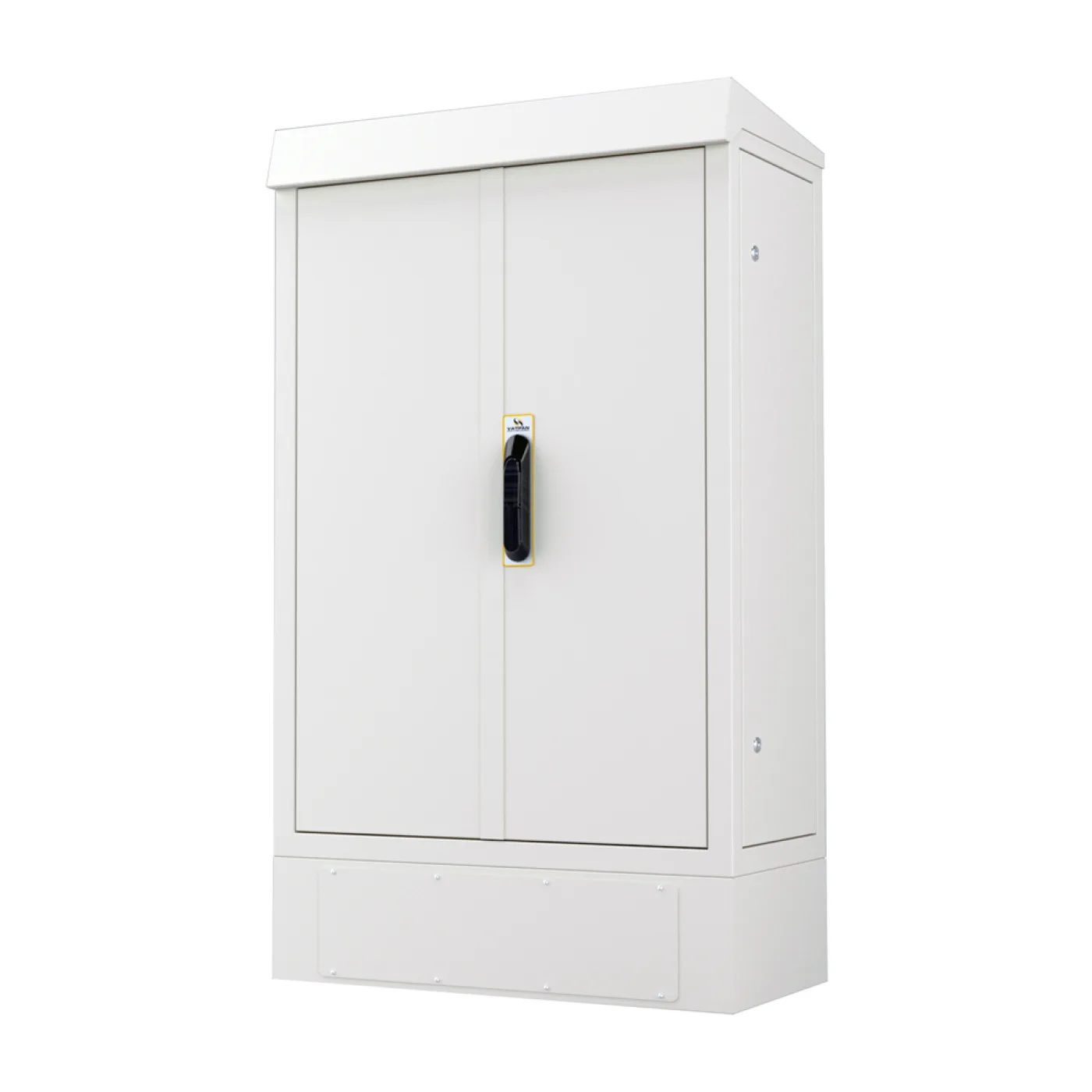
An outdoor fibre cabinet is the physical node between the backbone and the drop. There may be no active equipment inside it — yet the whole connectivity of a neighbourhood or a campus passes through that body. A mistake in choosing it therefore costs rather more than one cabinet.
Capacity is set by panel count, not fibre count
The common mistake is to say "this many fibres are coming in" and size the cabinet from that. What consumes U is not the fibre itself but the hardware terminating and distributing it:
| Component | Typical space |
|---|---|
| ODF / fibre patch panel (24–48 port) | 1–2U |
| Splice tray drawer | 1U |
| PLC splitter tray (1:8, 1:16, 1:32) | 1U |
| Slack storage unit | 1U |
| Cable manager | 1U |
| Active equipment (OLT, switch), if any | 1–4U |
| Power / UPS, if any | 2–6U |
At a distribution point, four ODFs, two splitter trays, two splice trays and managers reach 12–14U without difficulty. Add service and growth headroom and 22U becomes a sensible starting point.
Two separate body families
Distribution point: 22U, 24U, 26U
At street cabinet scale, for points feeding a neighbourhood or a group of buildings. Depth is offered at 400, 450 and 600 mm — fibre hardware is shallow, so these depths are sufficient and they keep the body within a pavement's width.
Aggregation point: 44U, 48U, 52U
For larger volumes we produce bodies 1500 mm wide, in 600 and 800 mm depths. 1500 mm is more than twice a standard 19-inch body; it is used to hold multiple rail sets in one enclosure, or one rail set plus a generous cabling volume. Confirm the exact internal arrangement from the product's own datasheet — your splice plan is built on it.
Depth: why fibre fits a shallow cabinet
Where a server wants 800 mm, fibre hardware works in 200–300 mm. Our cabinets are compatible with 200–300 mm shelf systems; a 400 mm body is comfortable for fibre, and 600 mm is right where active equipment is going in too.
Keeping the depth down has a practical benefit: it takes less pavement and less space in front of a building, and the door swing is smaller.
Protection: IP55 — and IP54 once a fan is fitted
Our outdoor fibre cabinets are IP55 when sealed: dust-protected and resistant to low-pressure water jets. Fitting a fan and filter takes them to IP54, because a filtered opening is by definition an opening.
On the fibre side this is often not a problem: a passive distribution point has nothing generating heat and the cabinet can stay sealed. But put an OLT or a switch inside and cooling is needed — and at that moment you have accepted IP54. The alternative is a sealed body with closed-loop cooling; the detail is in our article on thermal management in an outdoor cabinet.
The real fault is not a break but a bend
The commonest problem inside a fibre cabinet is not a cut cable. It is a violated bend radius — and it is the most maddening kind for whoever is fault-finding, because the cable looks perfect.
What happens is this: the fibre turns more sharply than it is allowed to, part of the light escapes the cladding, and attenuation rises. The link does not fail outright; it slows, the error rate climbs, and sometimes it recovers when the weather cools. Faults chased for weeks start this way.
The measures inside the cabinet are clear:
- Every tray needs a slack storage area; surplus fibre must not be coiled at random.
- Radius guides have to be present at turning points.
- Cable ties must not be pulled tight; the fibre bundle must not be crushed. Use hook-and-loop.
- Fibre crossing a door hinge bends at the same point every time the door moves — leave extra slack there.
When a stainless body?
Fibre cabinets are long-life infrastructure; they serve ten years and more. On a coast, in salt air and in regions with heavy industrial pollution, a painted body may not last that long. Our catalogue holds FODC models with a 304-grade stainless body — identified by the SS304 suffix in the stock code.
Lead time: built to order
Outdoor cabinets are produced against the order and shipped within a minimum of three working days. Put that in the schedule when planning the site; on fibre projects, a late cabinet means excavation and pulling crews waiting.
Order of decisions
- Add up the ODFs, splitters and splice trays in U.
- Add 25% for service and growth.
- Passive distribution point: 22U–26U. Aggregation point: look at the 1500 mm wide body.
- No active equipment: 400–450 mm depth is enough. With it: 600 mm.
- With active equipment, plan the cooling and the drop to IP54.
- On a coast or in a corrosive region, consider the stainless body.
- Put the lead time into the project schedule.