The answer to "is a fan enough, or do I need an air conditioner?" is not in the budget. It is in a single subtraction. Any cooling decision made without it is a guess — and the guess declares itself in the first hot week of summer.
The one number that decides
Write down two values first:
- Target internal temperature. The upper operating limit of the most sensitive device inside. For most network equipment that is 40–45 °C; for battery banks it is far lower.
- Peak ambient temperature. The summer peak in the shade at the cabinet's location — the peak, not the average from a weather site.
Then subtract: ΔT = target internal temperature − peak ambient temperature.
| ΔT | What is possible |
|---|---|
| Clearly positive (e.g. +15 °C) | A fan or a heat exchanger will do |
| Barely positive (e.g. +5 °C) | Marginal; raise the airflow, a double wall is essential |
| Zero or negative | Air conditioning only. A fan blows the hot outside air in |
The last row is the most important and the most often skipped: a fan cannot make the inside cooler than the air outside. If it is 45 °C out there, the best a fan can do is bring the cabinet to 45 °C. It cannot go one degree below.
Option 1 — Fan and filter
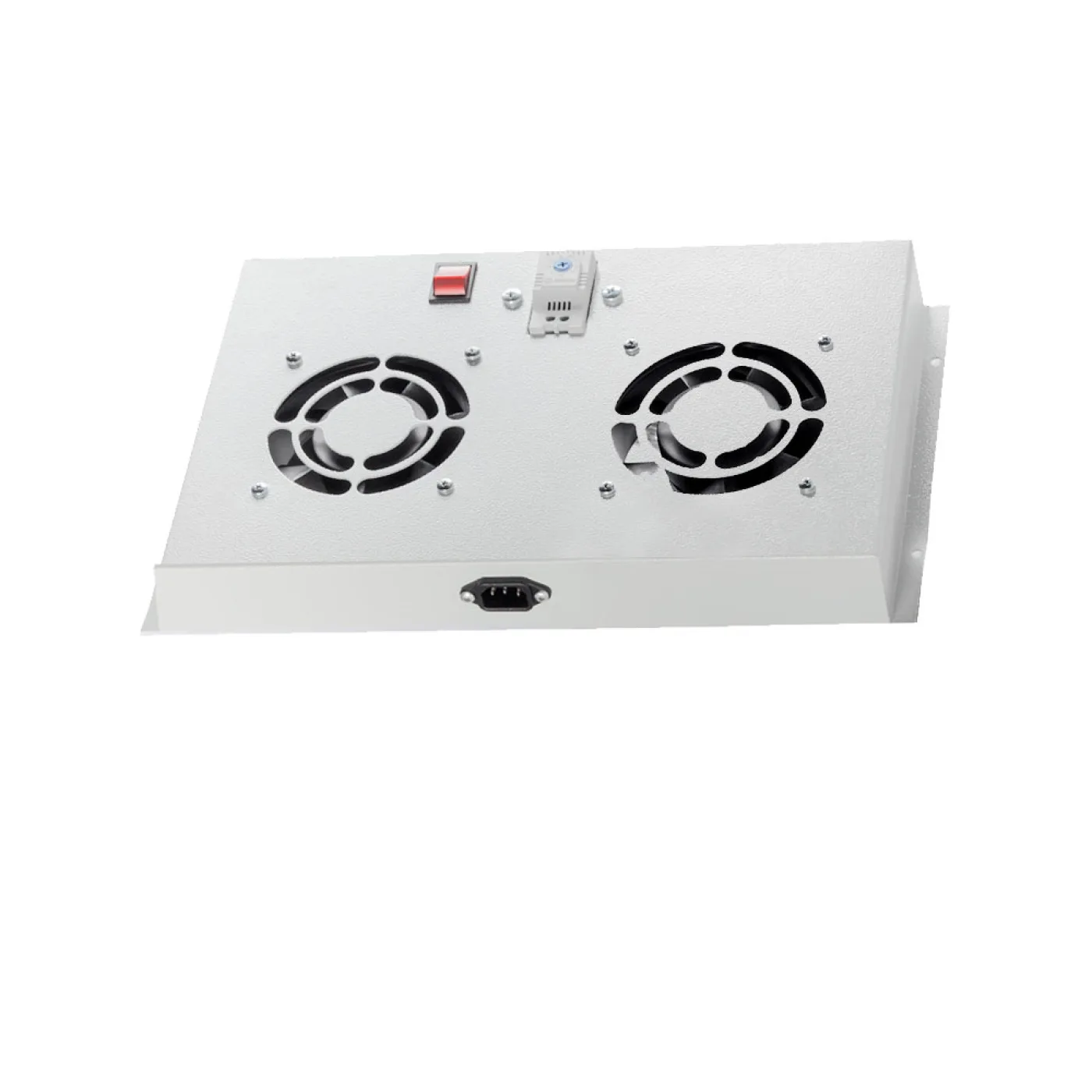
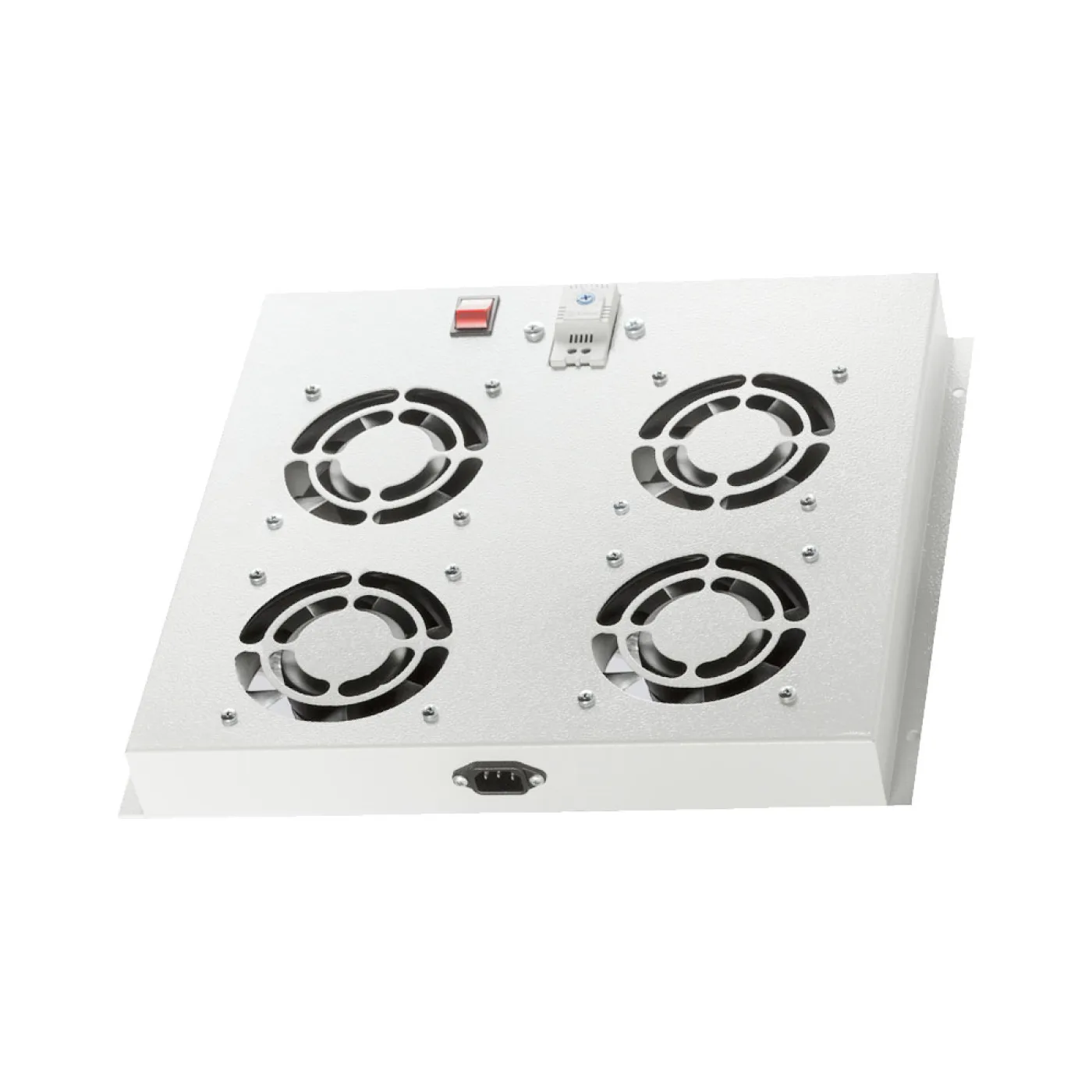
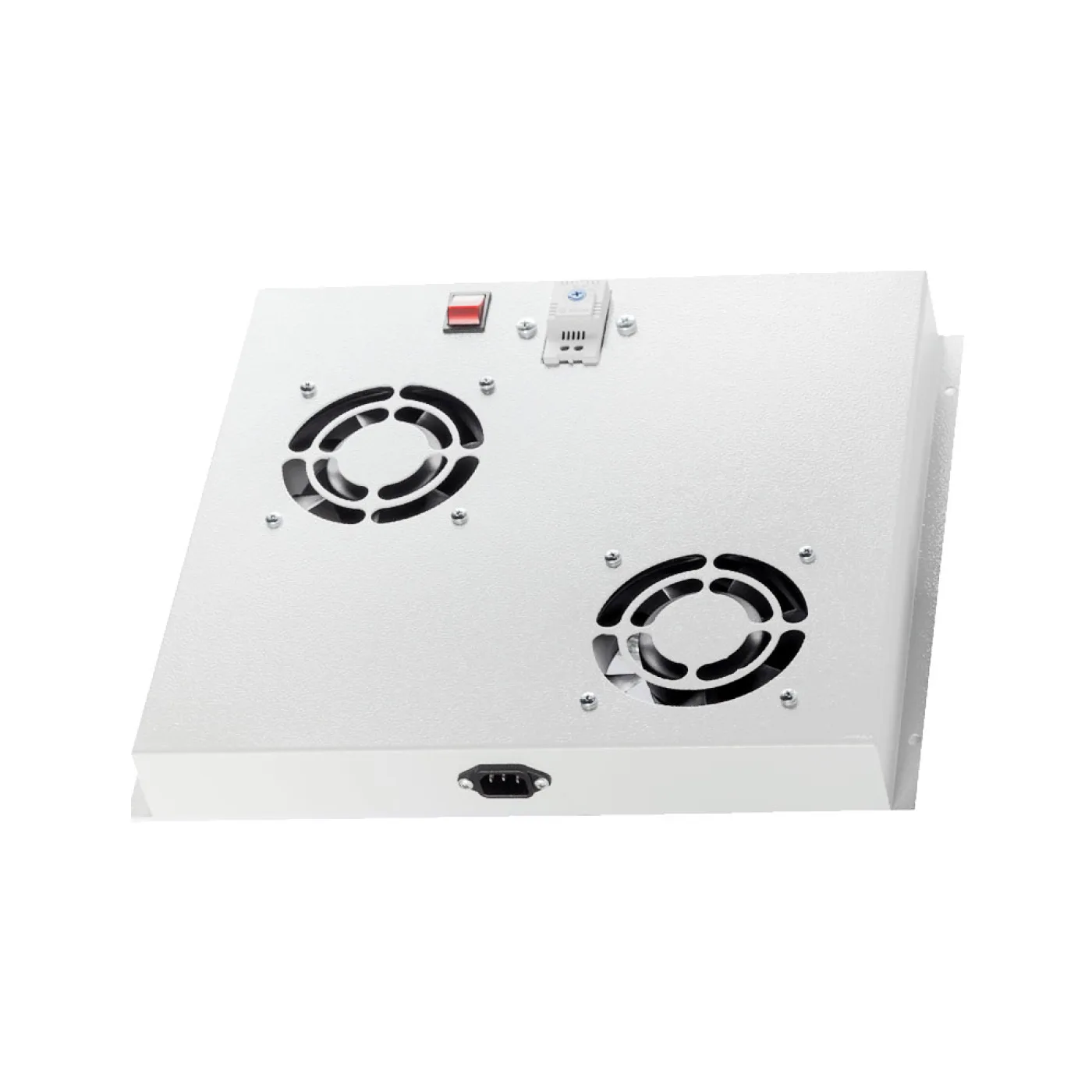
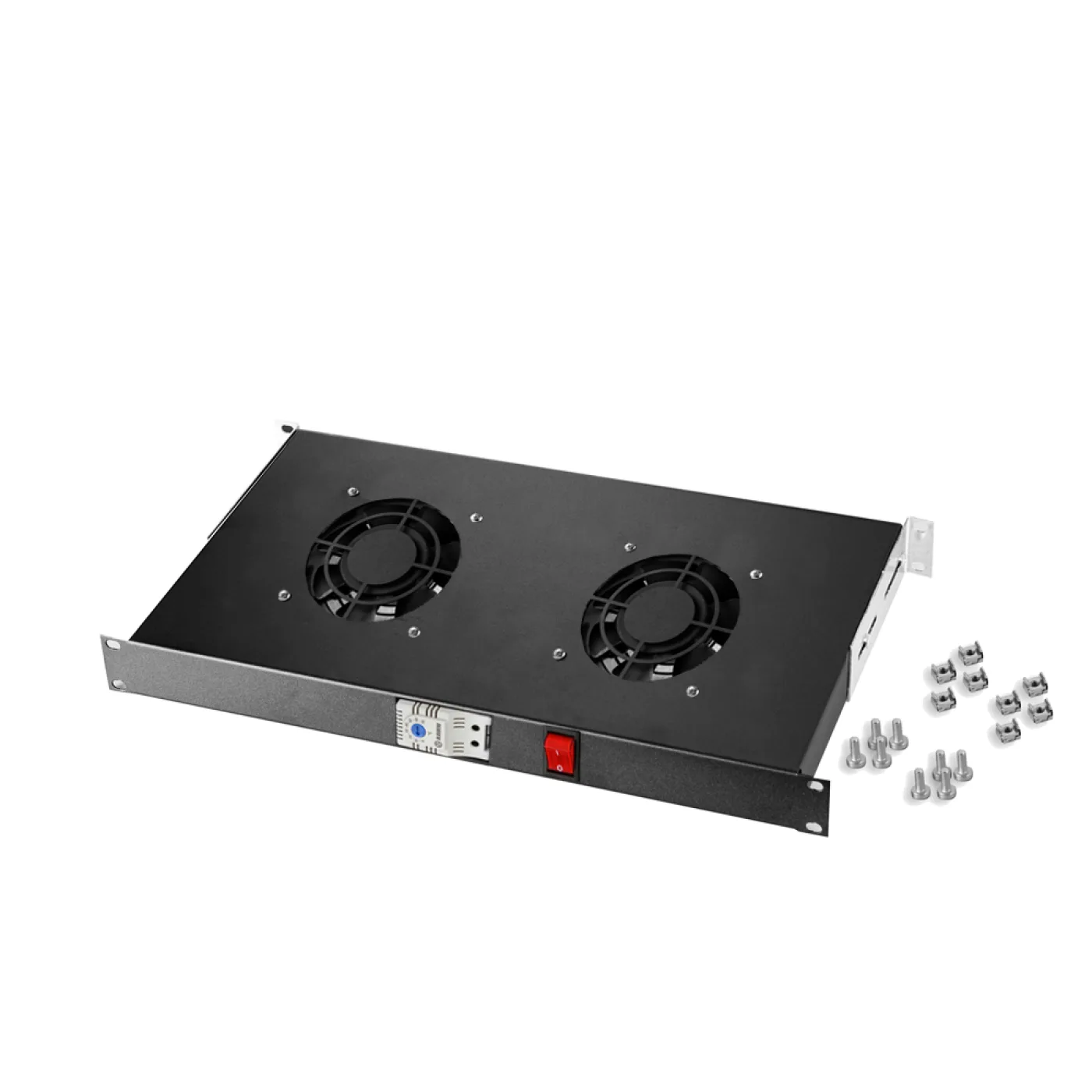
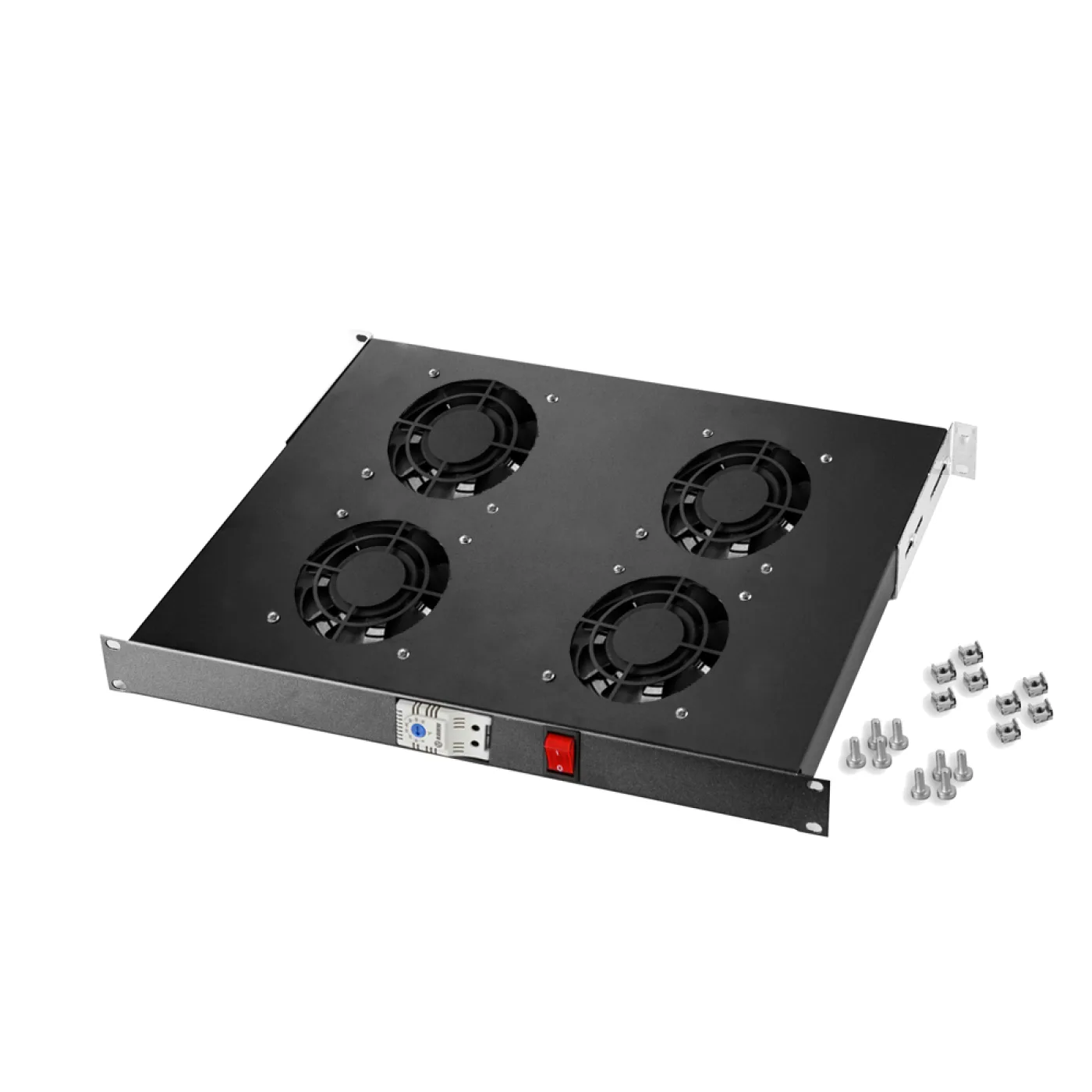
The cheapest, simplest and most common answer. A filtered inlet, a filtered outlet and a thermostat-controlled fan module: it draws air from outside and pushes the hot air out.
In its favour: low capital cost, low energy use, simple installation. The fan modules in our catalogue run on an analogue thermostat with a 0–35 °C range — the fan does not spin constantly, it starts when the threshold is crossed. Airflow is 2.3–3 m³/min per fan.
Against it:
- It lowers the IP rating. A filtered opening ends dust-tightness; an IP65 body becomes IP54 (detail in our IP article).
- Filters need maintenance. A blocked filter leaves the fan apparently running while the airflow has stopped. This is the commonest way cooling is lost quietly.
- It cannot go below ambient. See the table above.
Option 2 — Heat exchanger (air-to-air)
Two separate air circuits: the inside air circulates inside, the outside air circulates outside, and the two exchange heat across a surface without ever mixing. There is no refrigerant.
In its favour: the cabinet stays sealed and keeps its IP rating. It does in a dusty environment what a fan cannot.
Against it: it is bound by the same thermodynamics — if the outside air is hotter than the internal target, it does nothing. Dearer than a fan, cheaper than an air conditioner.
Heat exchangers are not in the VATPAN catalogue; the option is described here for completeness. Where a dusty environment meets a high ambient, the answer from us is an air conditioner.
Option 3 — Air conditioning
The only method that can go below ambient. If it is 45 °C outside and the cabinet has to stay at 35 °C, there is no alternative.
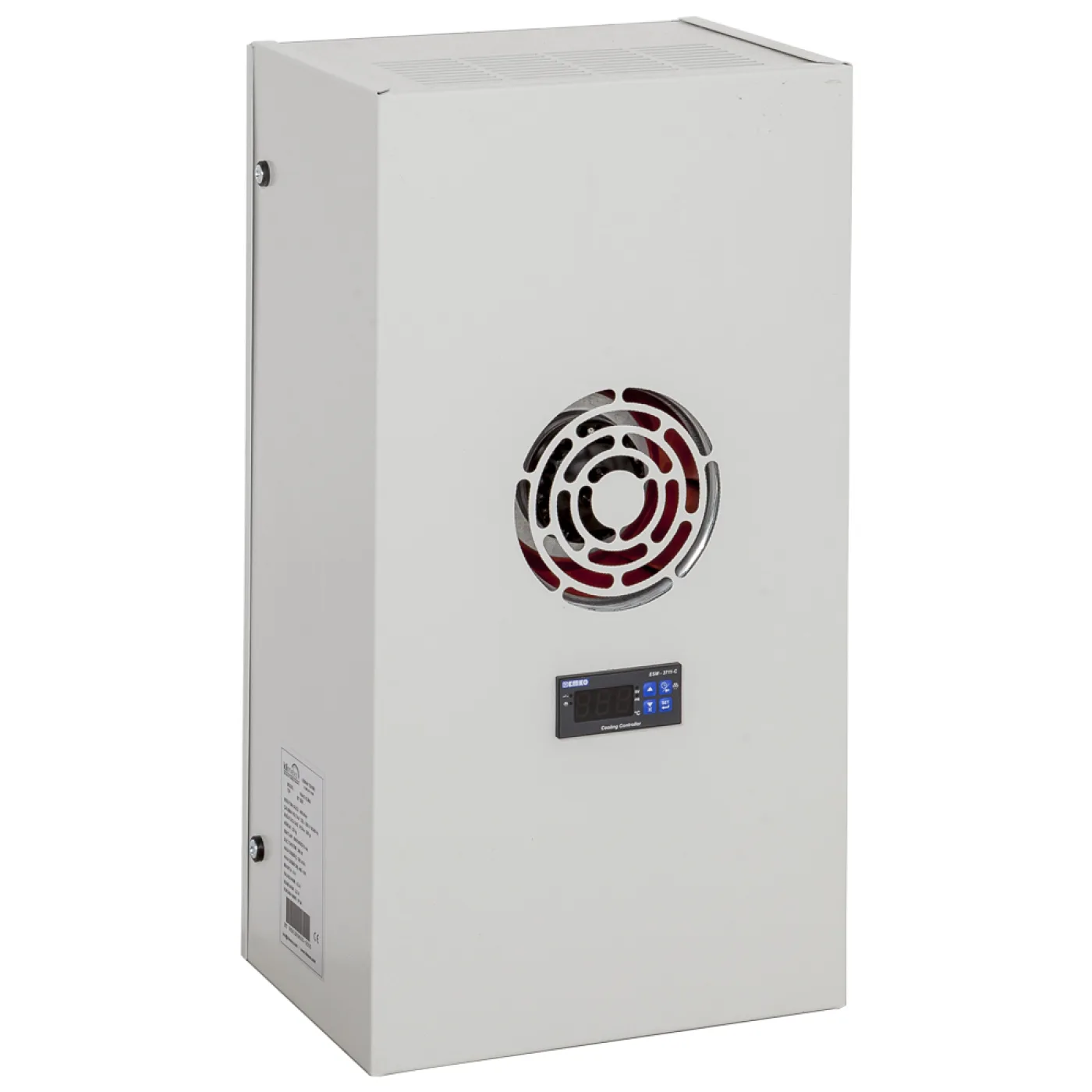
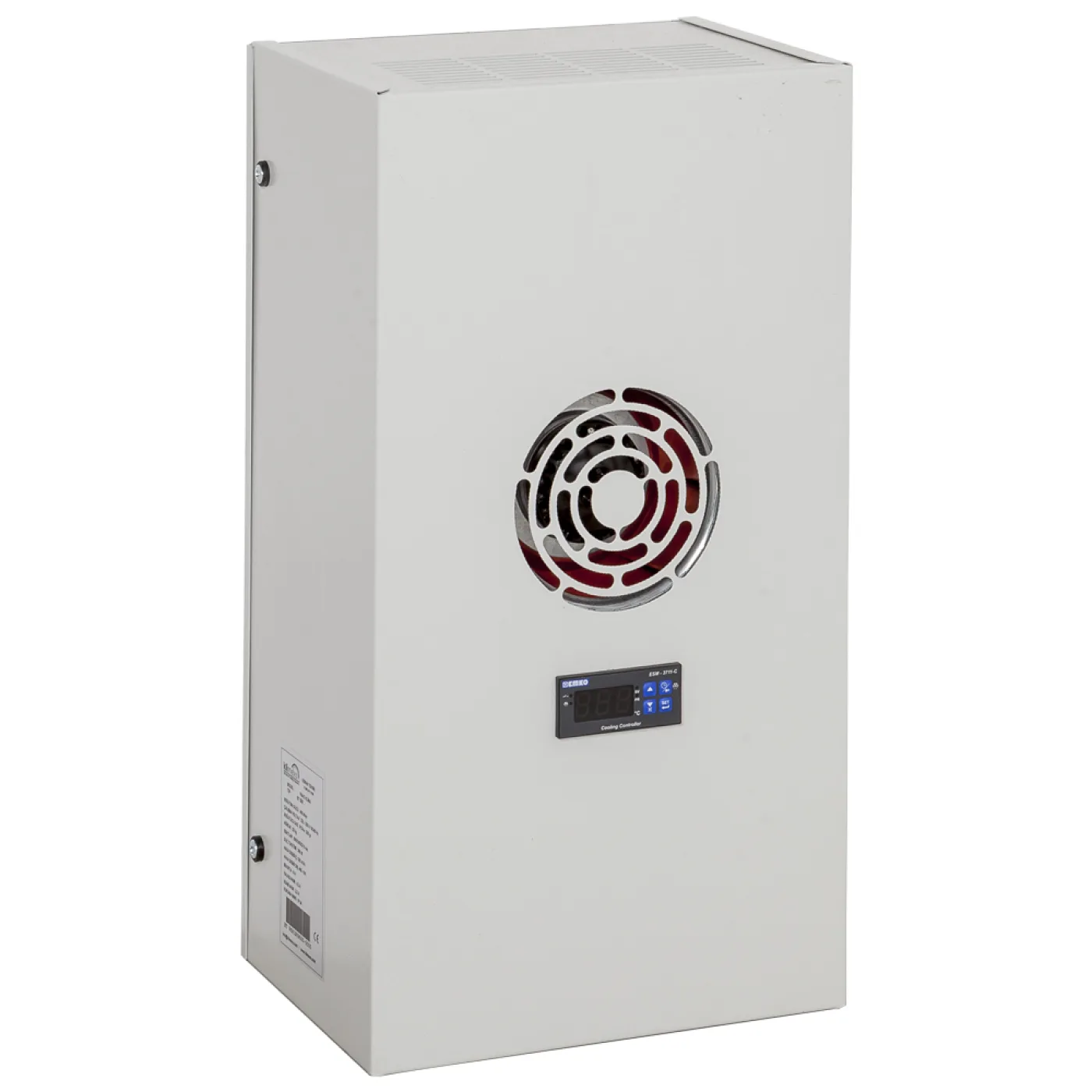
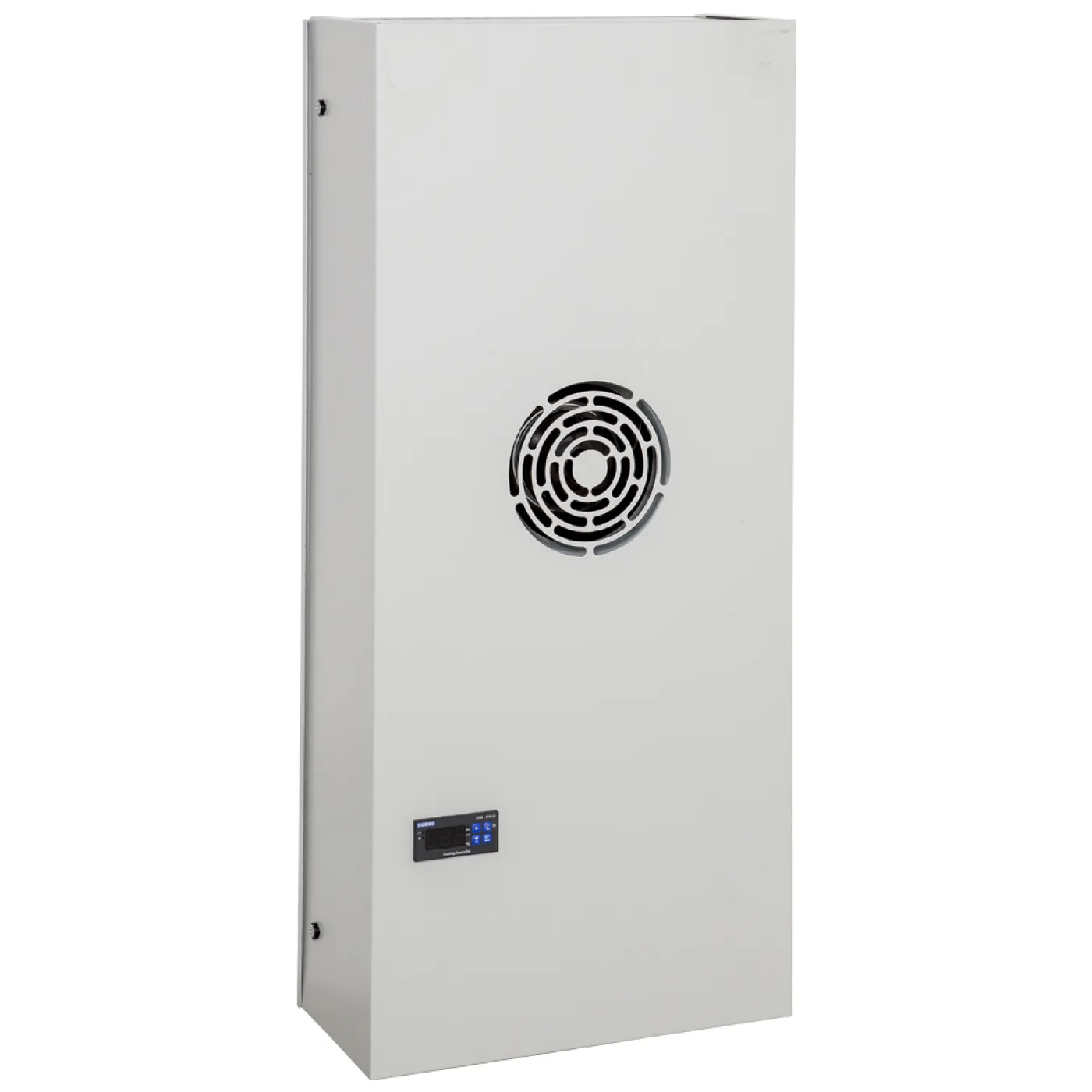
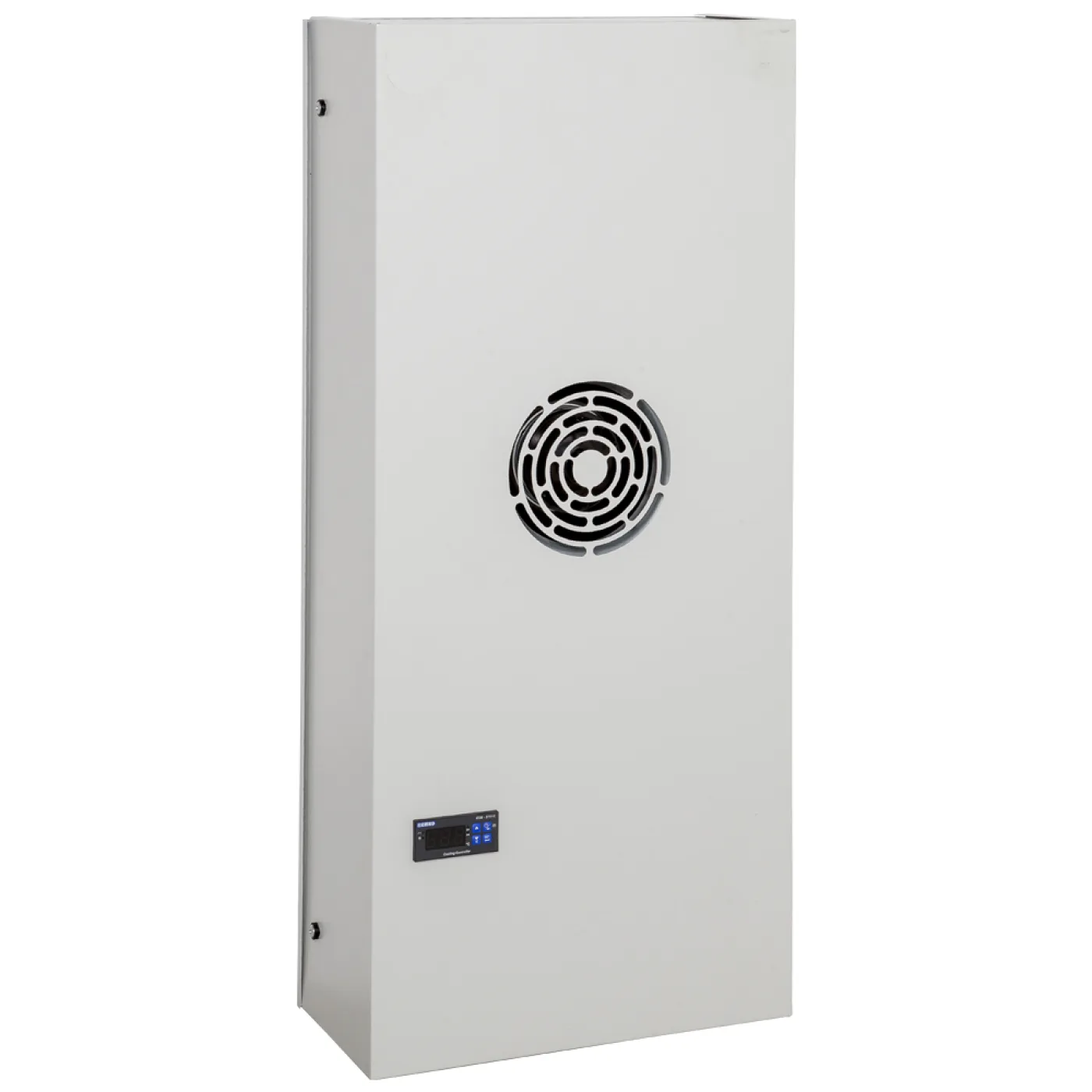
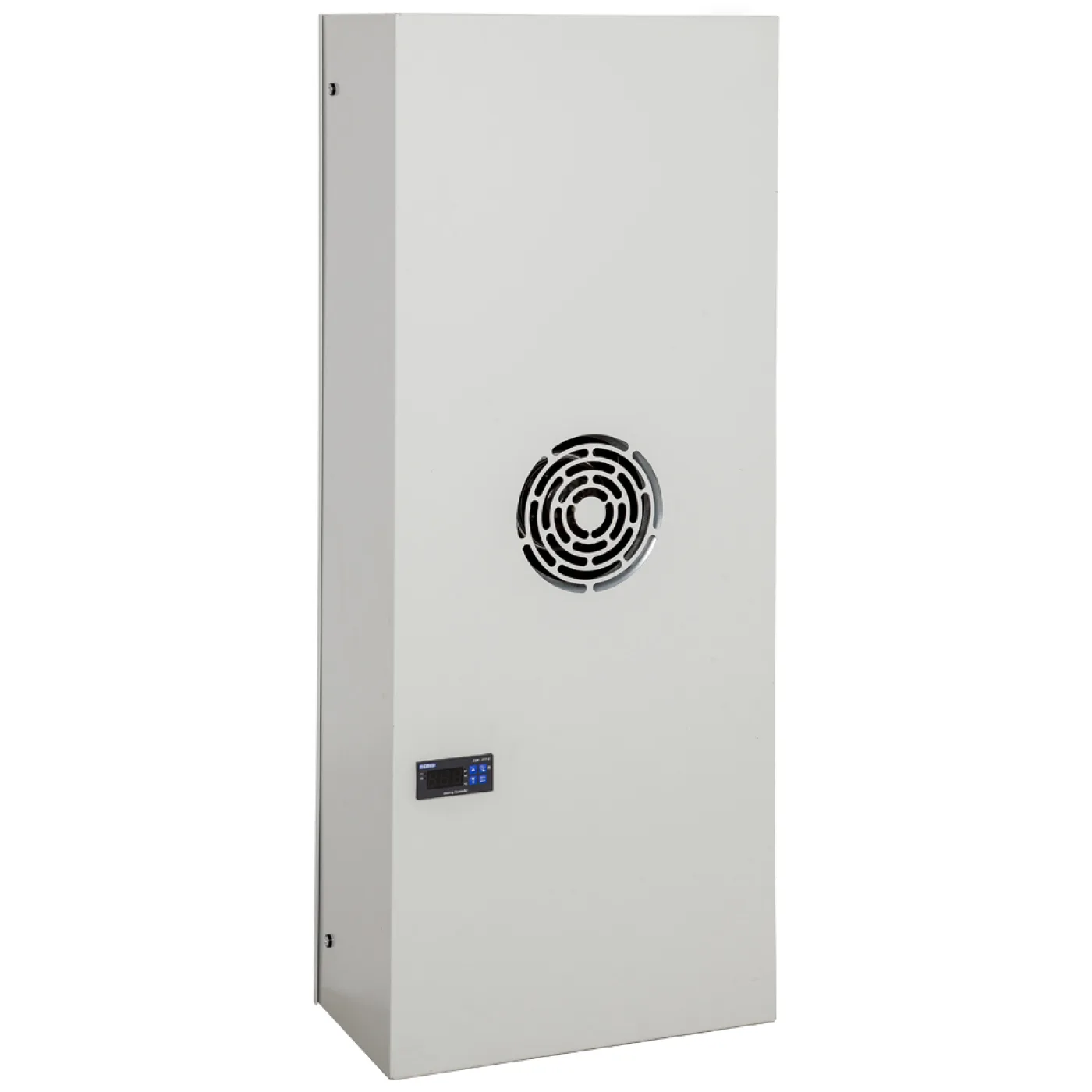
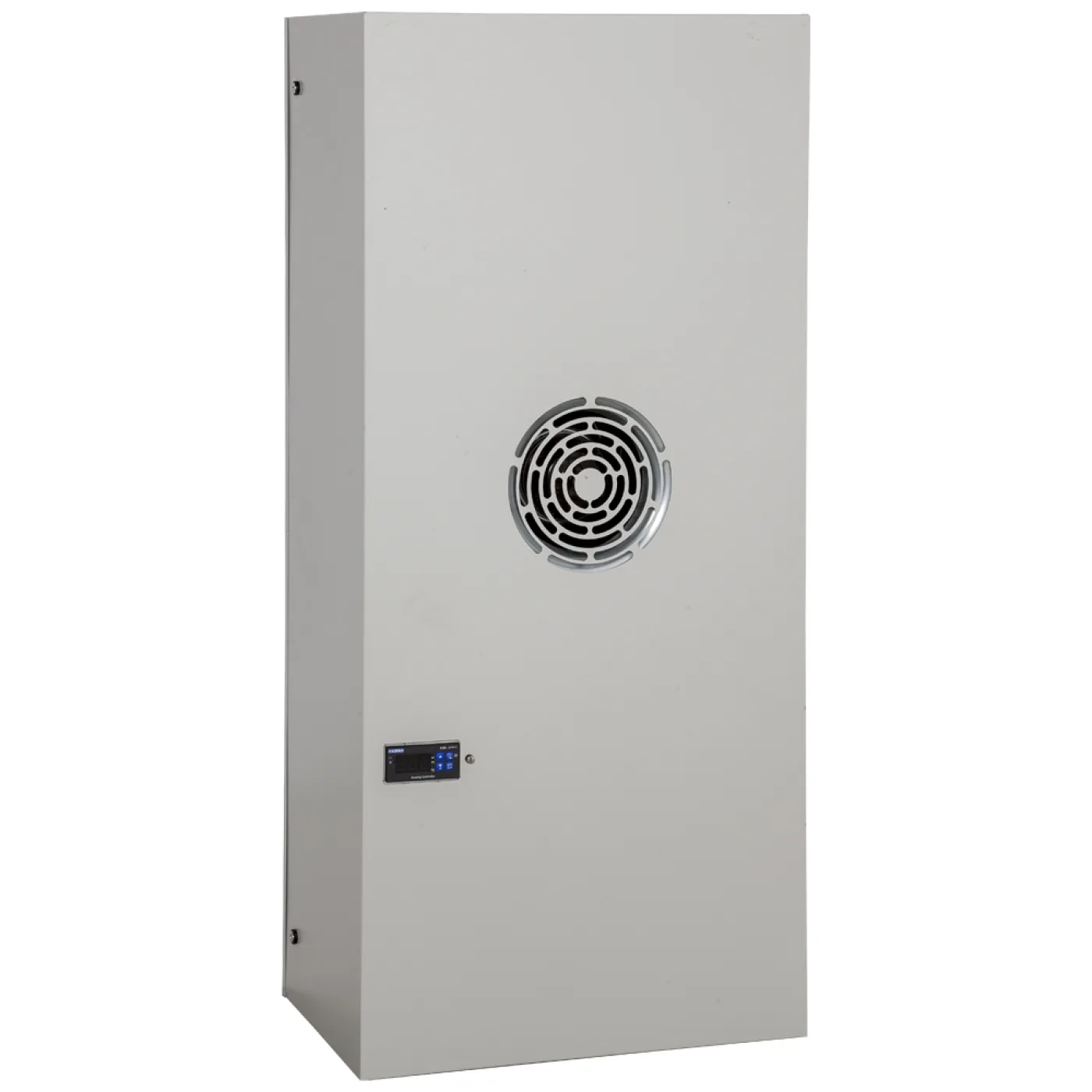
Our cabinet air conditioners are side-mounted and run in a series from BT350 to BT4000. Choosing the right model is a capacity calculation: the total internal dissipation, the solar load and the required ΔT are assessed together — read the capacity from the product's own datasheet rather than guessing from the number in the model name.
Three things must not be skipped when using one:
- Condensate. An air conditioner condenses moisture, and that water needs somewhere to go. One installed without a drain route collects water in the base of the cabinet.
- The cabinet must be sealed. Fitting a fan to an air-conditioned cabinet means paying to cool the outside air. The two are not used together.
- Power and maintenance. It is a compressor-driven device: it needs electricity and periodic service.
The forgotten fourth problem: condensation
What destroys equipment in outdoor cabinets is more often not heat but water — and that water usually does not come in from outside. It forms inside.
The mechanism: during the day the cabinet warms and the air inside takes up moisture. At night the air cools quickly, metal surfaces fall below the dew point, and moisture condenses on the boards. It repeats every day. The result is corrosion and, in time, failures nobody can explain.
The answer is a small heater with a thermostat. The aim is not to heat the cabinet but to hold internal surface temperatures a few degrees above the dew point. In cold and humid climates, anywhere with a large day-to-night swing, and in battery cabinets, this is not a luxury.
Five common mistakes
- Not designing the airflow. Inlet at the bottom, outlet at the top. With both on the same face the air short-circuits and the cabinet does not cool.
- Leaving empty U open. Without blanking panels, hot air circulates from the rear to the front and equipment breathes in its own exhaust.
- Never changing the filter. At least once a year, more often in dust.
- Setting the thermostat band too tight. With the on and off thresholds close together the fan or compressor cycles constantly — noise, and early failure.
- Ignoring the solar load. Adding up the watts of the equipment alone is an incomplete calculation for a cabinet in open ground. A double wall can cut most of that load already — see our single-versus-double-wall article.
The decision in short
- Add up the total internal dissipation in watts.
- Find the ΔT between the target internal temperature and the peak ambient.
- ΔT clearly positive and the environment clean: a fan.
- ΔT positive but the environment dusty: a sealed body with a heat exchanger, or an air conditioner.
- ΔT zero or negative: an air conditioner — there is no other option.
- In every case, cut the solar load with a double wall and consider a heater against condensation.
The products below bring our outdoor fan modules and BT-series cabinet air conditioners together.