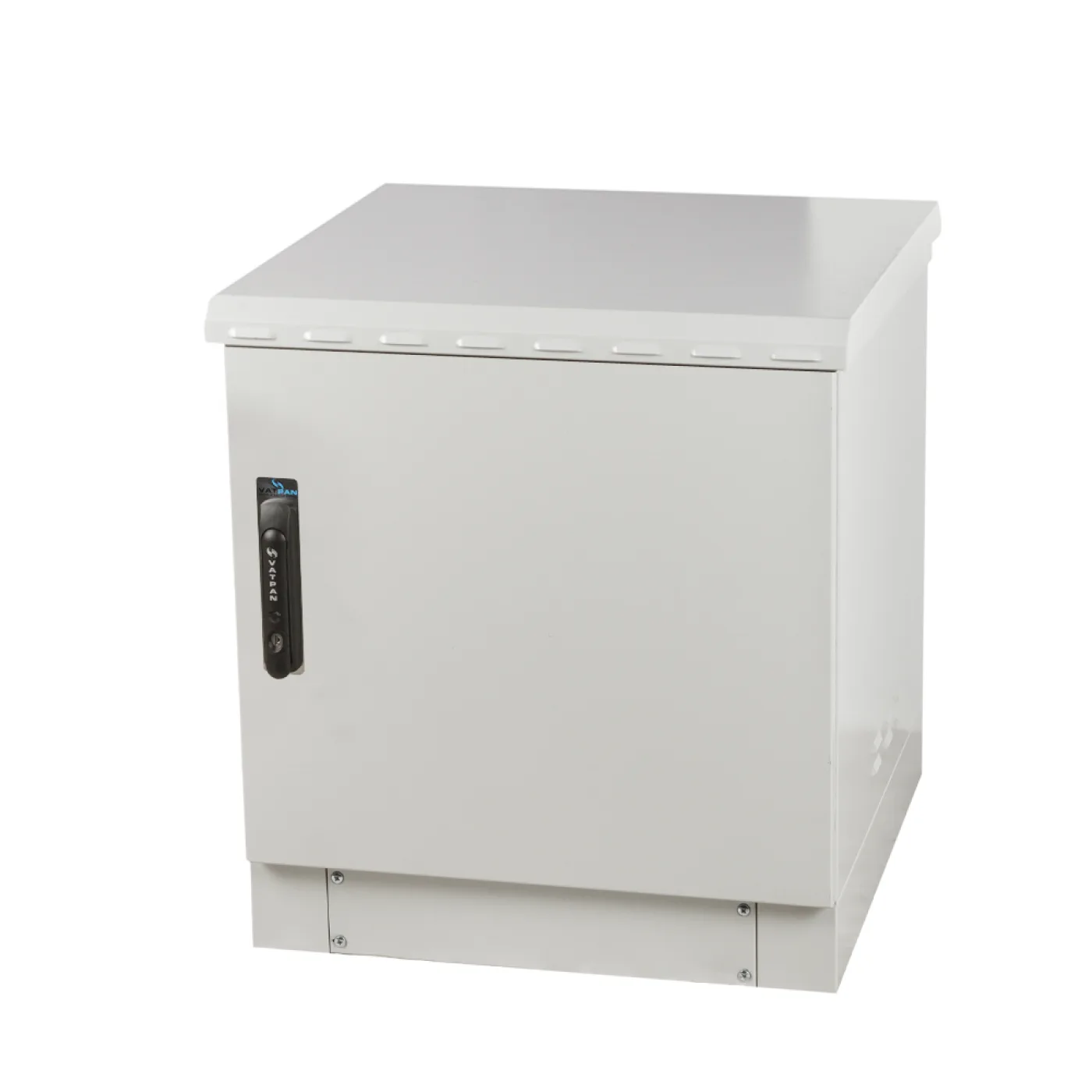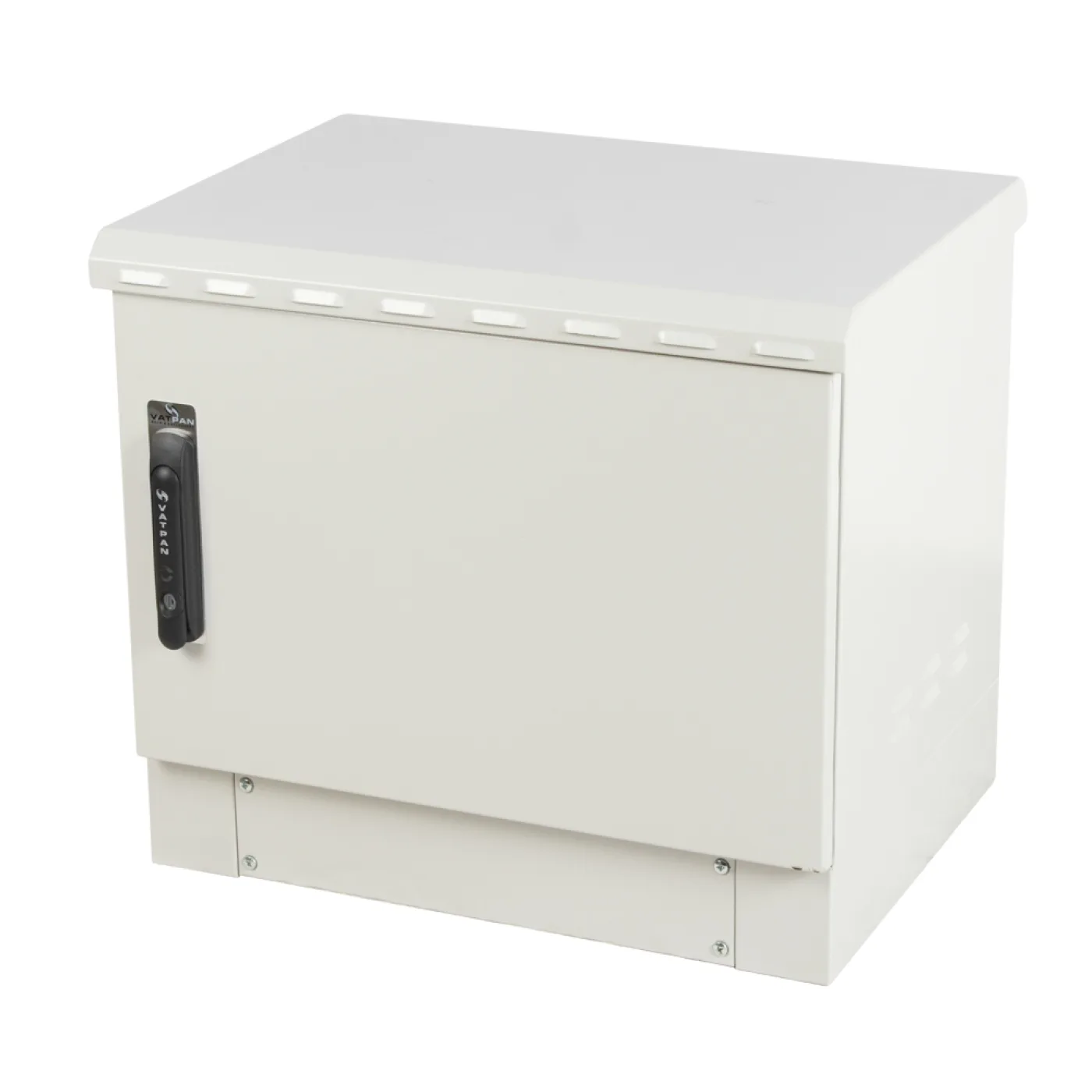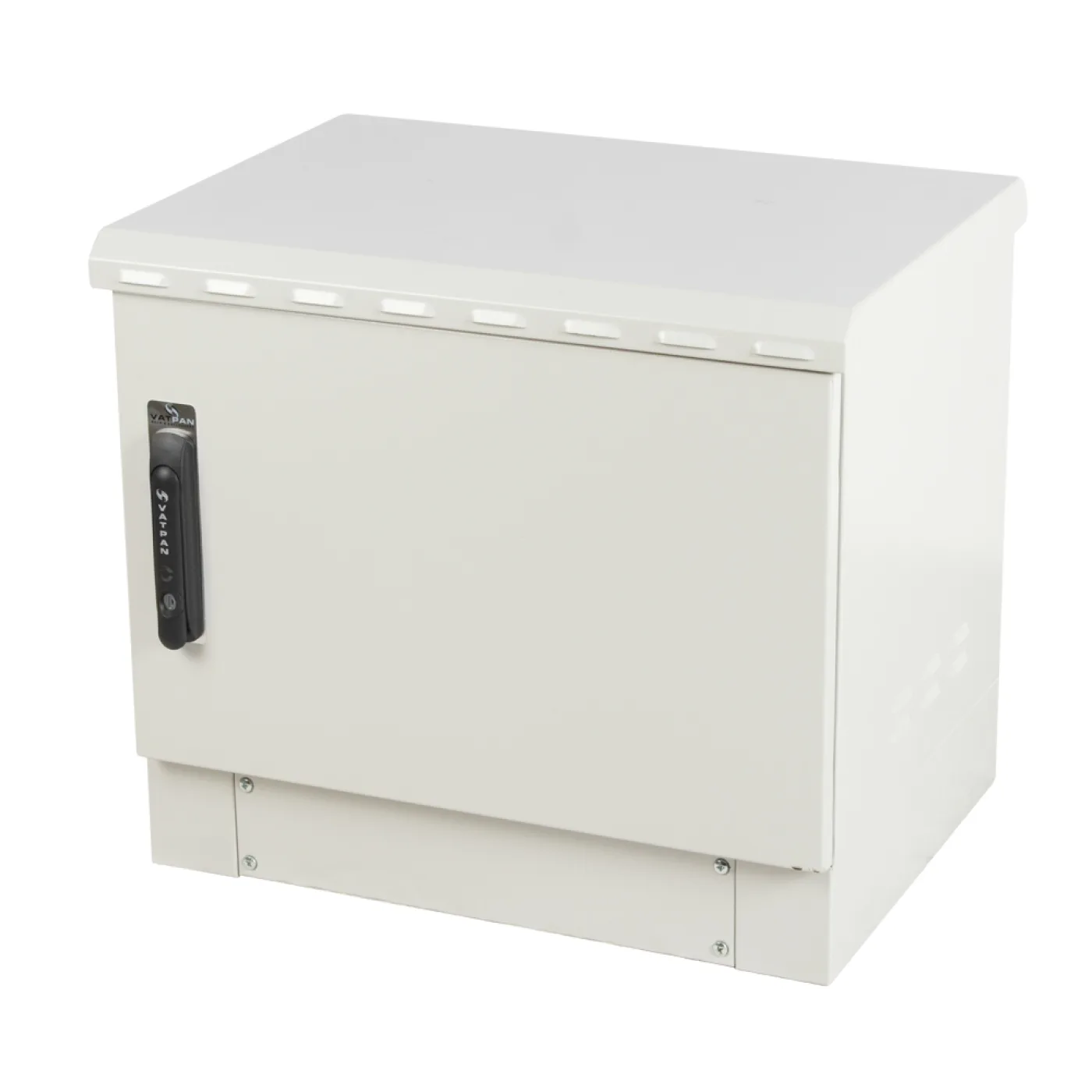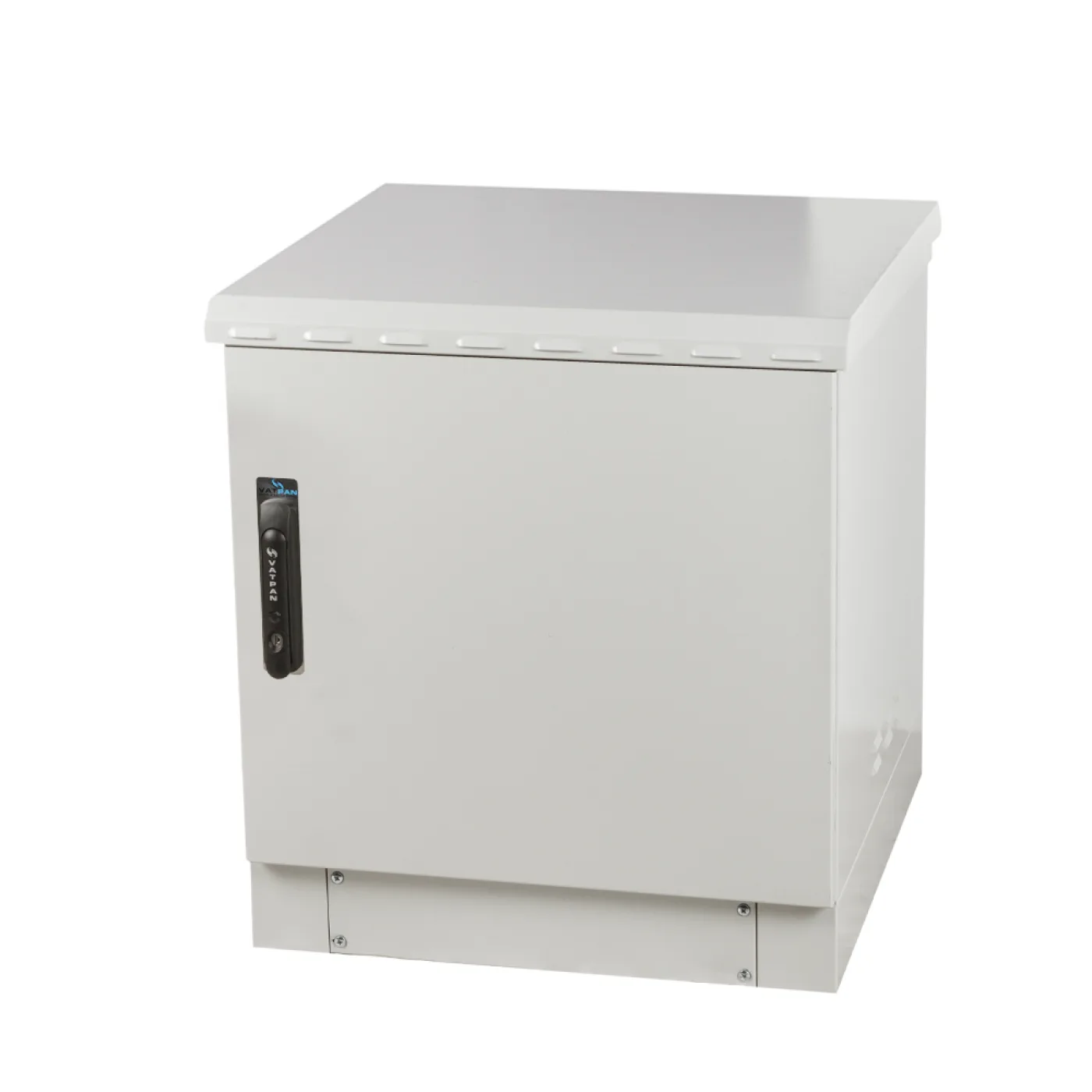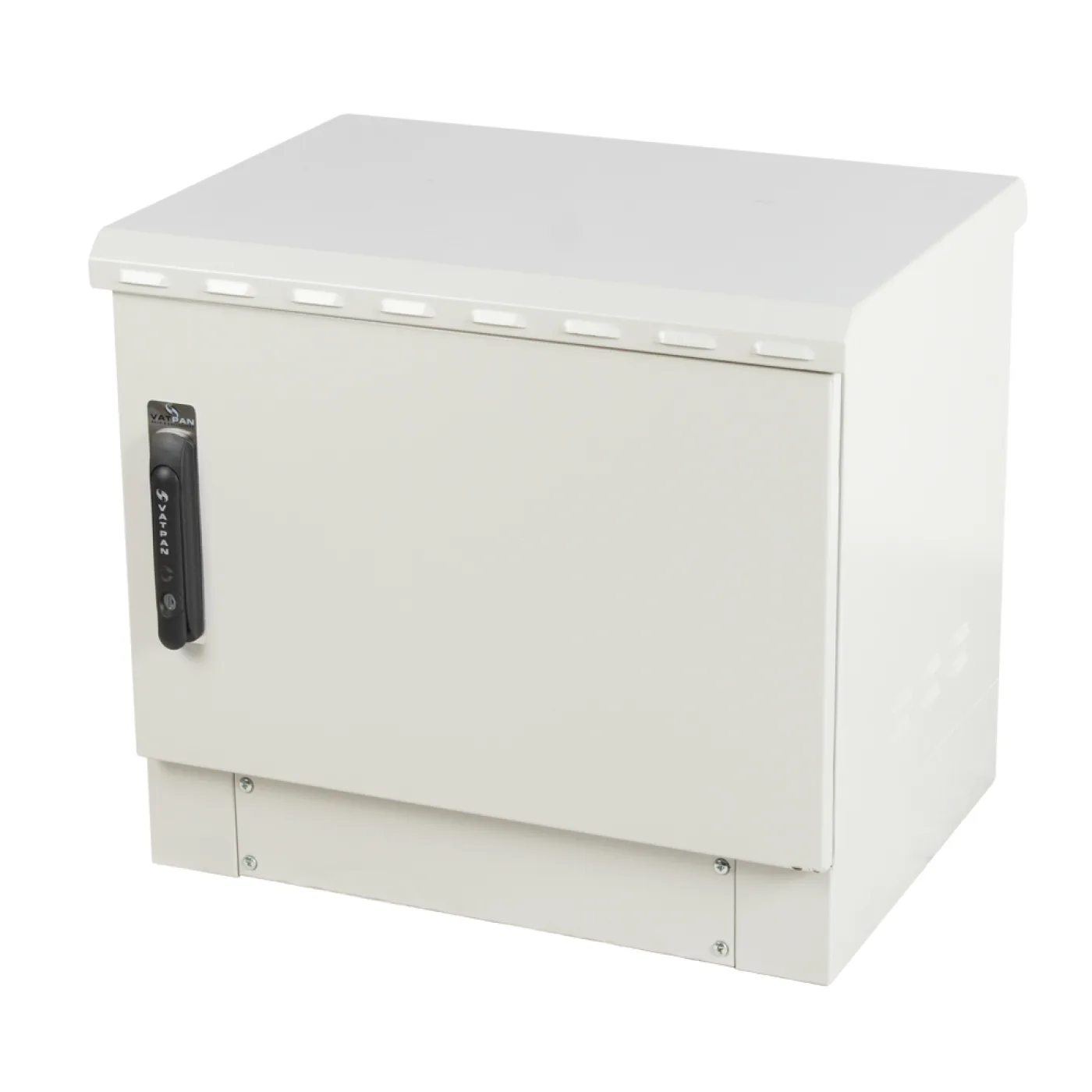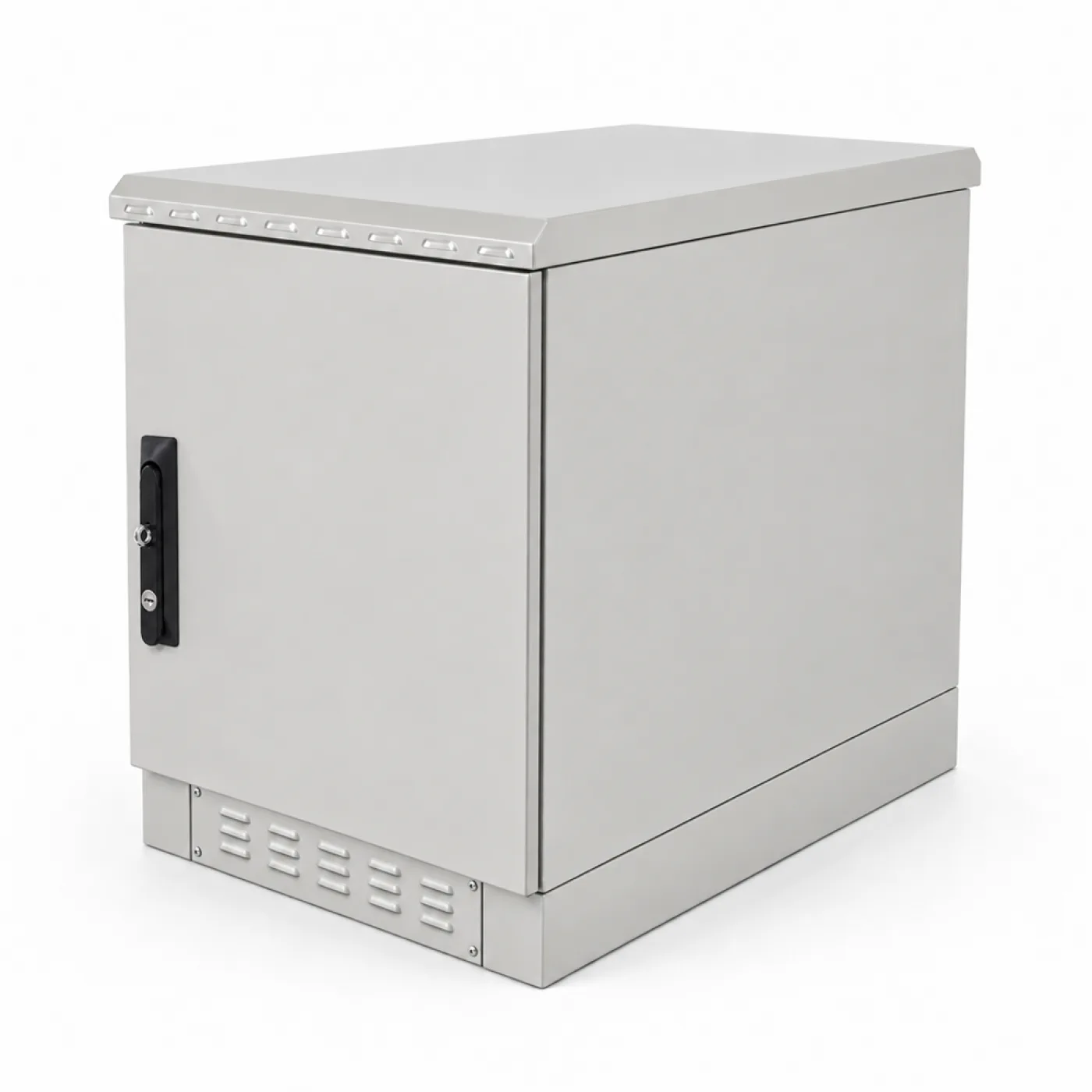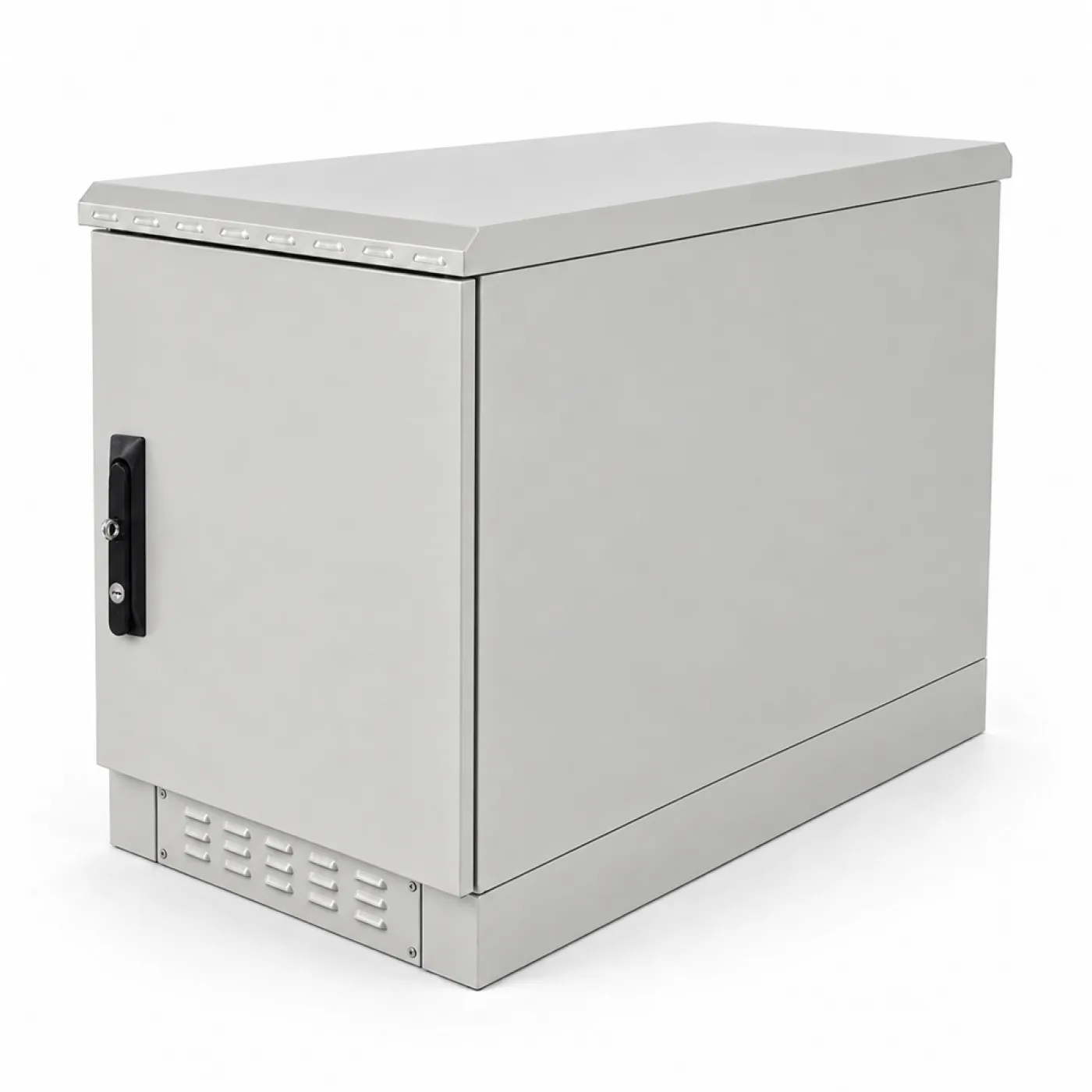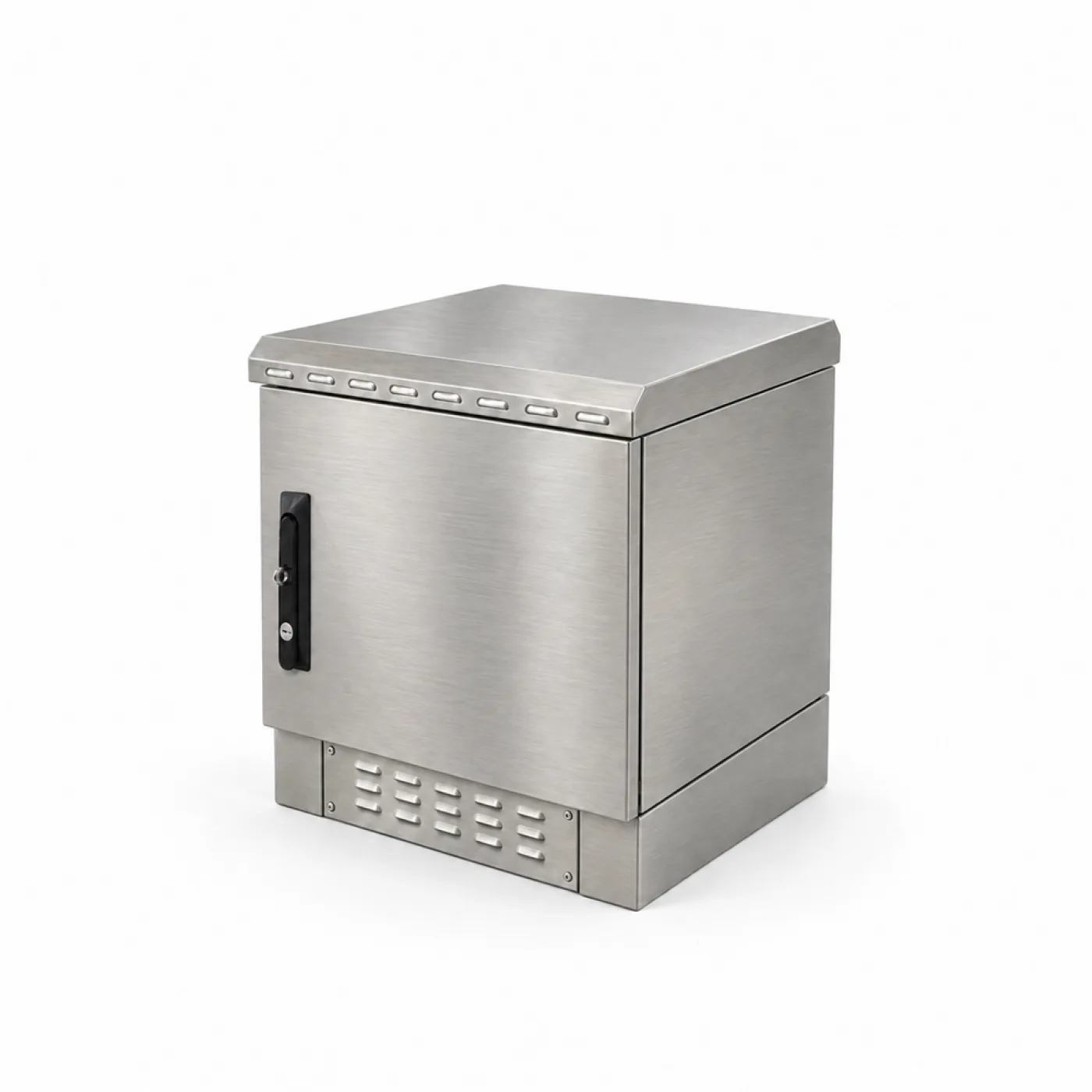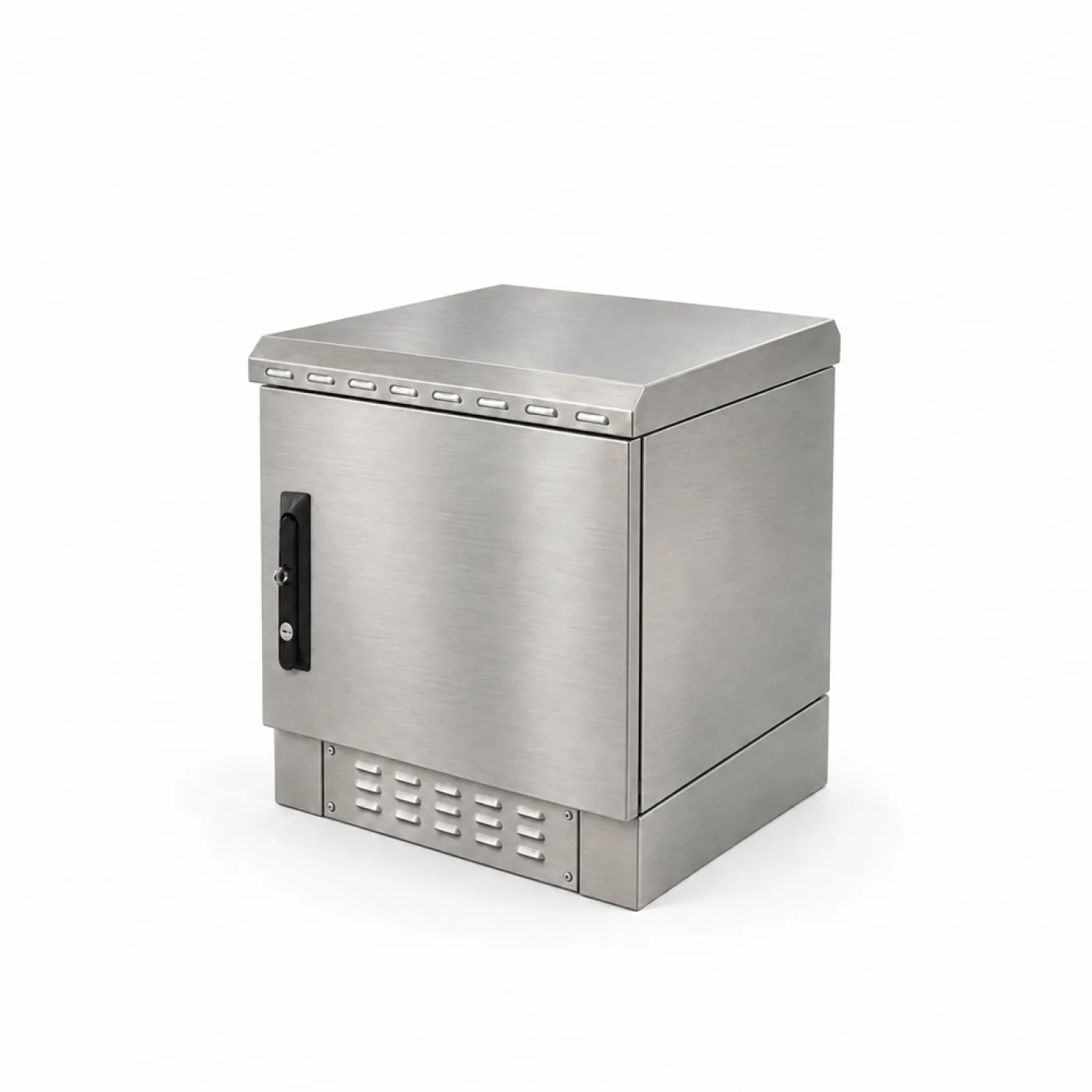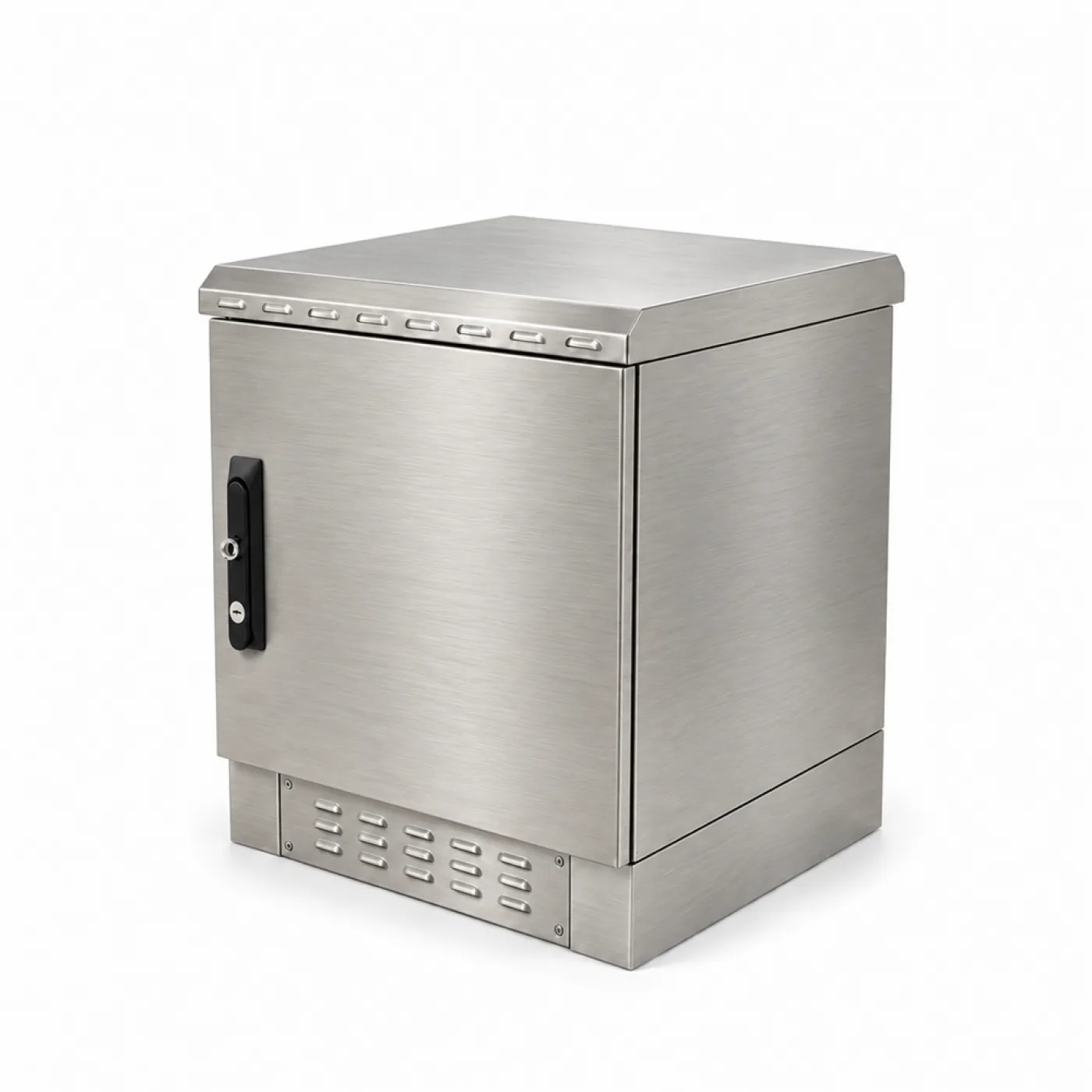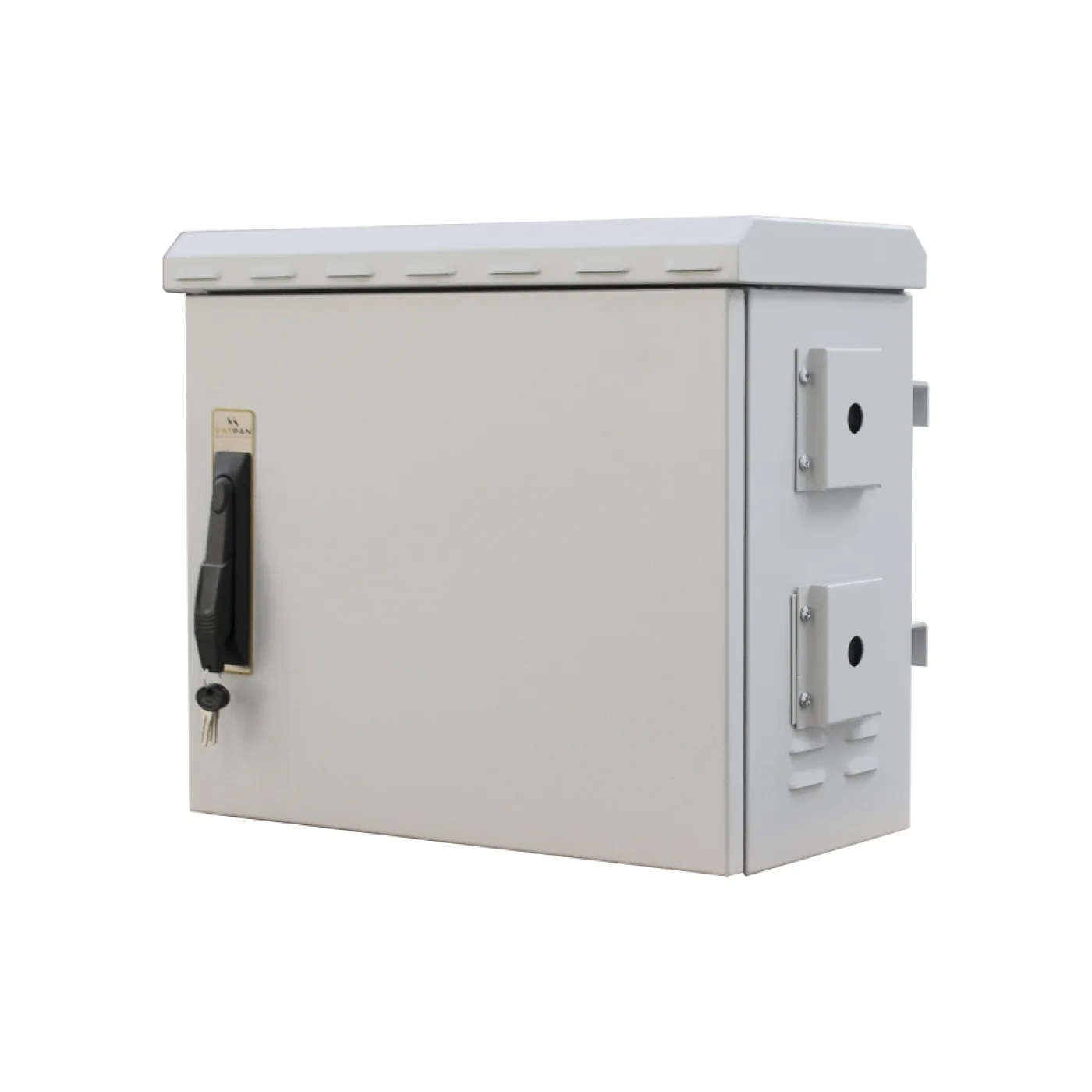
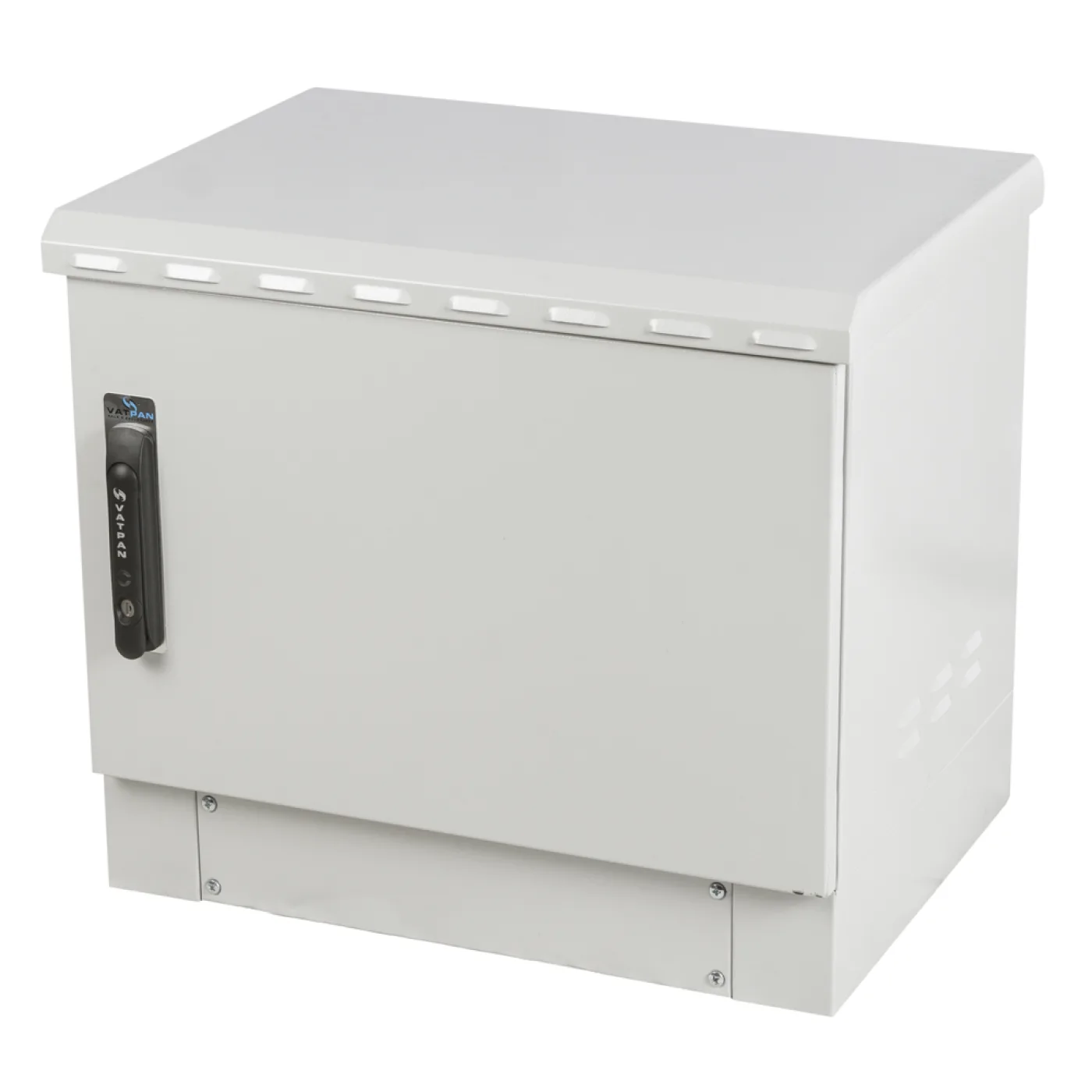
What determines the temperature inside an outdoor cabinet is, on most projects, not the electronics people assume it is. The heat a steel skin collects in direct summer sun can be several times what the switch inside it produces. The choice between a single and a double wall is precisely the choice of how you meet that load.
Three separate heat loads
An outdoor cabinet is heated from three sources at once:
- Internal dissipation: the heat the equipment inside produces. Known in watts, and calculable.
- Ambient temperature: if it is 40 °C outside, the cabinet reaches 40 °C without doing anything at all.
- Solar load: radiation falling on the surface and heating the steel. It depends on orientation, season, colour and shade — and it is usually the largest item.
For the first two, the answer is cooling. For the third, the answer is to stop the heat entering the cabinet in the first place. That is what a double wall does.
How a double wall works
A double-walled cabinet carries a second steel skin outside the body, with an air gap between the two. It works like this:
- The sun strikes the outer skin and heats it.
- That skin heats the air in the gap between the two.
- The warmed air rises and leaves at the top of the gap, drawing cooler air in at the bottom — a chimney effect.
- Most of the heat is carried away by that flow; the part reaching the inner skin is markedly reduced.
Three properties make this arrangement valuable:
- It uses no power. No fan, no compressor, nothing to fail.
- It does not lower the IP rating. The air gap is outside the inner body; the inner body stays sealed and keeps its rating.
- It needs no maintenance. There is no filter to change and no blade to clean.
A double wall is not a cooling system; it is a sun shield. It does not remove the heat the equipment inside produces. Where internal dissipation is high, a double wall needs a fan, a heat exchanger or an air conditioner alongside it. The two are complements, not alternatives.
When is a single wall enough?
A double wall is not always necessary, and where it is not, it is cost paid for nothing. A single wall is the right choice when:
- The cabinet is in shade. On the north face of a building, under an eave, in a covered car park or beneath a roof, there is no solar load to shield from.
- The climate is mild. Where summer peaks are low, the difference is not felt.
- Internal dissipation is small. A modem, a small switch and a patch panel — a few tens of watts in total — run without trouble in a single-walled body.
- The cabinet is already cooled. If an air conditioner is going in, the solar load simply adds to its capacity; on some projects a larger unit is cheaper than a second skin. It is an arithmetic question.
When does a double wall become necessary?
- Direct sun plus a hot climate. Roadside, open ground, rooftop.
- Temperature-sensitive equipment inside. Battery banks are the clearest case: heat shortens battery life directly.
- Air conditioning is not available. Where there is no power budget, or maintenance access is difficult, the passive answer is the only one.
- The cabinet has to stay sealed. If dust rules out fans (see our IP article), cutting the solar load passively becomes essential.
Colour and roof count too
A double wall does not work alone; two details noticeably increase its effect:
- A light colour. Light tones such as RAL 7035 light grey reflect a greater share of incoming radiation than dark surfaces do. A dark outdoor cabinet is not an aesthetic preference but a thermal cost.
- An overhanging roof. A roof panel that projects beyond the body both keeps rain away from the door gap and shades the front face at midday.
Stainless steel is a separate axis
Single versus double wall is a question about heat; galvanised versus stainless is a question about corrosion. They are independent and chosen together. Seventy-five bodies in our outdoor family are 304-grade stainless steel, and those too are produced in single- and double-wall forms — on a coast, a double-walled stainless body is the typical choice because it answers both problems at once.
How to tell them apart in the catalogue
A 2X suffix in the stock code marks the double wall; SS304 marks the stainless body. So HC-7U450-SS304 is the single-walled stainless version and HC-7U4502X-SS304 the double-walled one of the same size. The product list below puts these pairs side by side.
Decision table
| Situation | Choice |
|---|---|
| Shaded, mild climate, low power | Single wall |
| Direct sun, hot climate | Double wall |
| Battery bank inside | Double wall |
| Dusty site, fans ruled out | Double wall plus closed-loop cooling |
| Coastal, salt air | Double wall plus stainless |
| Pole-mounted CCTV / camera | Double wall (pole-mount body) |
| Covered car park, under an eave | Single wall is enough |
What comes next
A double wall cuts the solar load but does not remove the heat the equipment inside produces. That needs an active answer, and the options differ widely in cost and maintenance — the choice between fan, heat exchanger and air conditioner is covered in this guide's thermal management article.