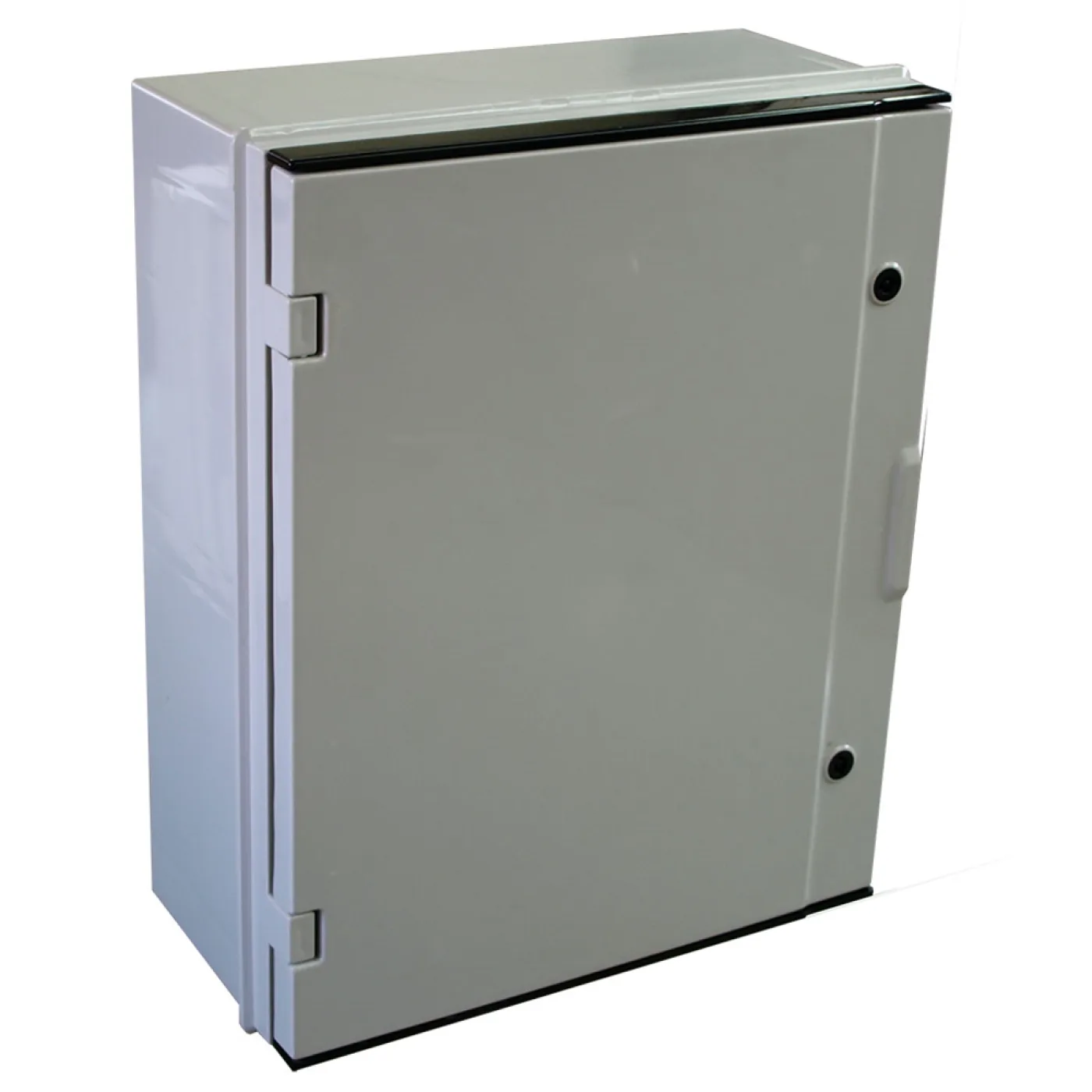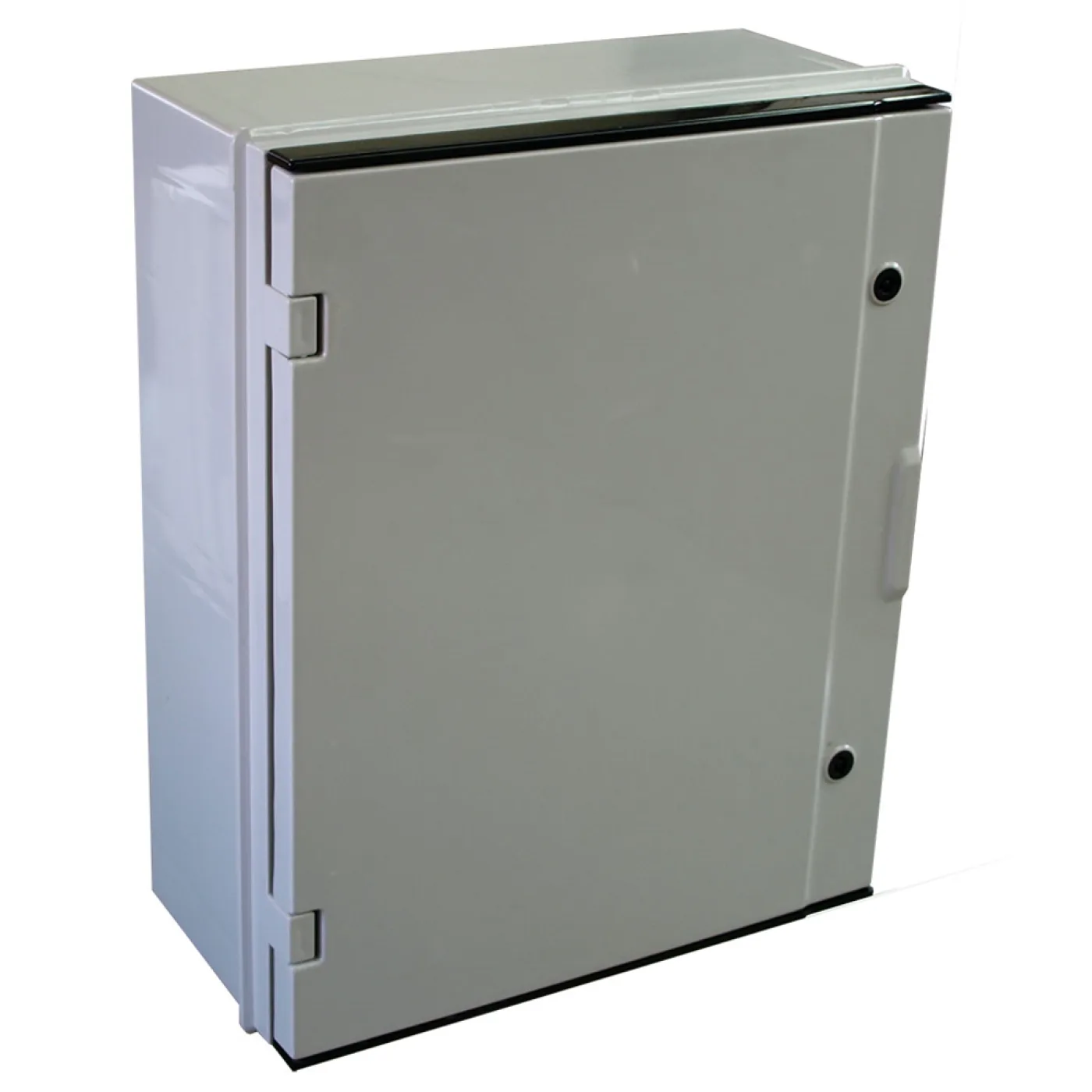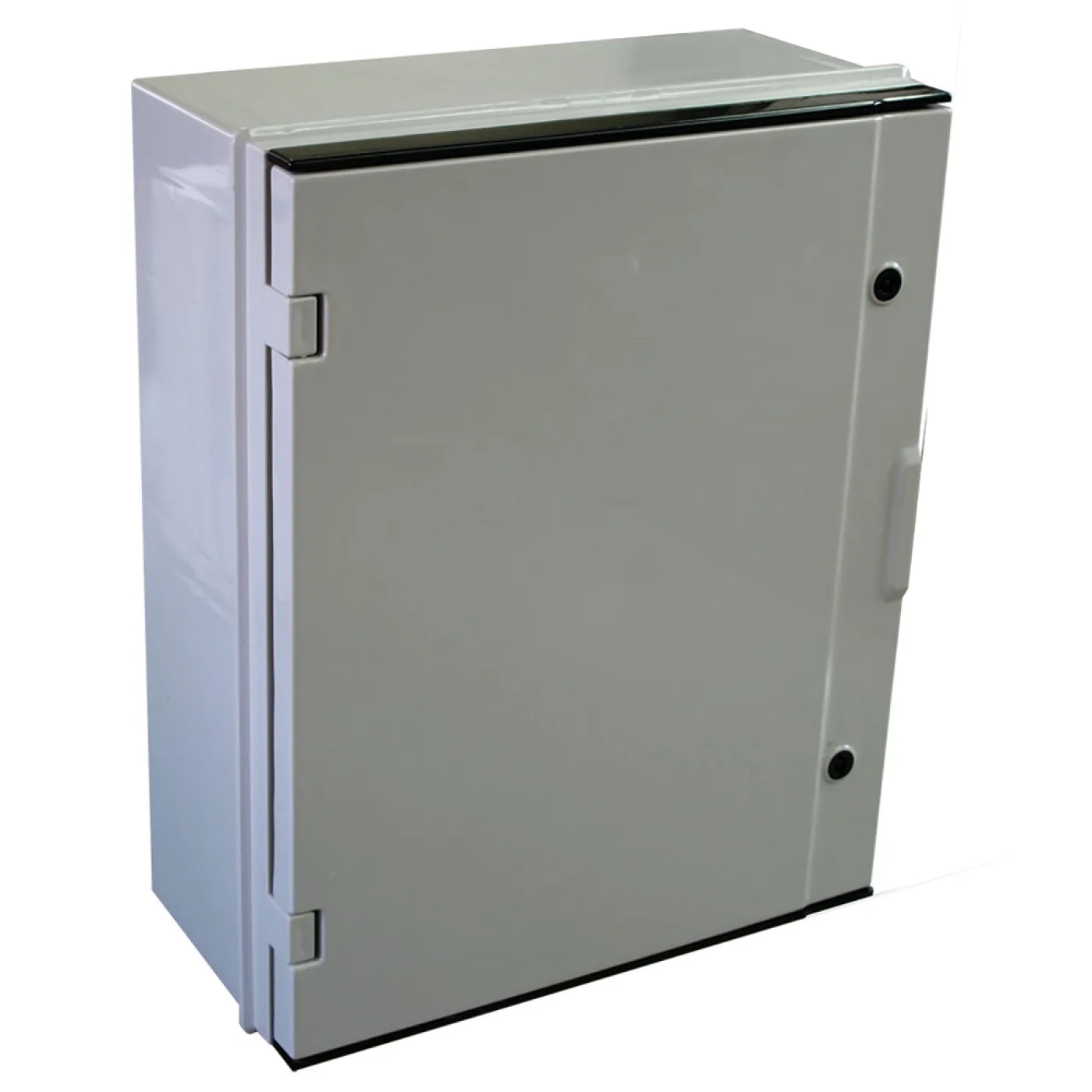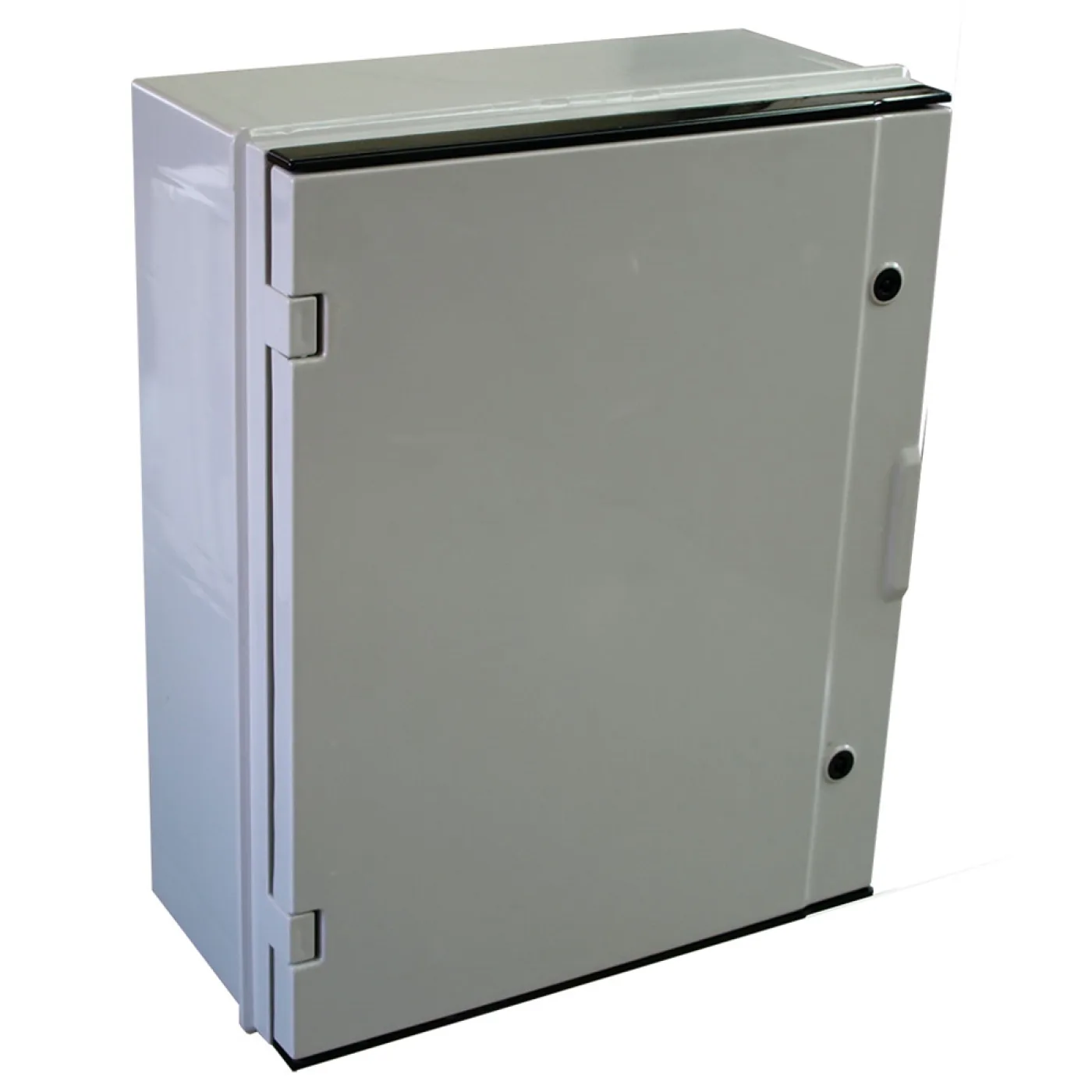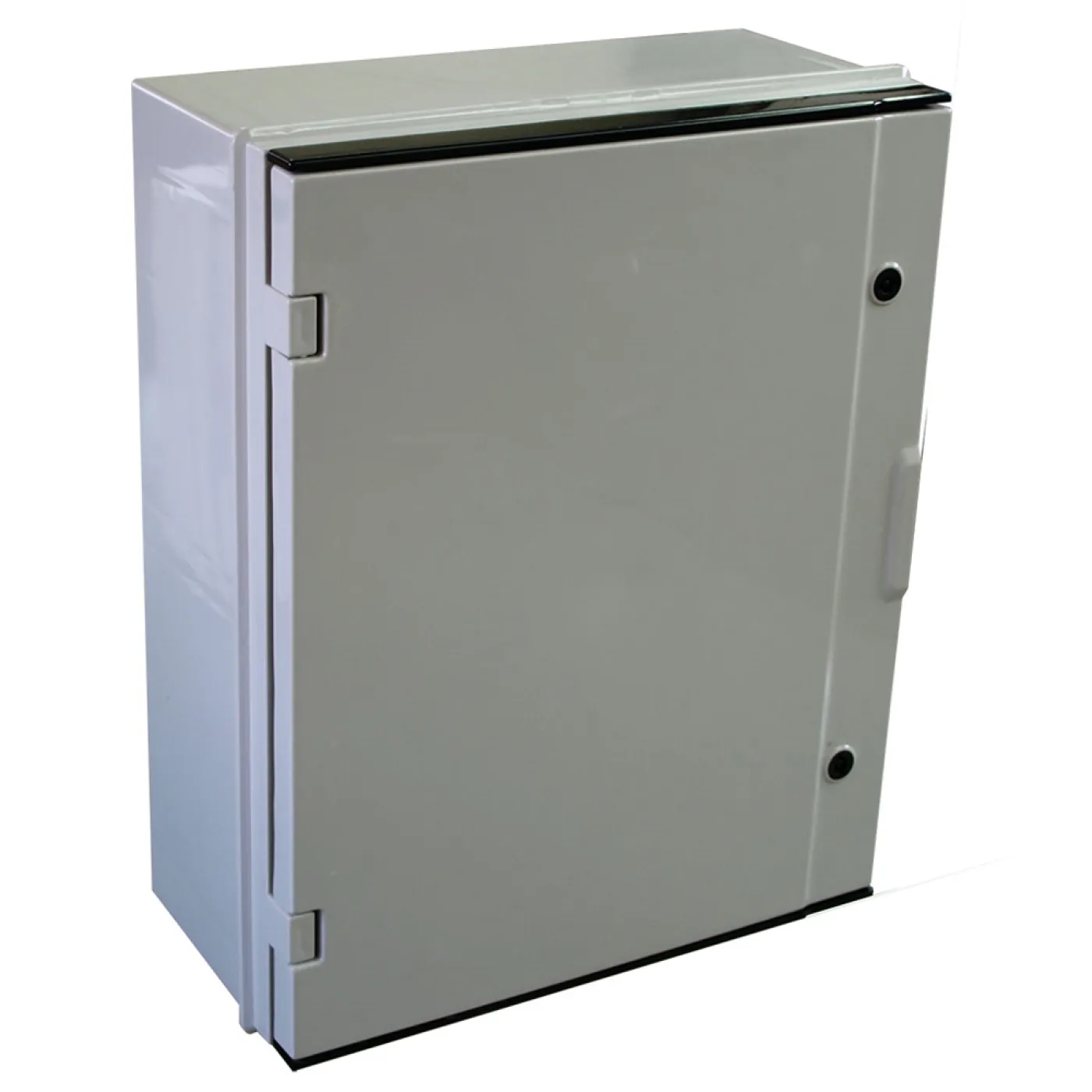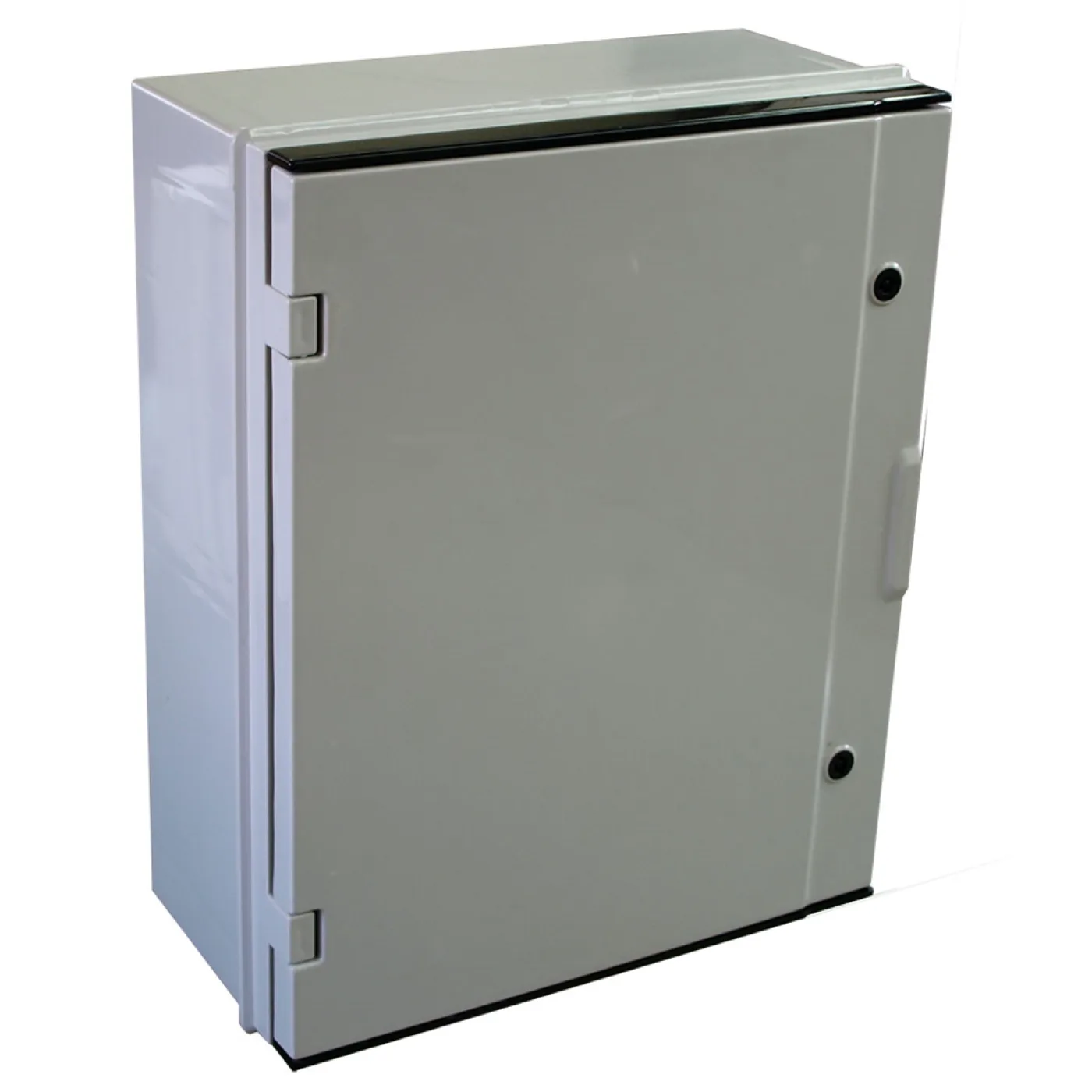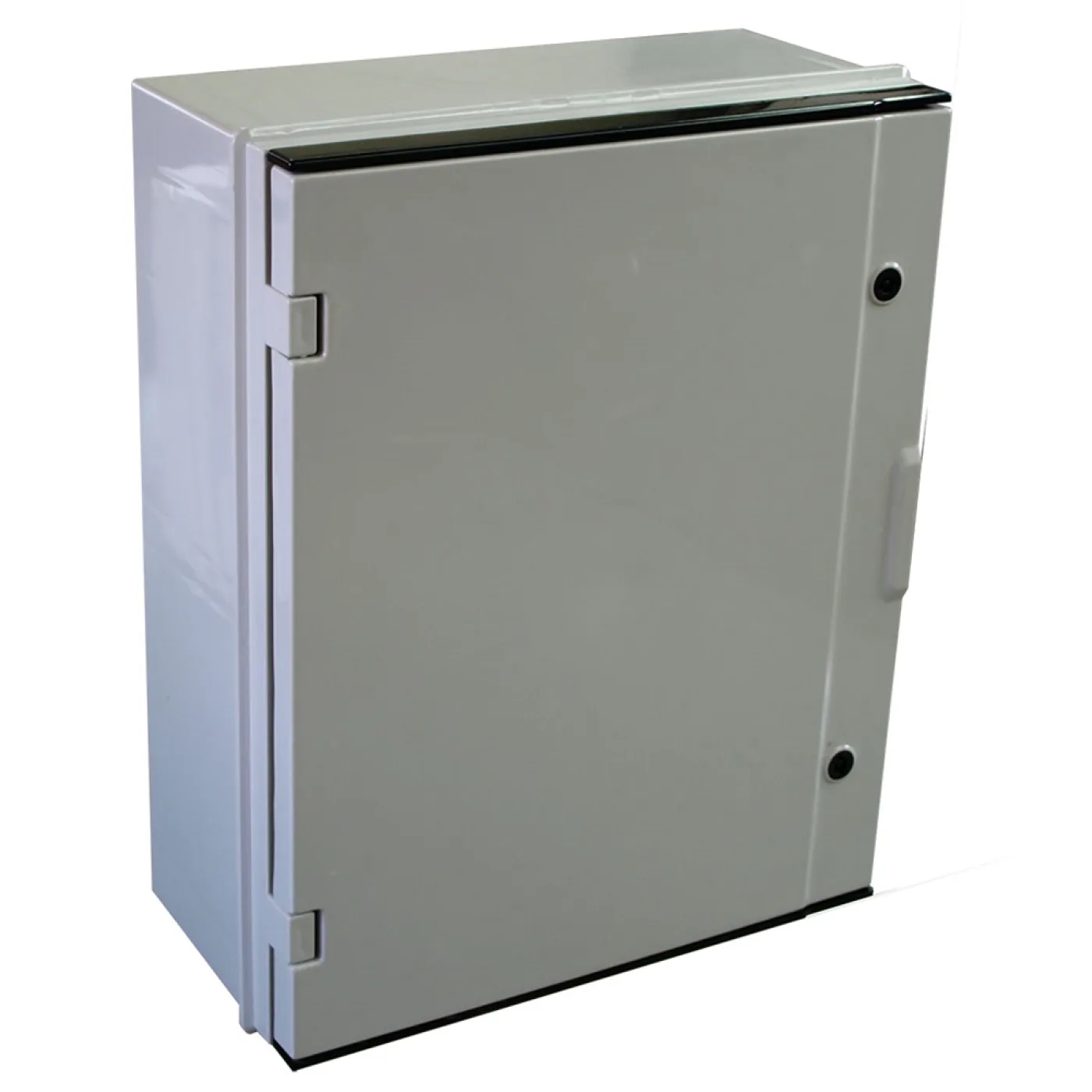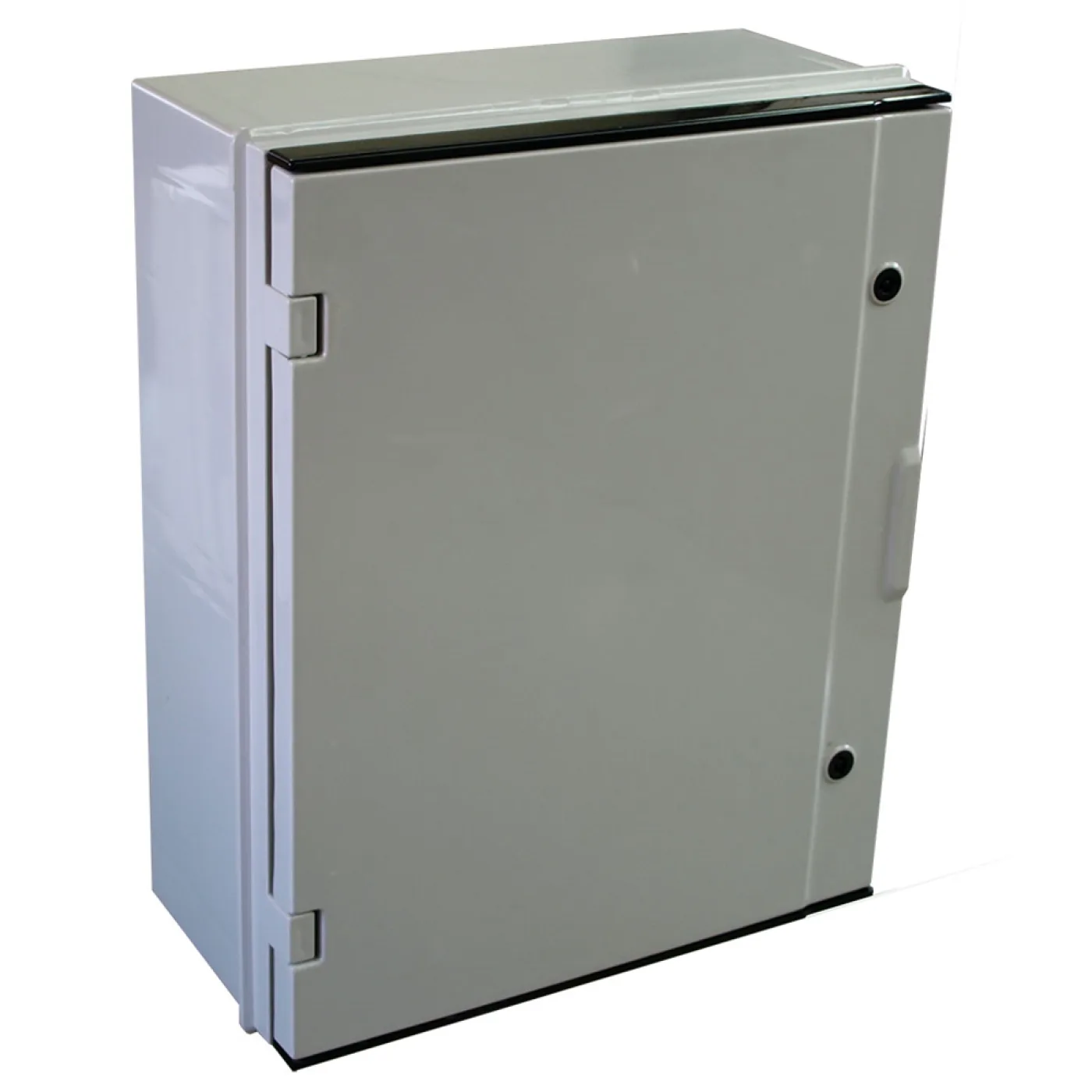
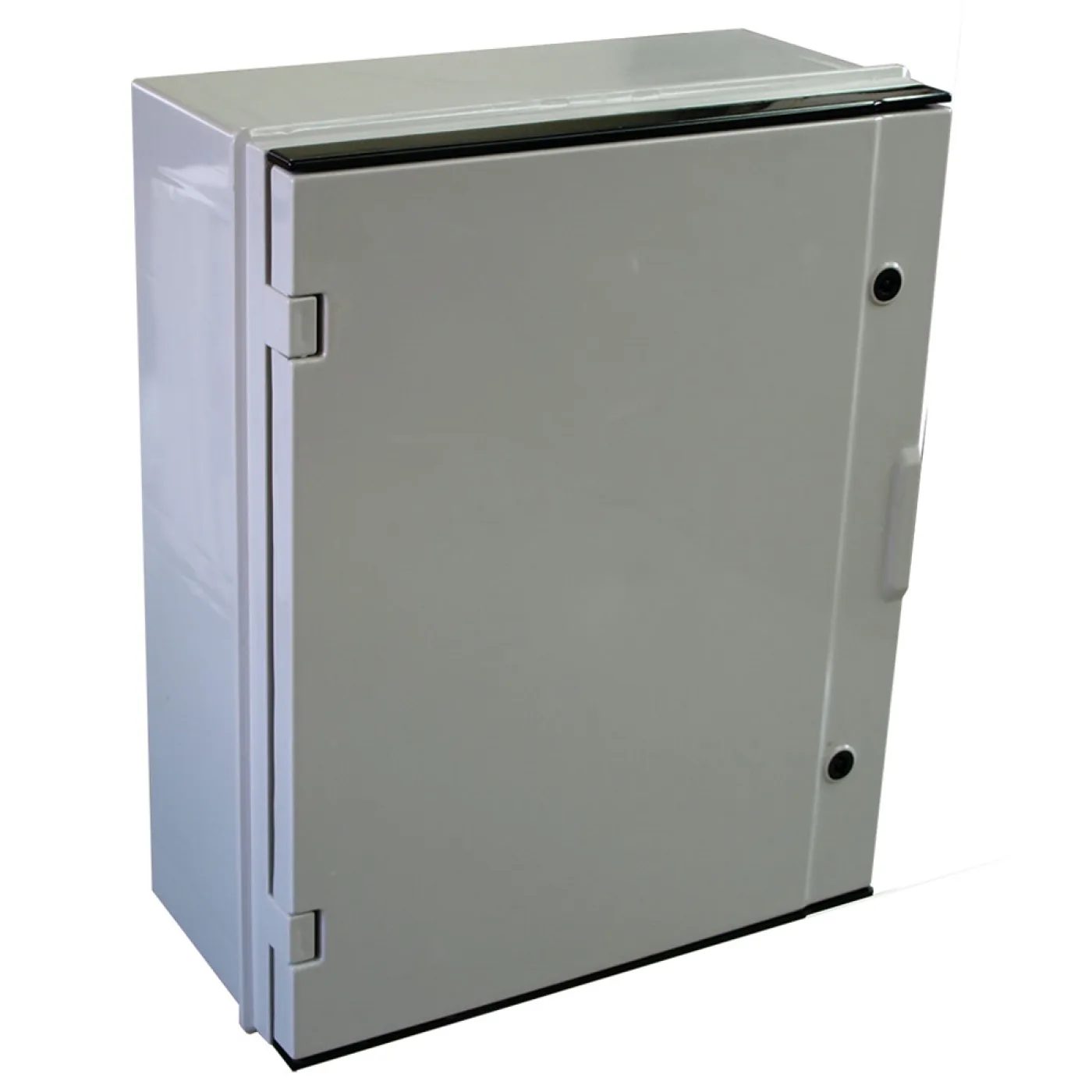
Once the material decision is made, three questions remain on a plastic enclosure: empty body or distribution panel, how many modules, and which depth. All three can be calculated — but the fourth point, at the end of this article, ruins more projects than any of them.
Two different products: empty body and distribution panel
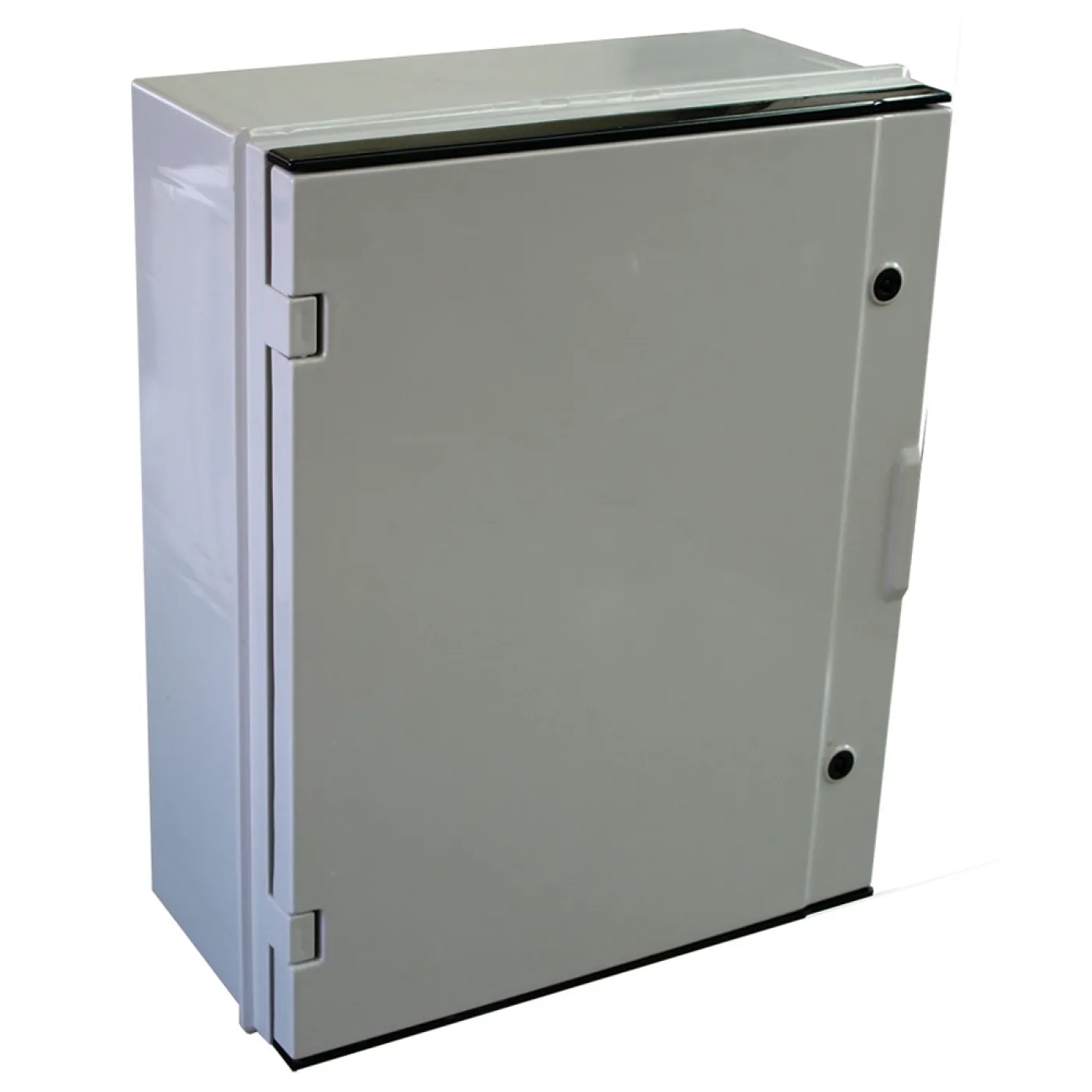
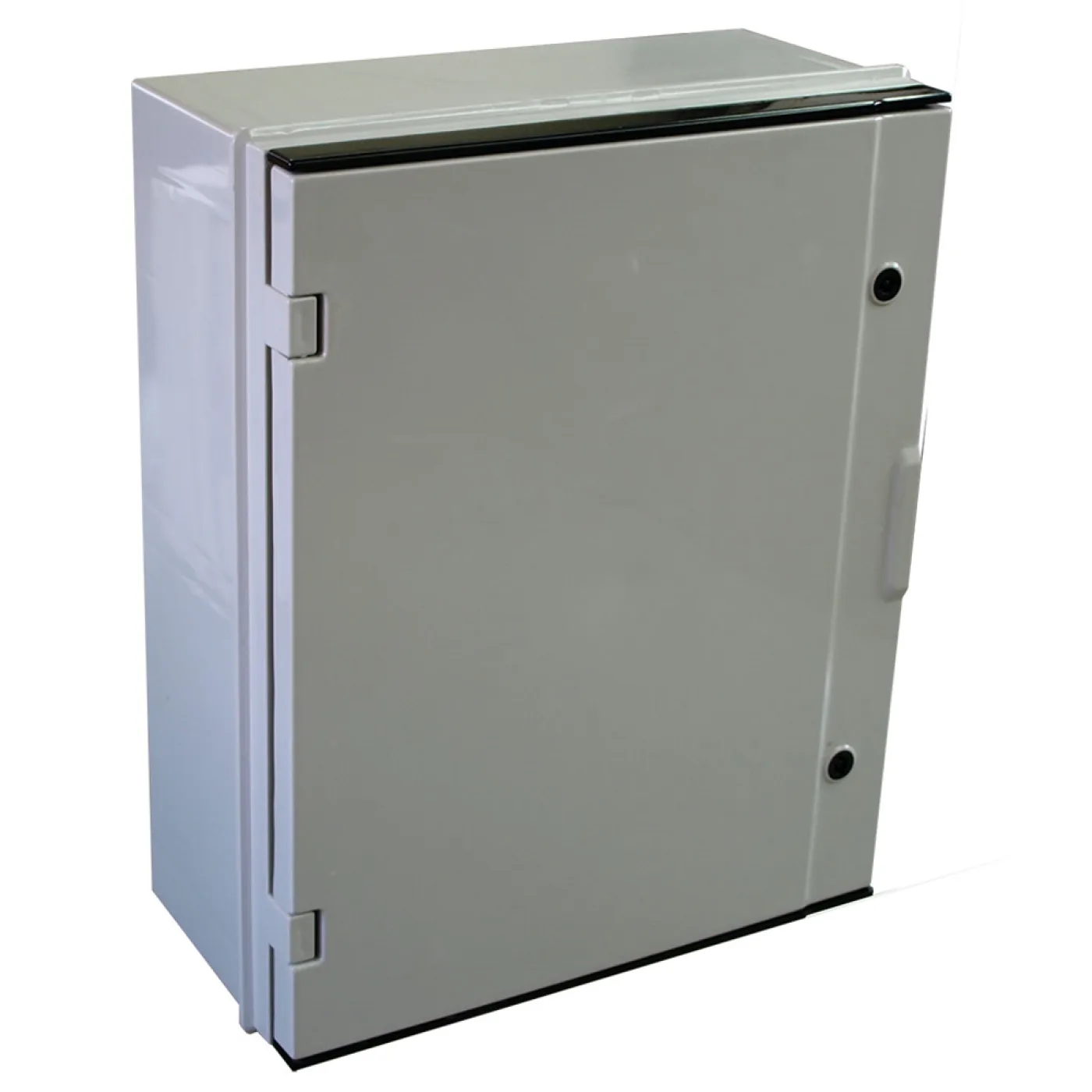
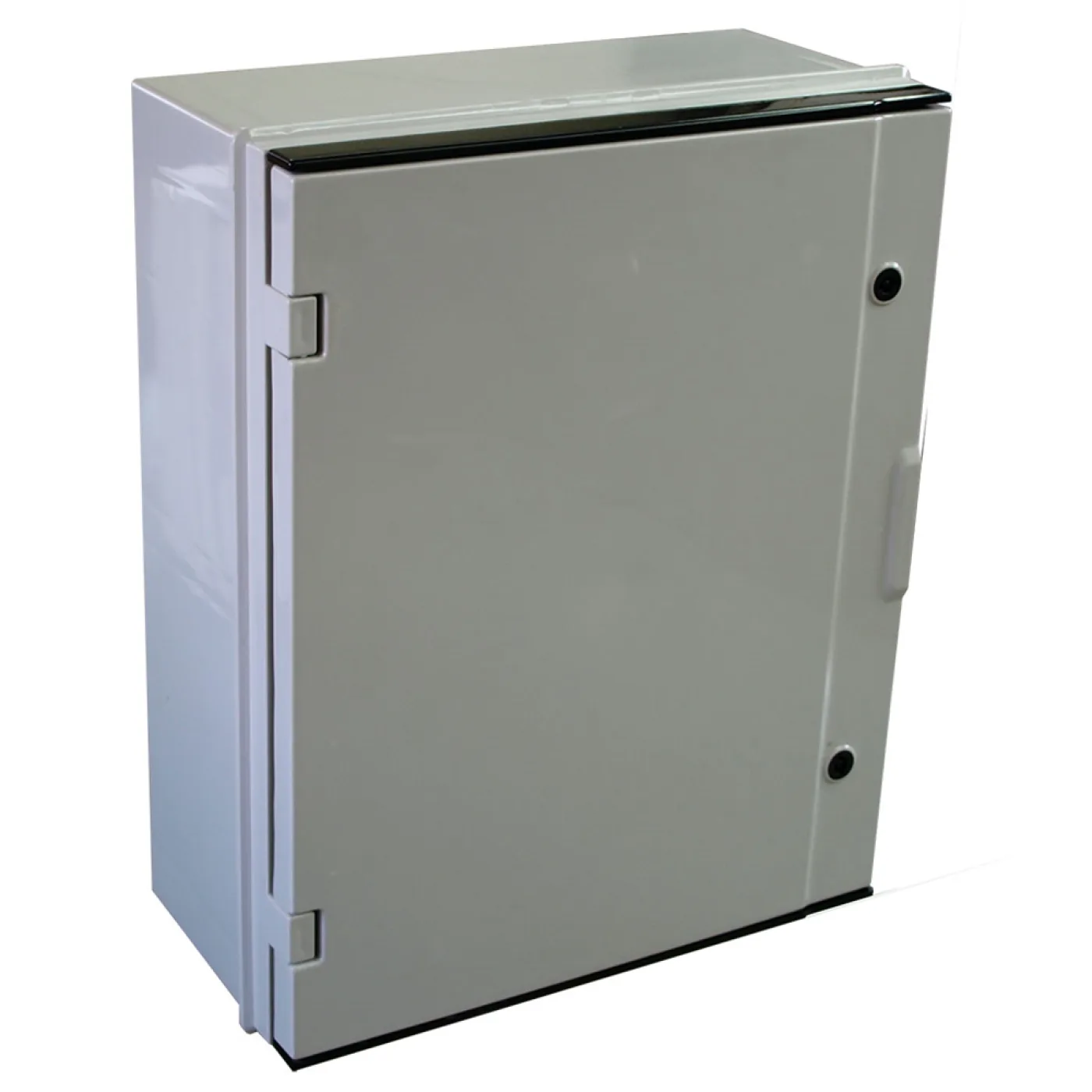
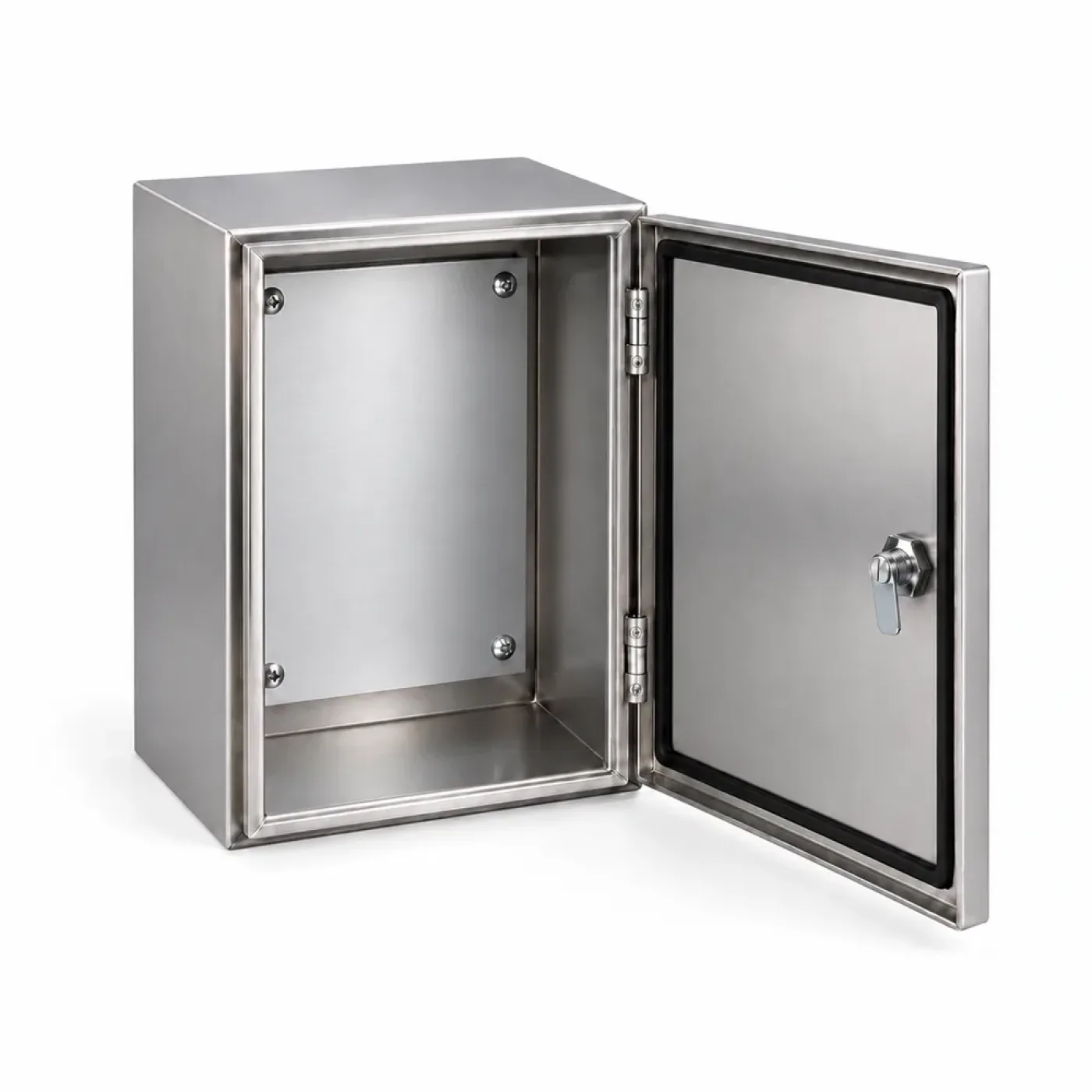
Empty enclosure (with base plate)
You get the body, the lid and a mounting base plate. What goes inside is entirely yours: terminals, relays, a power supply, a contactor, a small PLC. You drill whatever layout you want into the base plate.
Where it is right: where the contents are non-standard, where you are building a control panel, or where the devices do not fit a DIN rail.
Distribution panel (with module slots)
The DIN rail and the lid cut-out come ready; breakers clip straight onto the rail and their levers face out through the window. Our catalogue holds bodies with 8, 24, 50 and 80 module slots.
Where it is right: in conventional installation panels distributing breakers and residual current devices.
Module arithmetic: one module is 17.5 mm
The width of DIN-rail devices is standardised; one module is defined as 17.5 mm (on an 18 mm pitch). Typical widths:
| Device | Modules |
|---|---|
| Single-pole MCB (1P) | 1 |
| Two-pole MCB (1P+N) | 2 |
| Three-pole MCB (3P) | 3 |
| RCD (2 pole) | 2 |
| RCD (4 pole) | 4 |
| Contactor (small) | 2–3 |
| Surge protective device | 2–4 |
| Timer / meter | 1–3 |
Add them up, then add at least 20% spare modules. A panel is installed once and used for ten years; replacing it to add a circuit costs more than two extra rows bought at the start.
Leave the spare modules not because "it may come in useful" but for two concrete reasons: a circuit being split later (one line becomes two) and devices decided on afterwards, such as surge protection or a timer. Both happen on nearly every project.
Choosing the size
In our catalogue, slot count and body size pair up as follows:
| Slots | Body size (W×H×D cm) | Typical use |
|---|---|---|
| 8 | 20×30×15 | Small flat, single area, sub-panel |
| 24 | 30×40×17 | Apartment main panel, small business |
| 50 | 40×50×20 | Medium scale, floor panel |
| 80 | 50×70×25 | Commercial main panel, many circuits |
Empty bodies are offered from 25×33×13 cm to 50×70×25 cm, with intermediate sizes in between.
Do not underestimate the depth
Depth is the dimension most often left short. It has to accommodate three things at once:
- The device's own depth. Breakers are shallow; contactors, power supplies and transformers are not.
- Cable bend allowance. A heavy-gauge cable cannot turn sharply; the distance from rail to terminal has to allow for it.
- The lid closing. A panel whose cables press against the inside of the lid strains the gasket line and starts leaking in time.
Our depths run from 130 mm to 250 mm. If you are building a control panel with contactors or a power supply, stay away from the shallowest option.
Lid: opaque or transparent?
Our plastic enclosures are produced with an opaque lid. An opaque lid conceals the interior, protects it from UV and gives a tidier appearance.
There are cases where a transparent lid is preferred: panels where a meter must be read, devices with LED indication, applications where status should be visible without opening. If that is your requirement, say so before ordering — the standard product has an opaque lid.
Versions with a cam switch
Some of our distribution panels are offered with a cam switch: 12+cam, 32+cam, 46+cam and 65+cam configurations. The cam switch is the main isolator that de-energises the whole panel in one movement.
On any panel that will be maintained this is a safety feature: isolating the panel does not require a trip to the breaker upstream. The number in the name is the usable module count alongside the cam switch.
The key point: IP65 exists in manufacture and is lost at installation
Our ABS enclosures are produced to IP65. That is their state as they leave the box. On site, what frequently happens is this:
- A hole is drilled for a cable and no gland is fitted. The hole is now an open entry; the rating is over.
- A gland of the wrong size is used and a gap is left.
- An unused knock-out is not closed with a blanking plug.
- The gasket is dislodged or folded during installation and nobody notices.
- The lid screws are not tightened evenly and one corner stays open.
Any one of these alone can take IP65 down to something closer to IP20. A protection rating is not a product property but an installation outcome — and outdoors or in damp conditions it is what decides the panel's life.
The decision in short
- Standard DIN devices: a distribution panel. A bespoke layout: an empty body with a base plate.
- Count the modules, add 20% spare, step up to the next slot count.
- Choose the depth from the deepest device plus cable bend allowance.
- On a panel that will be maintained, prefer the version with a cam switch.
- Put glands, blanking plugs and the gasket on your installation checklist — IP65 is won or lost there.