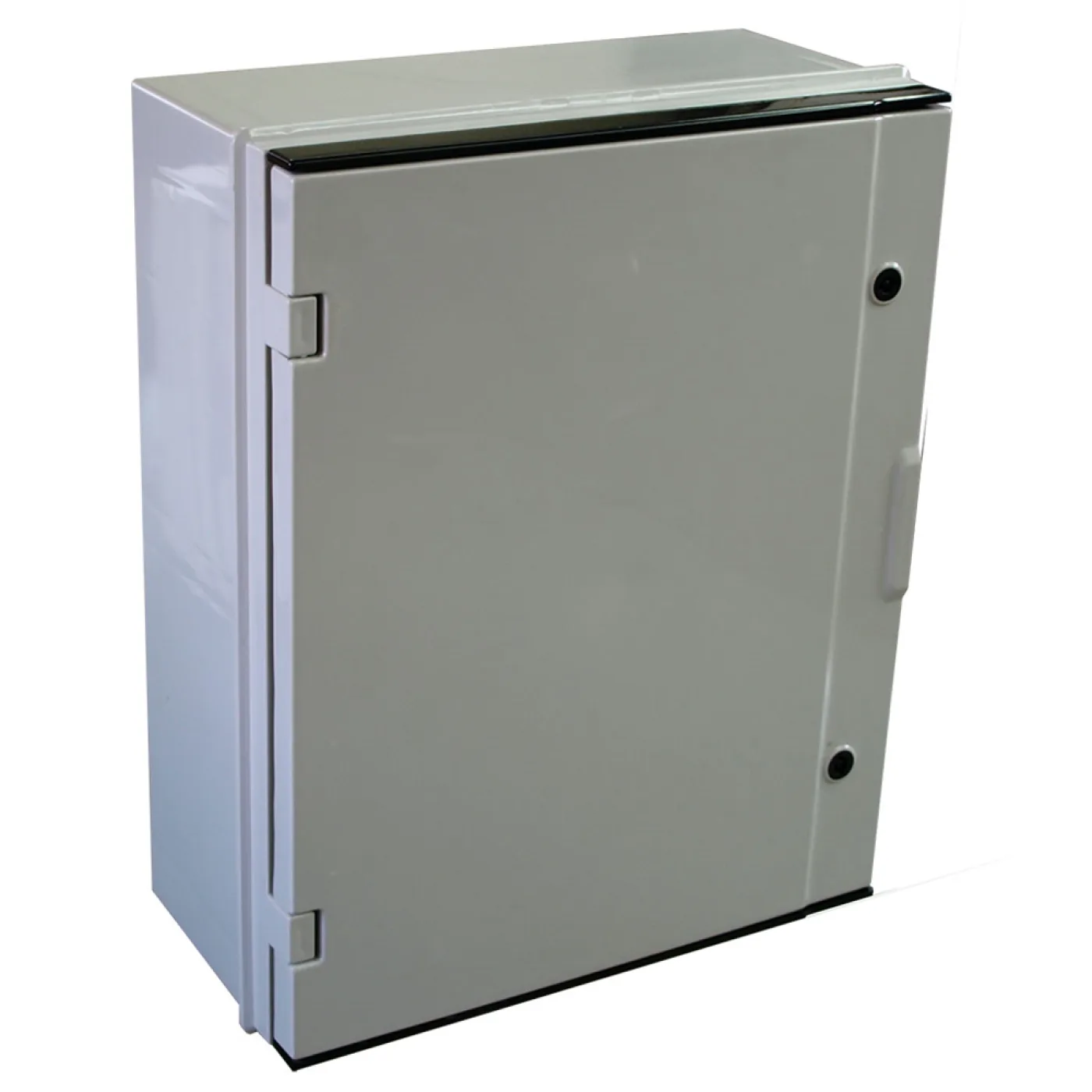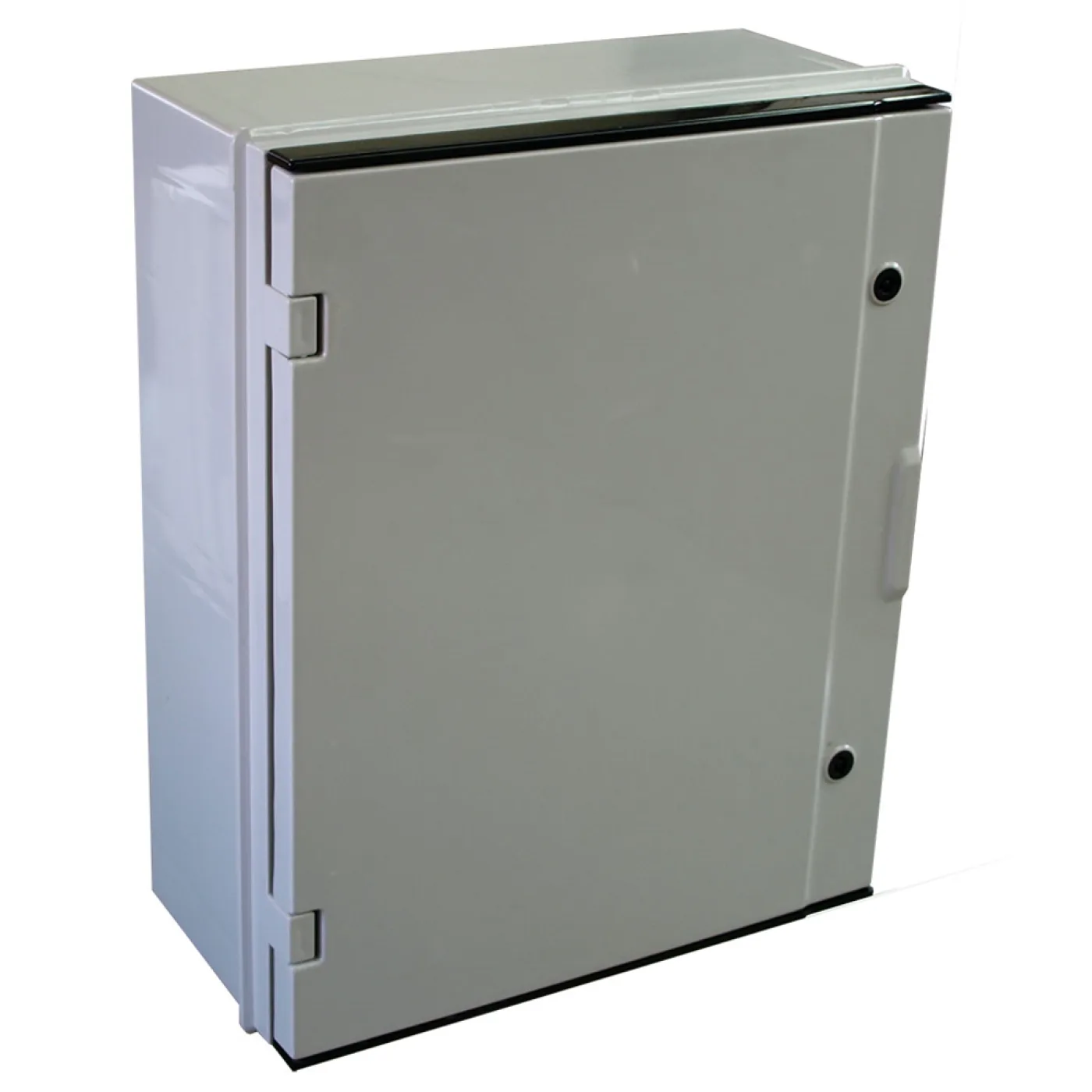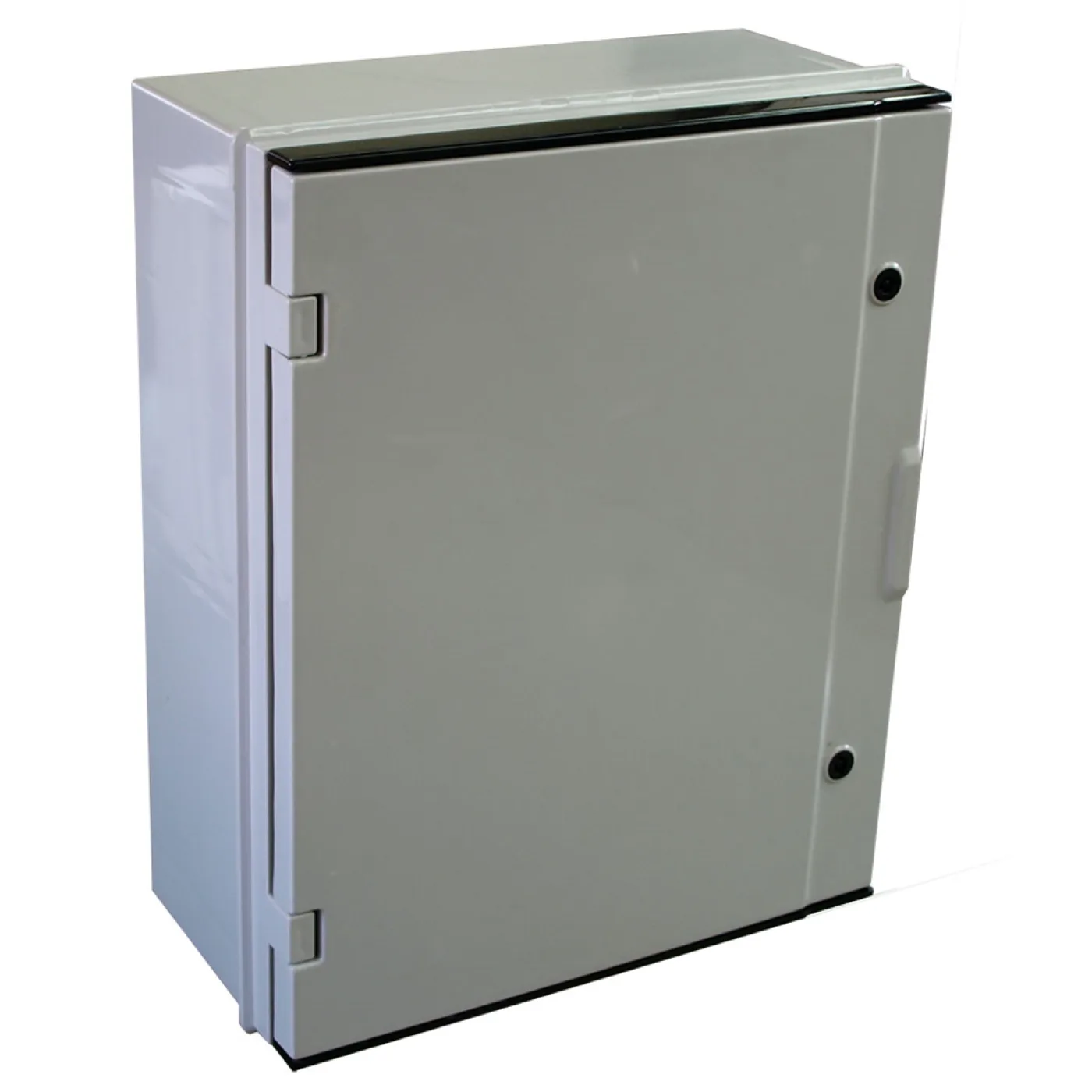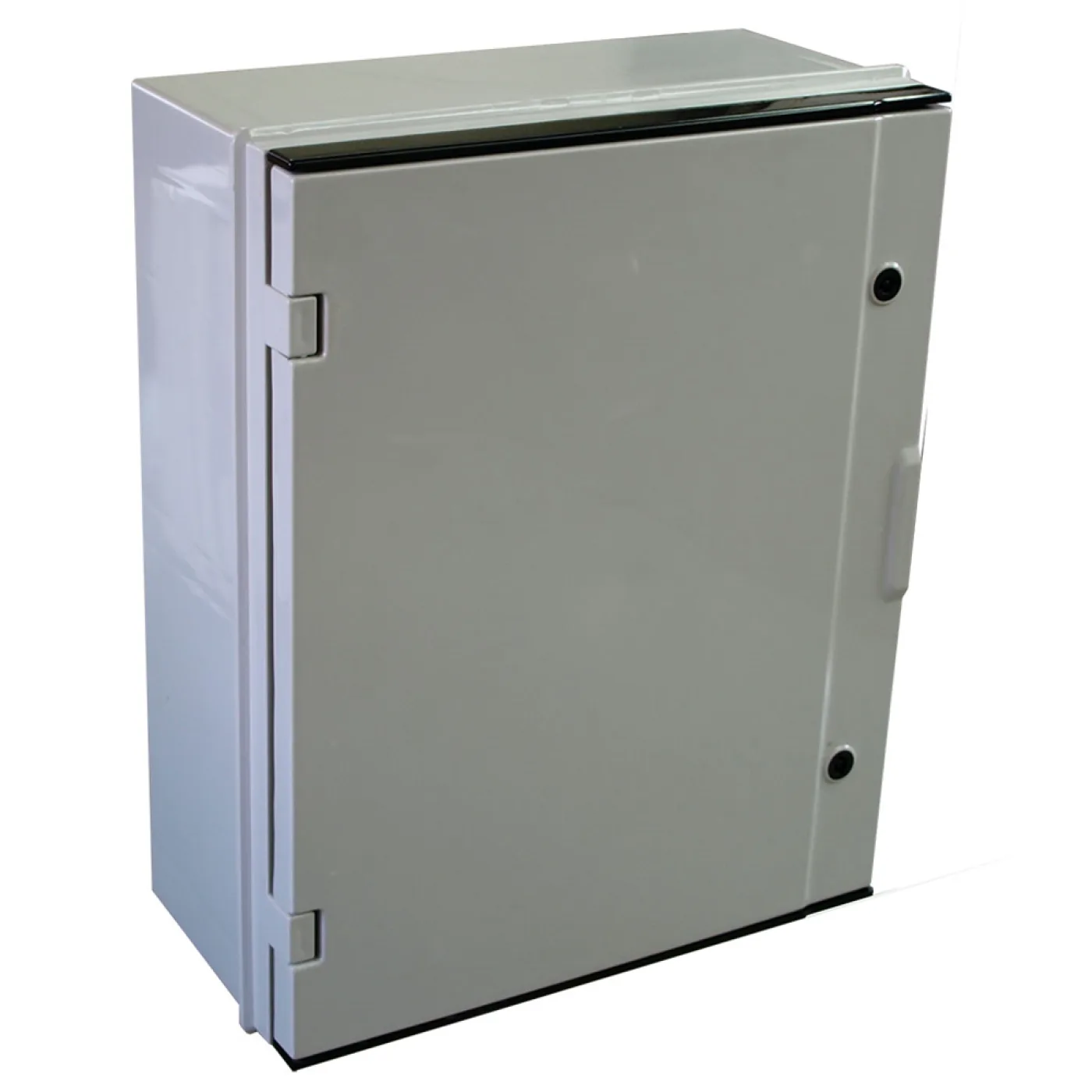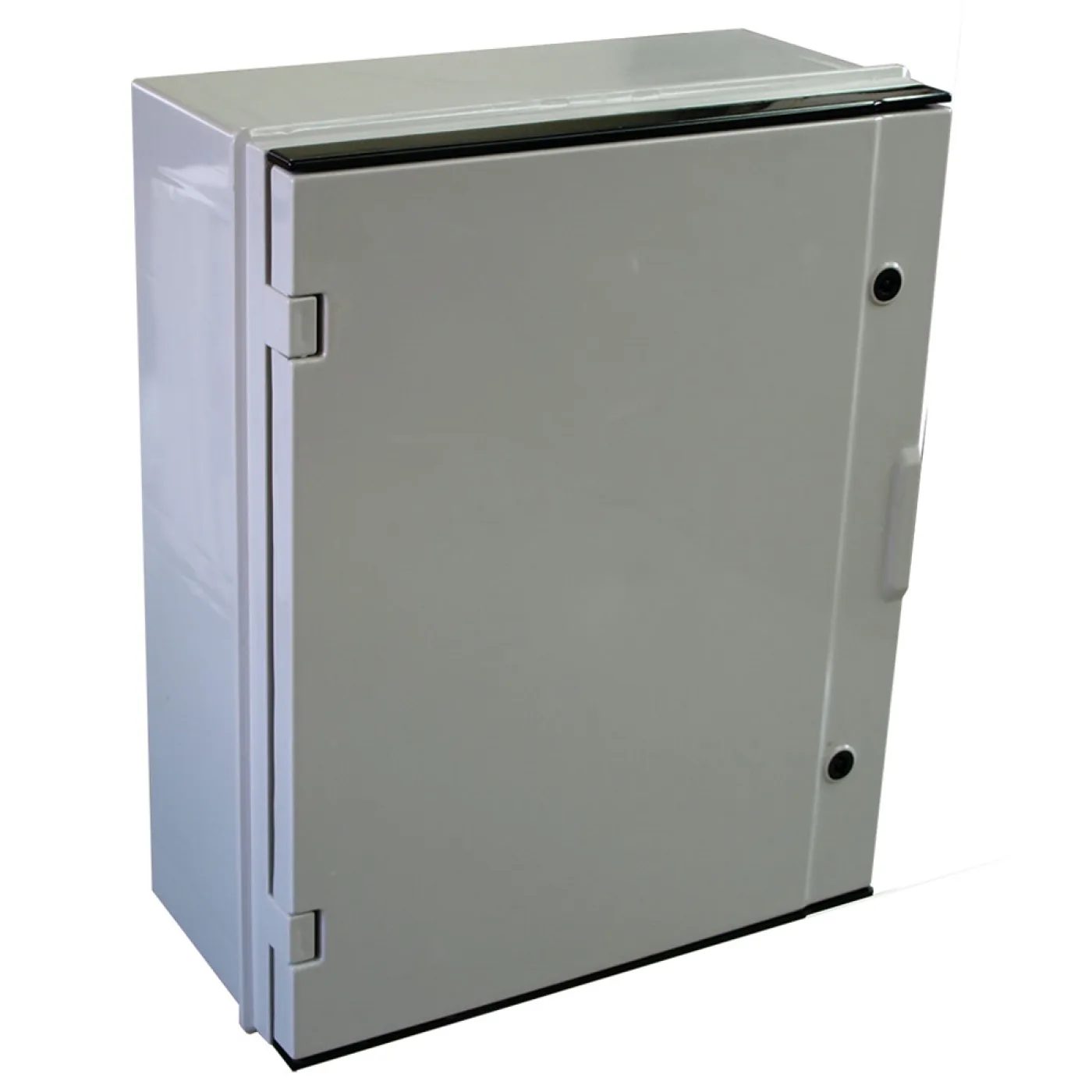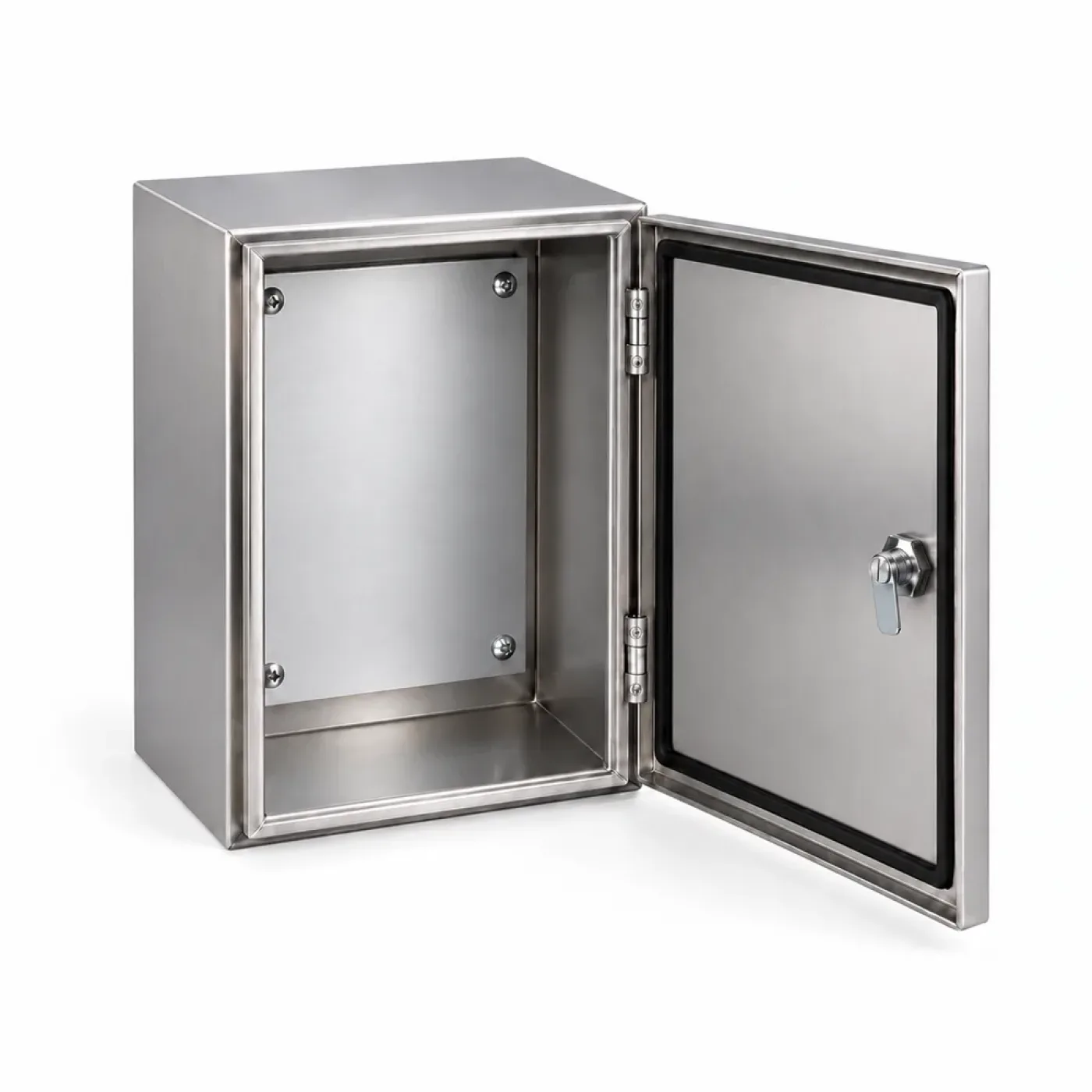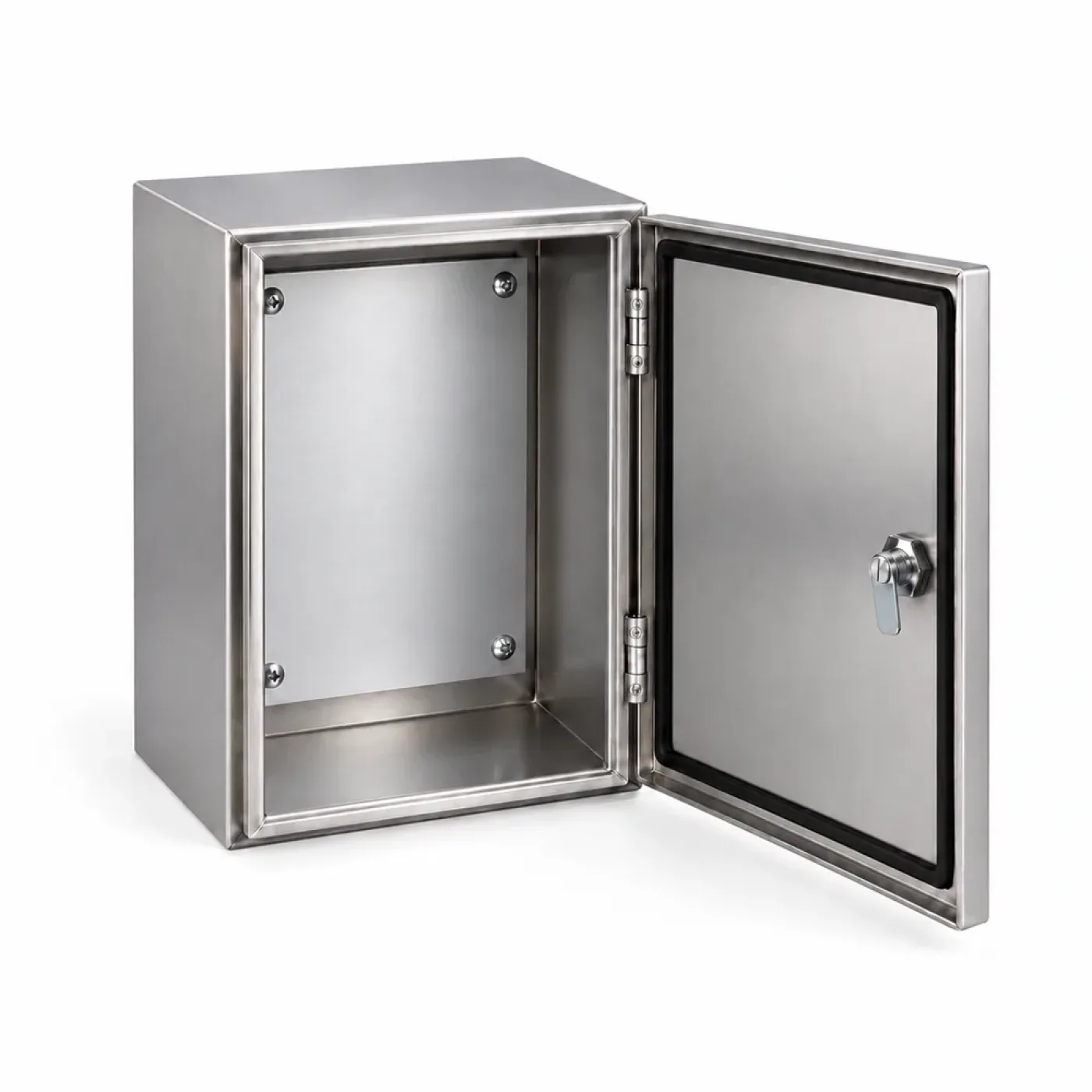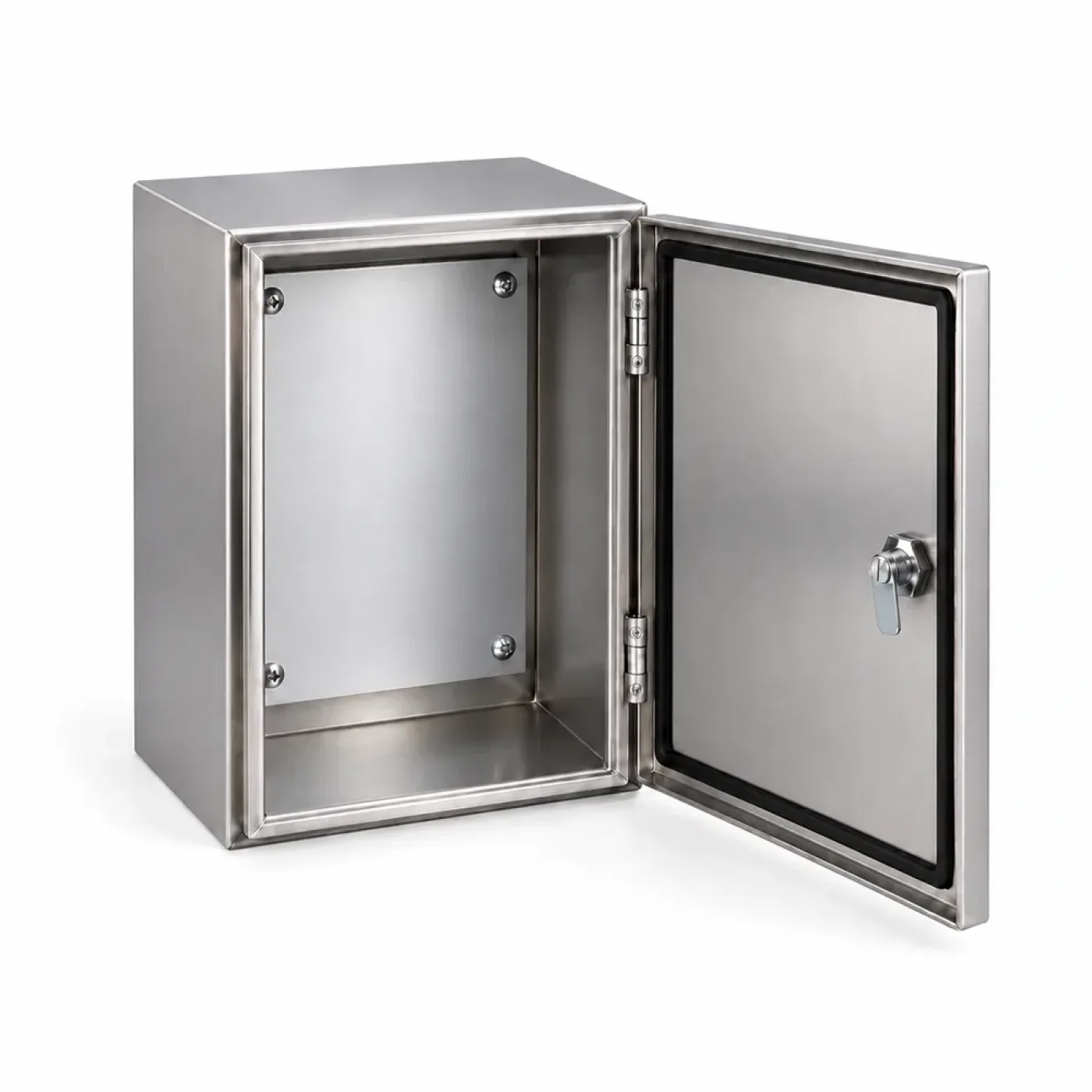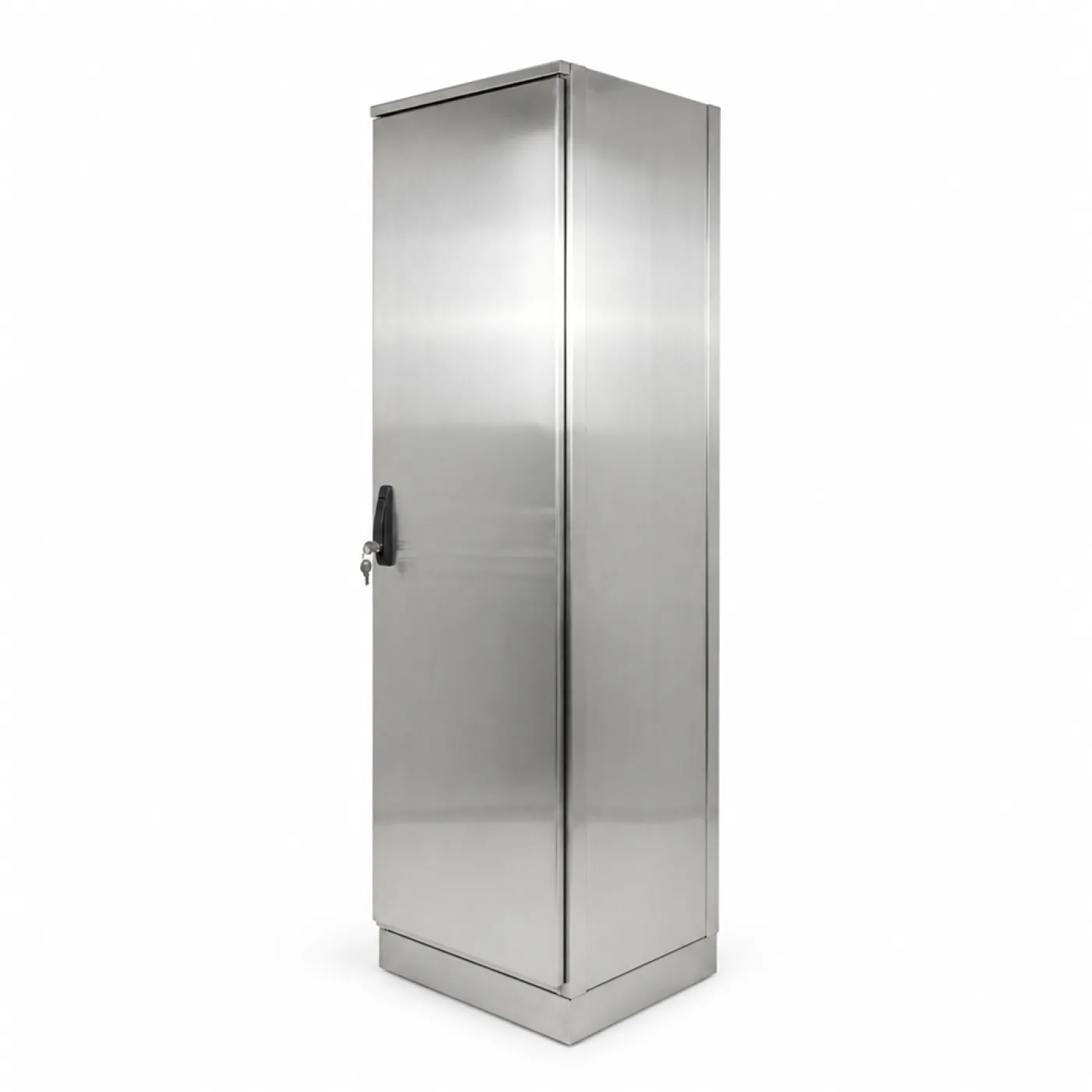
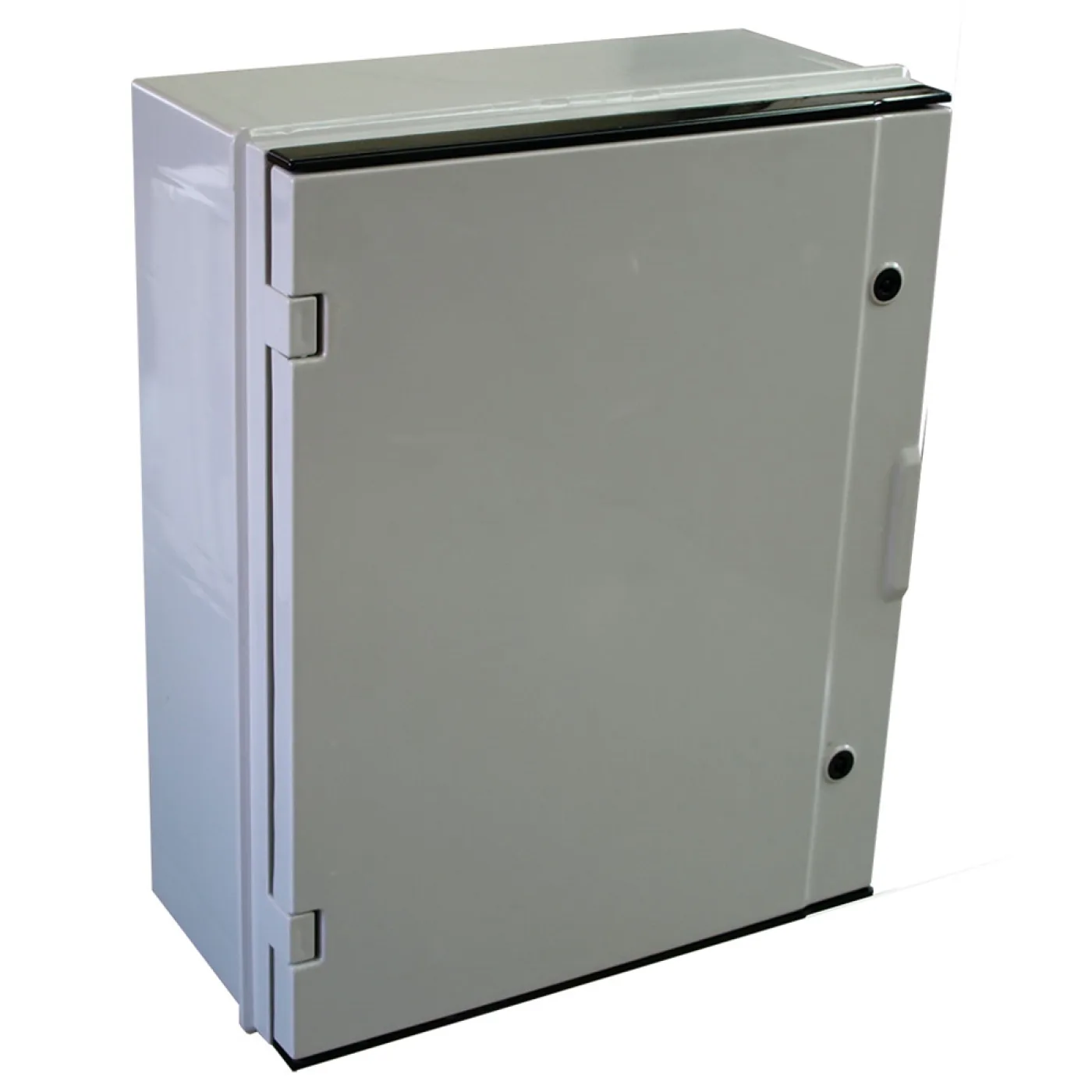
The question asked when choosing an enclosure body is usually "which is stronger?". It is the wrong question. There are four criteria — corrosion, electrical insulation, impact resistance and heat — and plastic wins two of them while metal wins two. Which of them outweighs the rest is a question about where the enclosure will stand.
Criterion 1 — Corrosion
Here plastic wins outright: ABS and polycarbonate do not rust, rot or lose their finish. A damp basement, a washed-down area, an agricultural building, coastal air — none of them touch plastic.
With metal there are three levels:
- Painted mild steel: protected while the paint is intact. Every scratch and every drilled hole is a starting point, and in damp conditions rust spreads from there.
- Galvanised: the zinc layer acts as a sacrificial anode and lasts markedly longer than paint alone.
- Stainless steel: forms a self-repairing oxide layer on the surface. It keeps protecting even when scratched.
Criterion 2 — Electrical insulation
A plastic body is non-conductive. A metal body is conductive, which is why it requires earthing and equipotential bonding; the bonding braid across the door hinge and the body-to-door continuity link are part of installing a metal enclosure.
In a plastic enclosure those details are not needed for the body — but they still apply to the metal mounting plate and the devices inside it. Which connections are mandatory depends on local wiring regulations and on the project's own design; this article is not an installation standard, and the decision belongs to the project's electrical engineer.
Criterion 3 — Impact and mechanical strength
Metal wins here. Where a forklift brushes past, a tool is dropped or someone stands on the lid, a steel body dents but does not split; a plastic body can crack, and a crack is the end of its sealing.
A second issue is UV: plastic left in direct sun for years becomes brittle and fades if its additive package is not up to it. If you are putting a plastic enclosure outdoors, place it in shade or move to metal.
Criterion 4 — Heat
This is the most frequently skipped criterion. Metal conducts heat, plastic insulates. In an enclosure containing devices that dissipate, a metal body sheds part of the heat through its surface; a plastic body keeps it inside.
The practical consequence: of two enclosures with the same load, the plastic one runs hotter. Where there are real dissipating elements — a transformer, a drive, a power supply — this turns into a ventilation or a material decision.
The unexpected part: our plastic is IP65 and our stainless IP54
Most buyers assume metal gives the better seal. In our catalogue the truth is the other way round:
| Body | Protection rating |
|---|---|
| ABS plastic enclosure (surface-mount, opaque lid) | IP65 |
| Monoblock stainless enclosure (surface-mount) | IP54 |
The reason is the manufacturing method. A plastic body is moulded in one piece; the gasket seat forms together with the body, in a single operation, as one continuous line. On a steel body the lid surround is produced by folding and welding, and achieving perfect continuity at the corners and weld ends is not as easy as moulding it.
The effect on your decision is clear: where dust and water are the direct problem and the environment poses no impact risk, a plastic enclosure seals better than a metal one. Corrosion resistance is a separate axis — a stainless body gives a mechanical life in salt and chemical environments that plastic cannot.
Decision table
| Environment / requirement | Body |
|---|---|
| Damp indoor space, not washed down; small distribution | ABS plastic |
| Dust and splashing water, no impact risk | ABS plastic (IP65) |
| Food, pharmaceutical, washed-down production | Stainless |
| Coastal, salt air | Stainless |
| Forklift traffic, impact risk | Steel or stainless |
| Transformer or drive inside, high dissipation | Metal plus ventilation |
| Direct sun, outdoors | Metal (UV ageing in plastic) |
| Budget-led, indoors, low load | ABS plastic |
A note on stainless grade
The stainless enclosures in our catalogue are made from 304-grade sheet; the body is 1 mm and the covers 1.5 mm, and the supporting chassis is monoblock welded. 304 is the grade suited to food and most general industrial environments.
To be honest about its limit: chloride-rich environments — seawater contact, swimming pool plant, areas with continuous chlorinated cleaning chemicals — call for 316 grade (alloyed with molybdenum) in the literature. If those are your conditions, do not start with 304; tell us what you need.
Where the sizes and forms differ
- ABS enclosures: from 25×33×13 cm to 50×70×25 cm, surface-mount, with a base plate.
- Stainless wall-mount: monoblock bodies from 200×250×200 mm to 600×900×200 mm. The depth is 200 mm throughout.
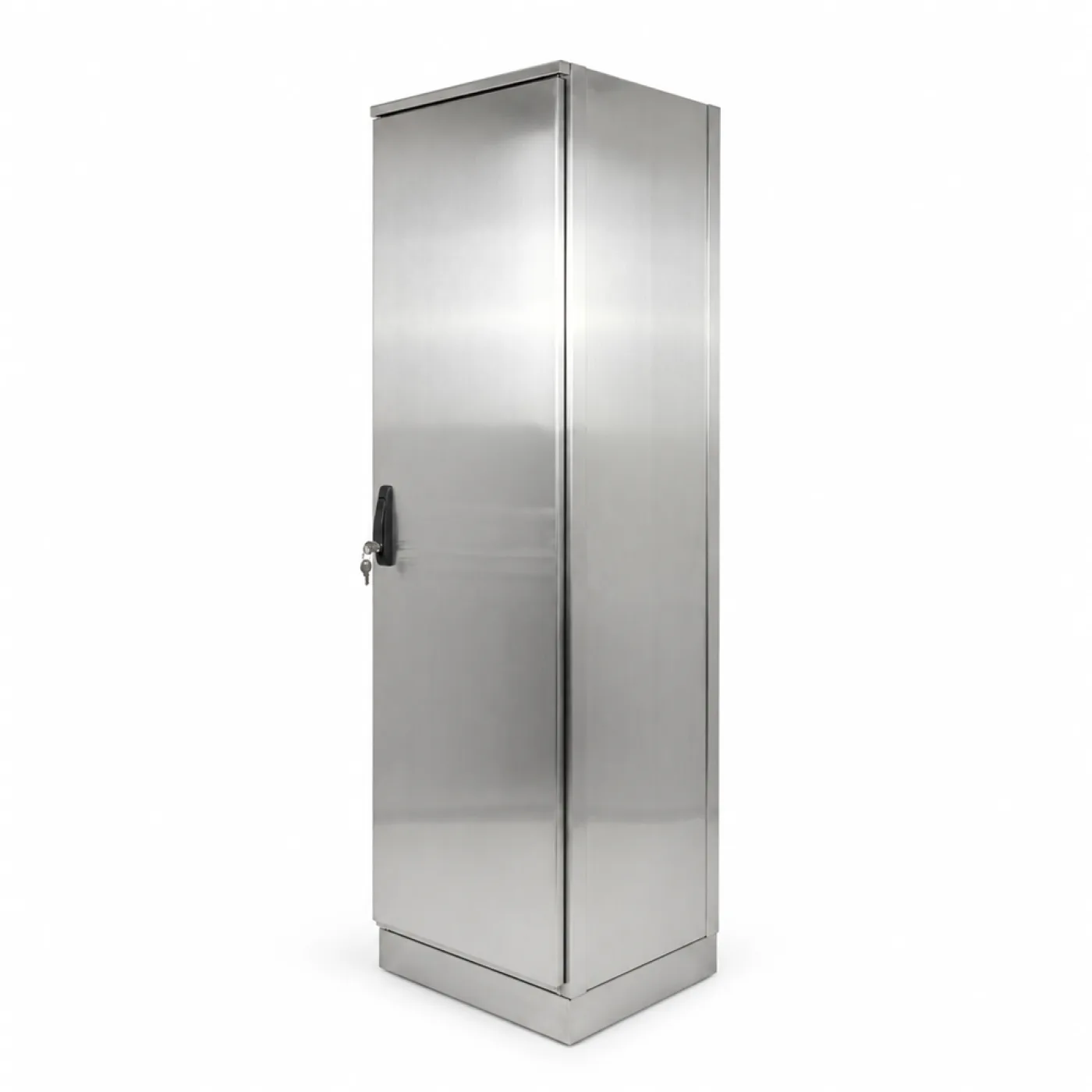
- Stainless floor-standing: modular industrial bodies 2100 mm tall in 600, 700 and 800 mm widths.
The next decision
With the material settled, size and module count come next. How many modules fit and which lid type to choose on the plastic side is covered in this guide's ABS enclosure article; what a monoblock body means and where it is required on the stainless side is covered in the stainless article.