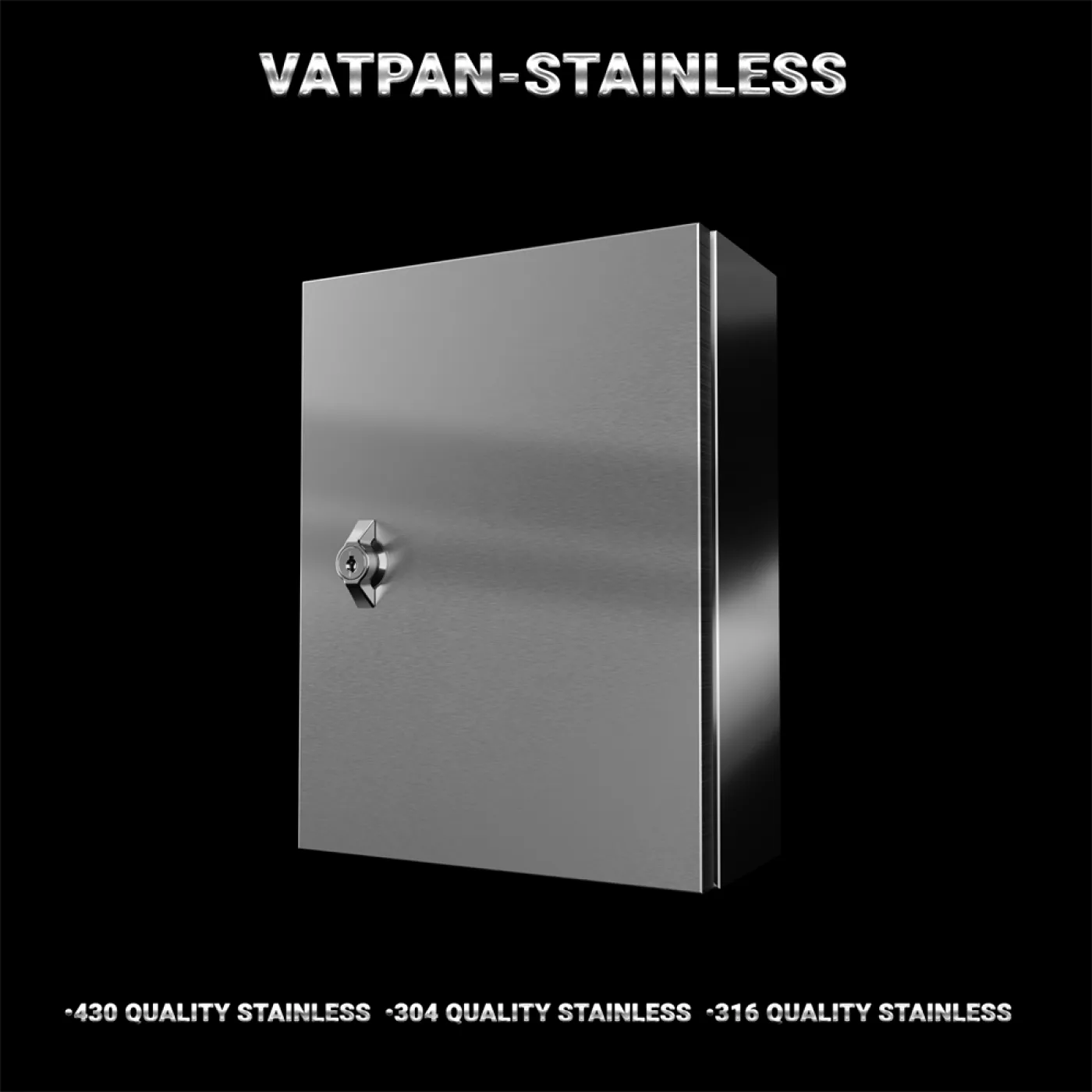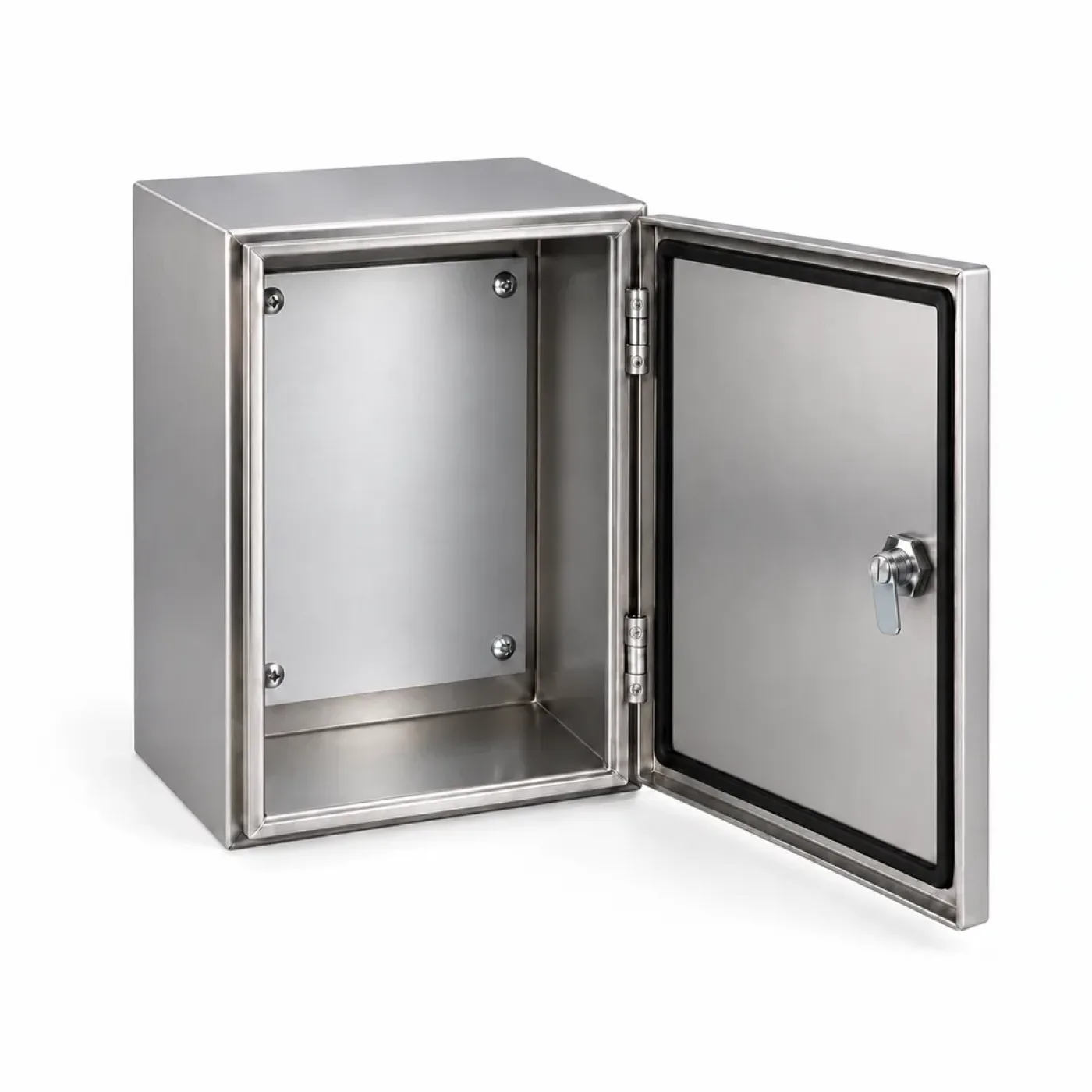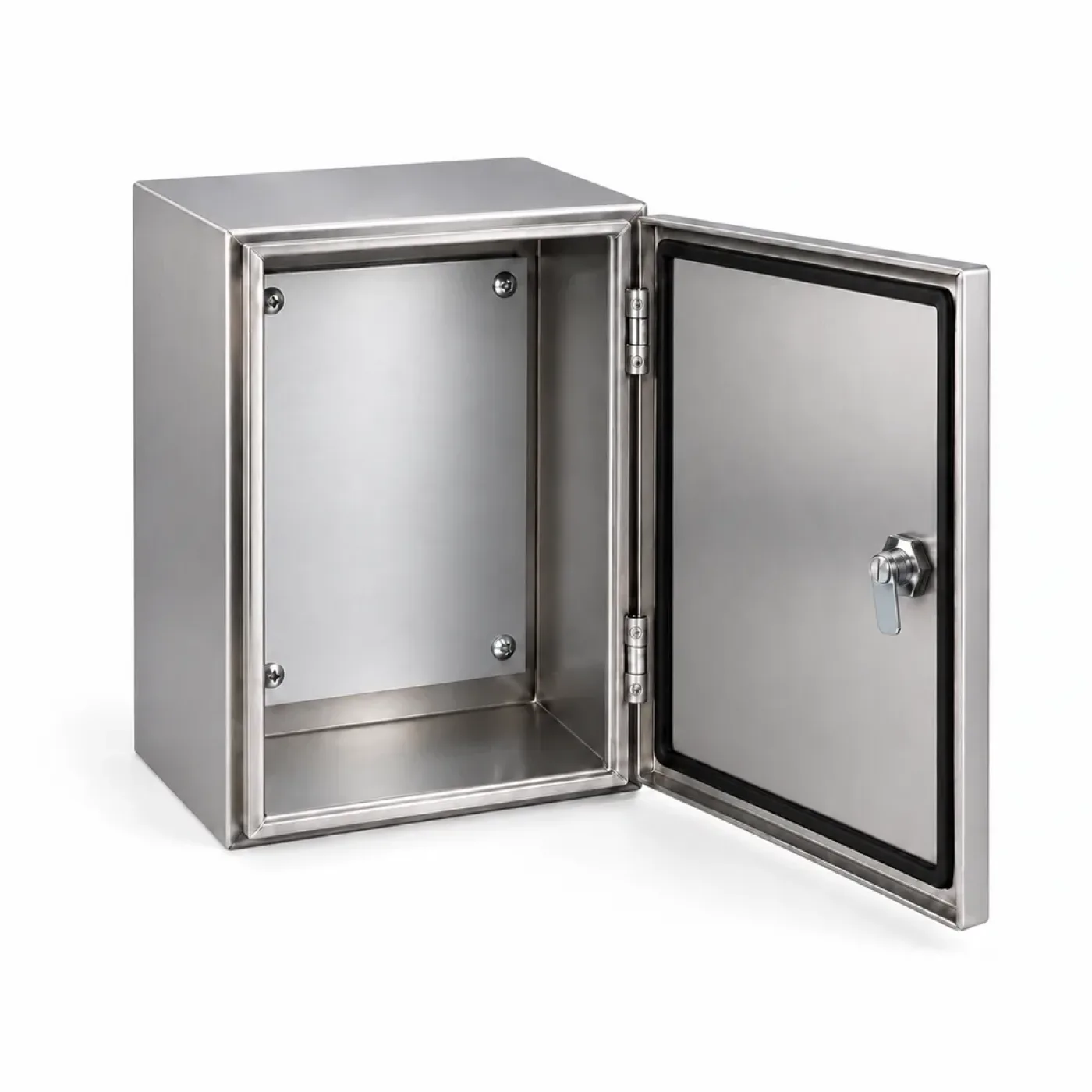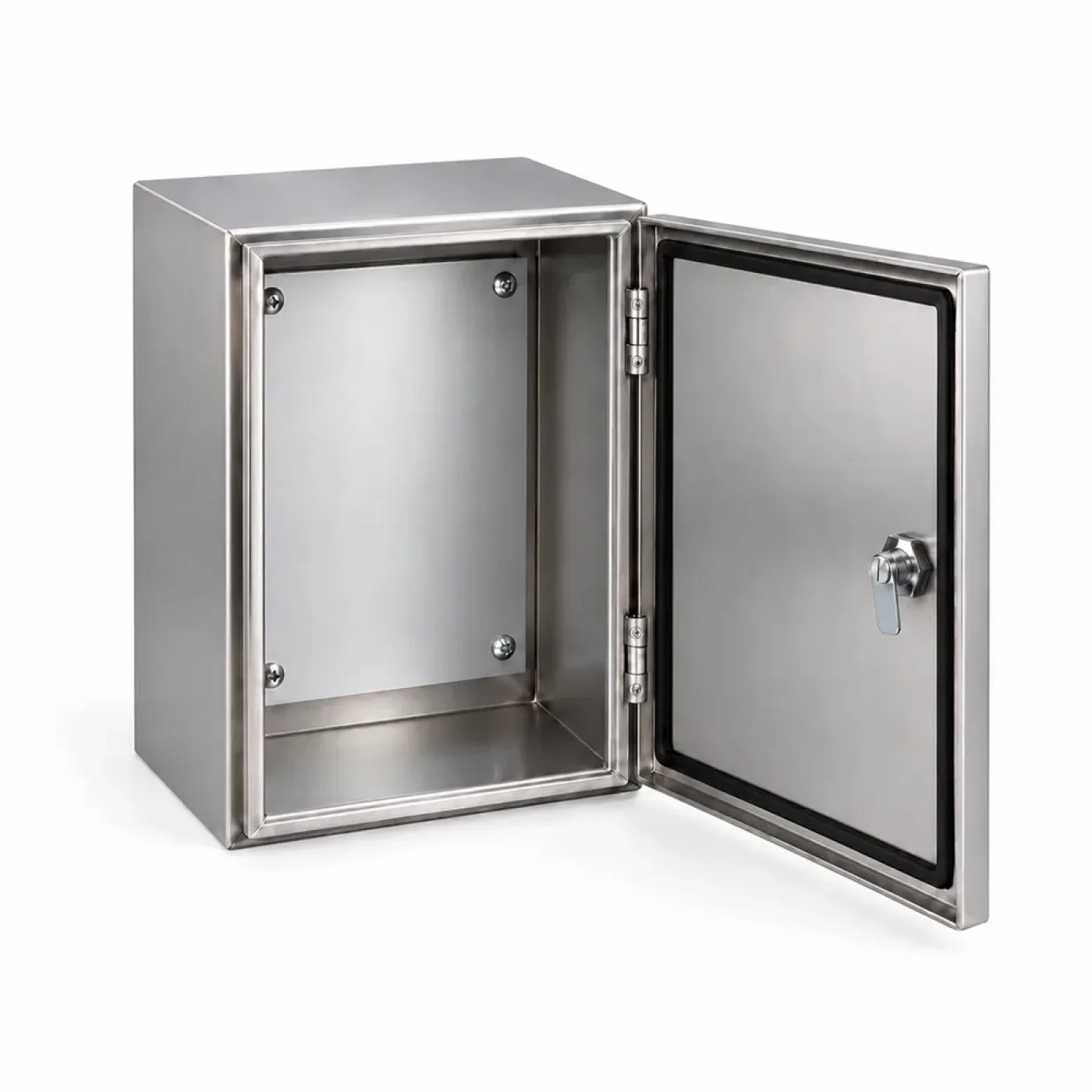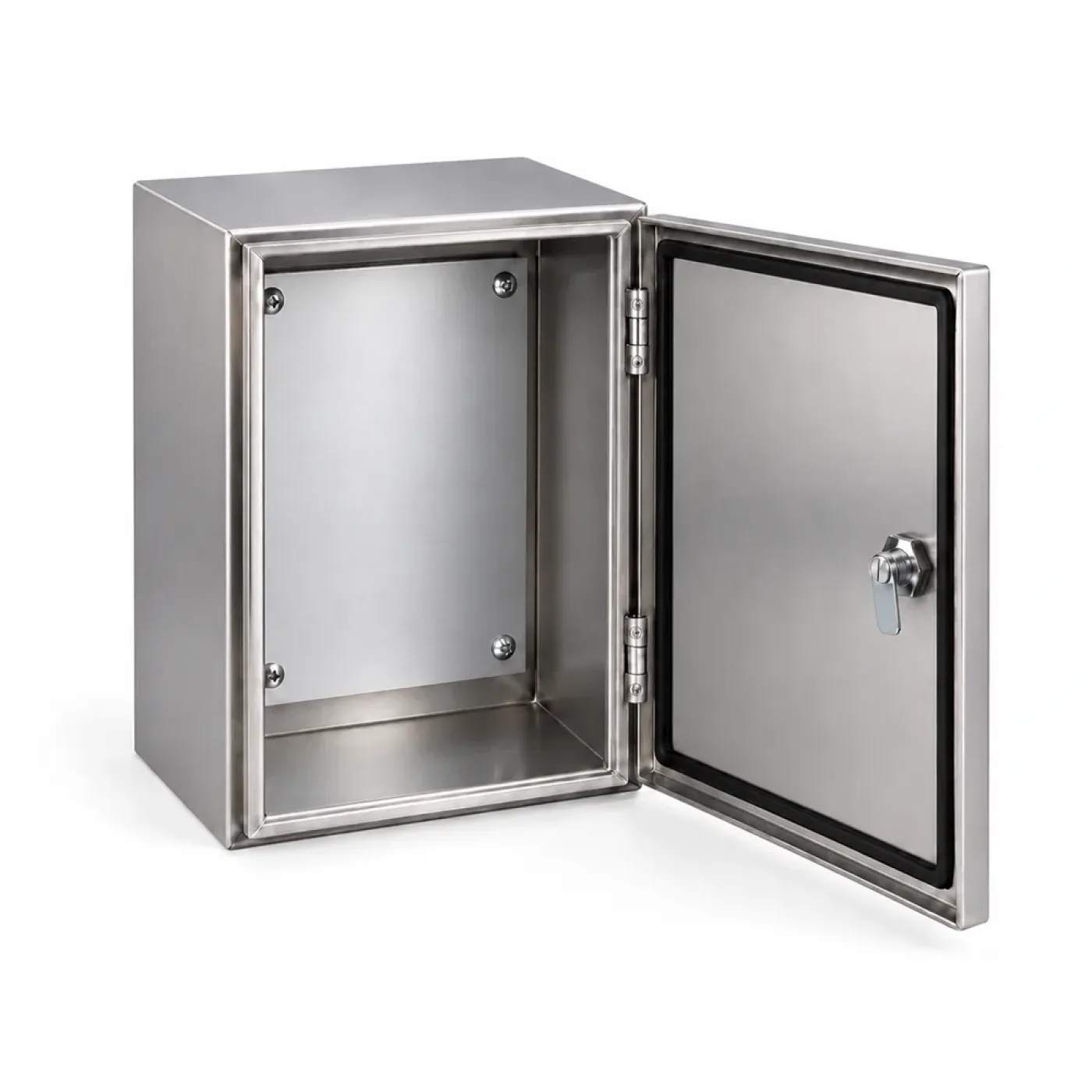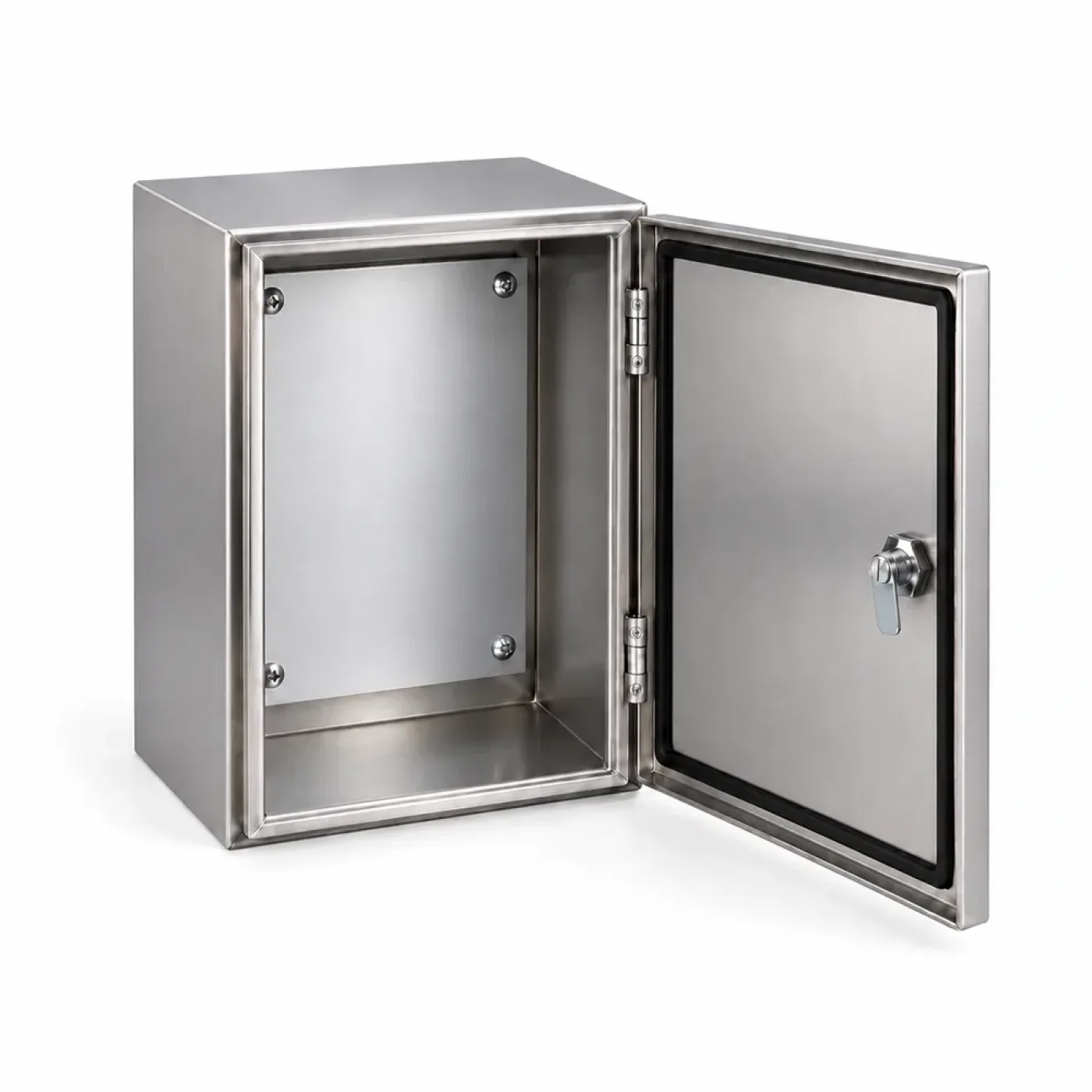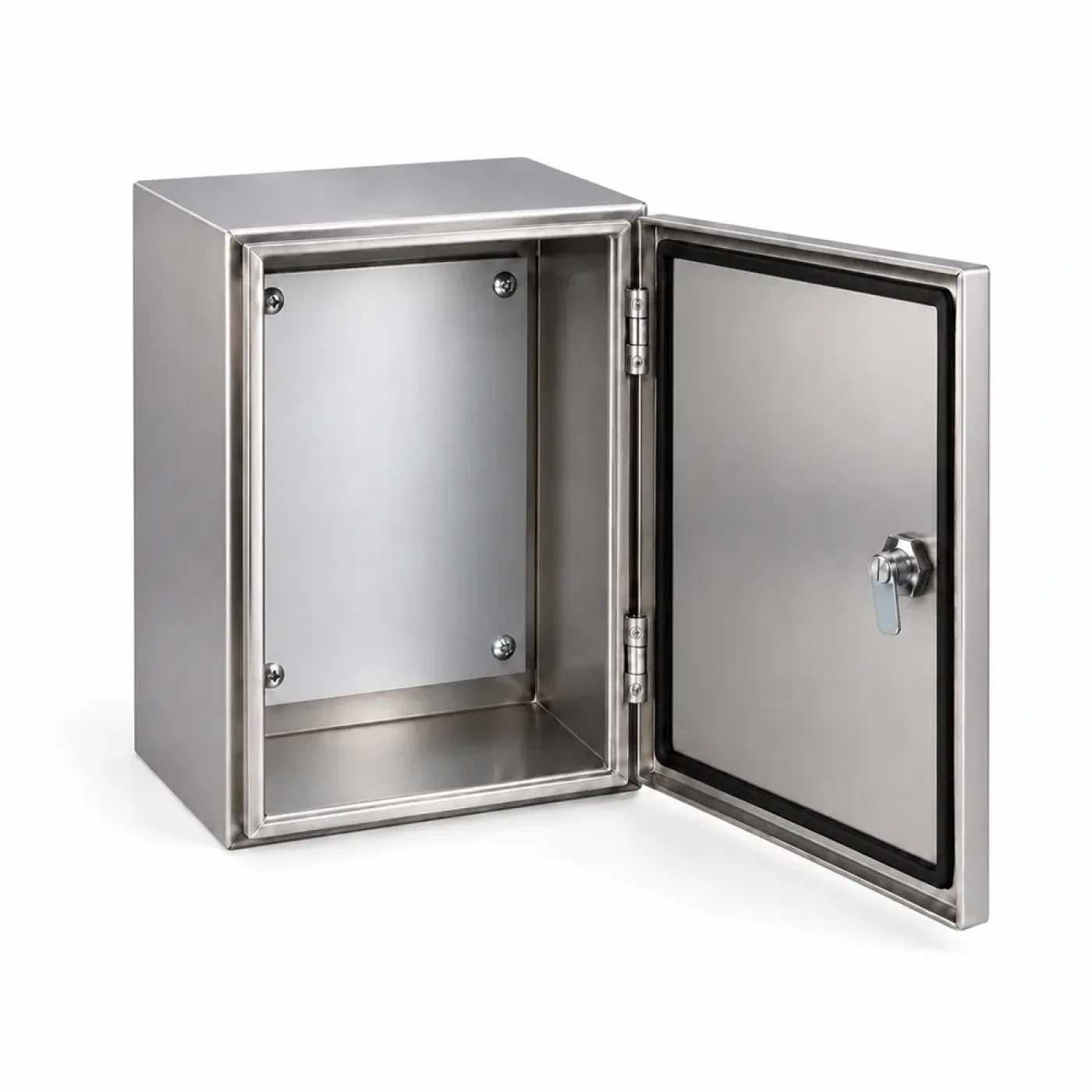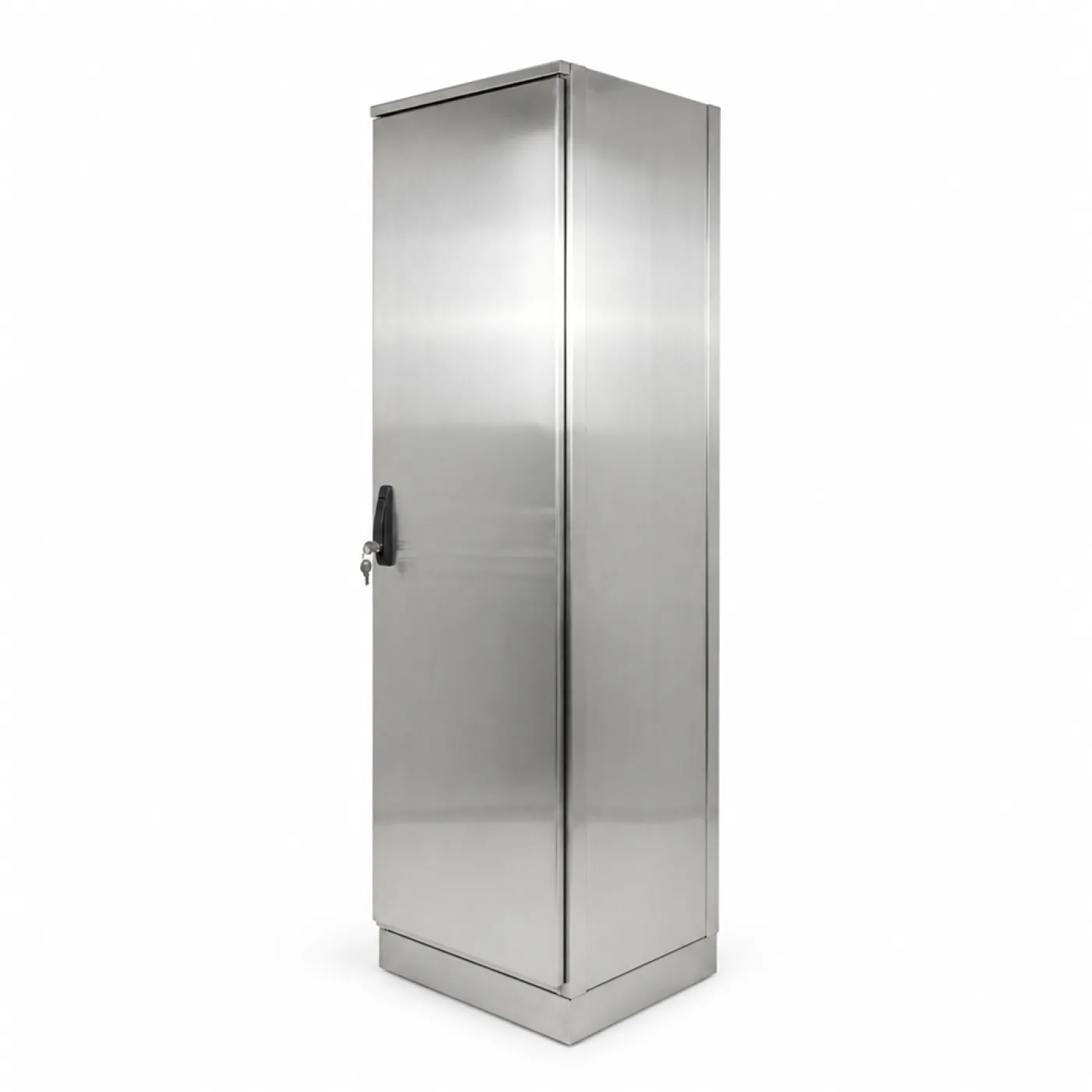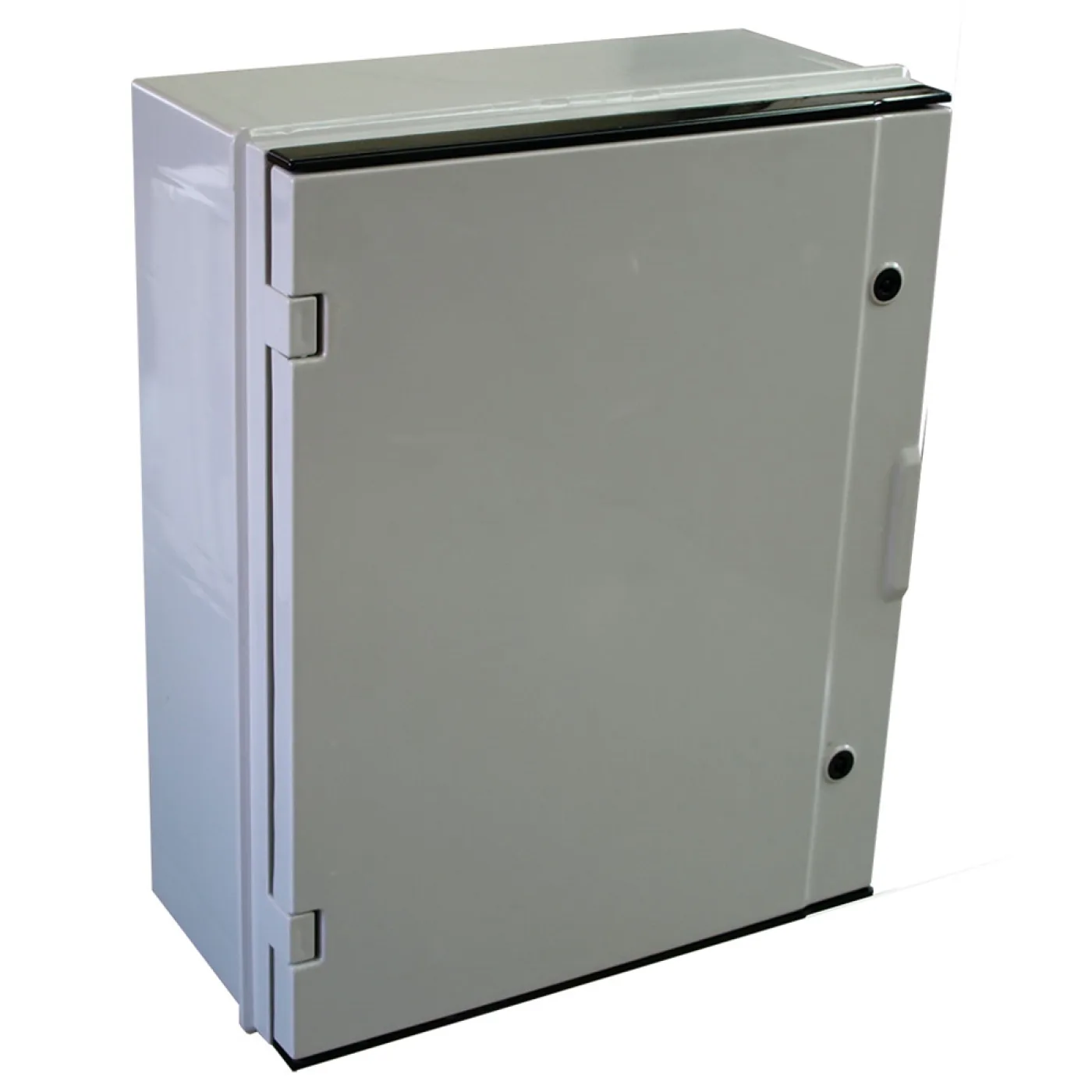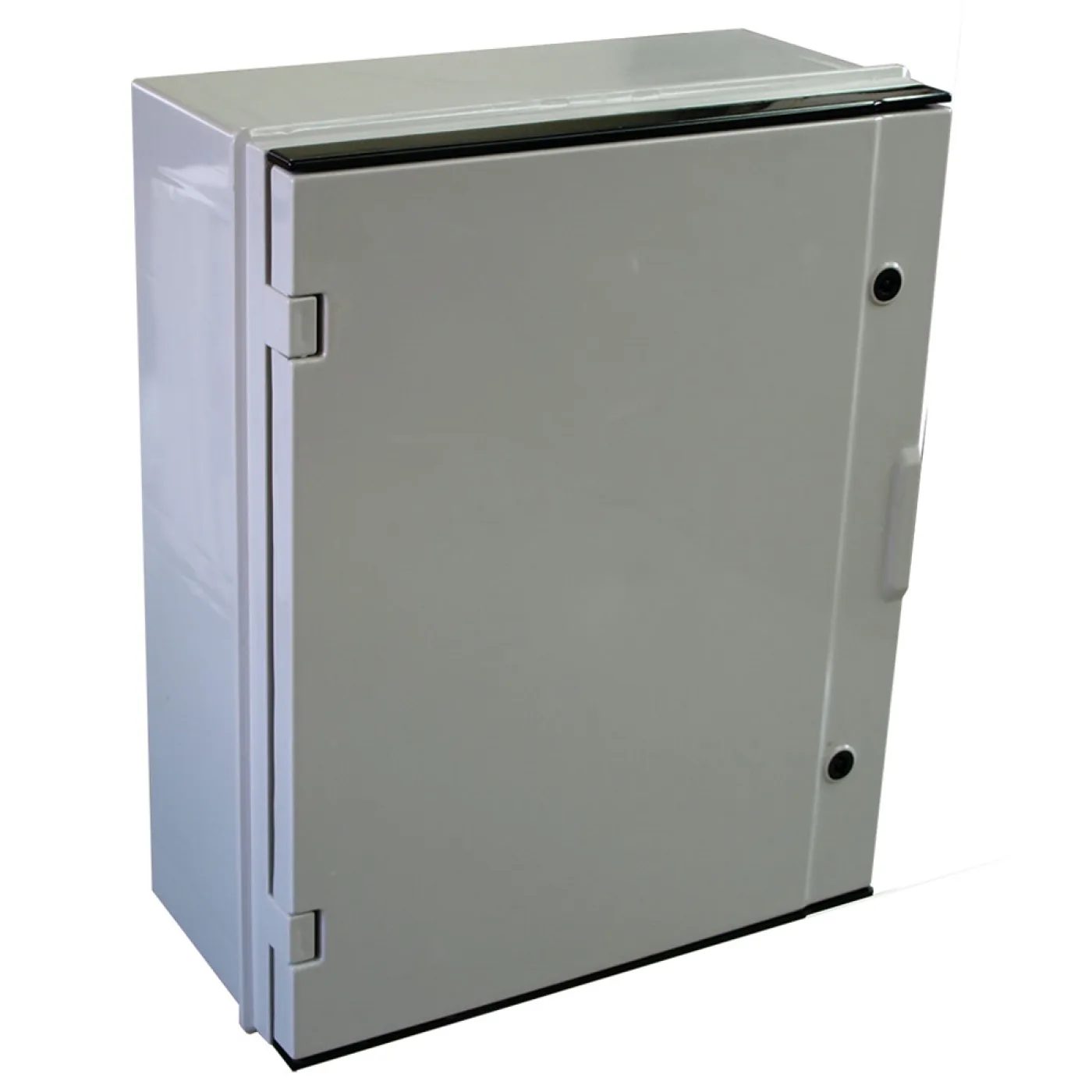
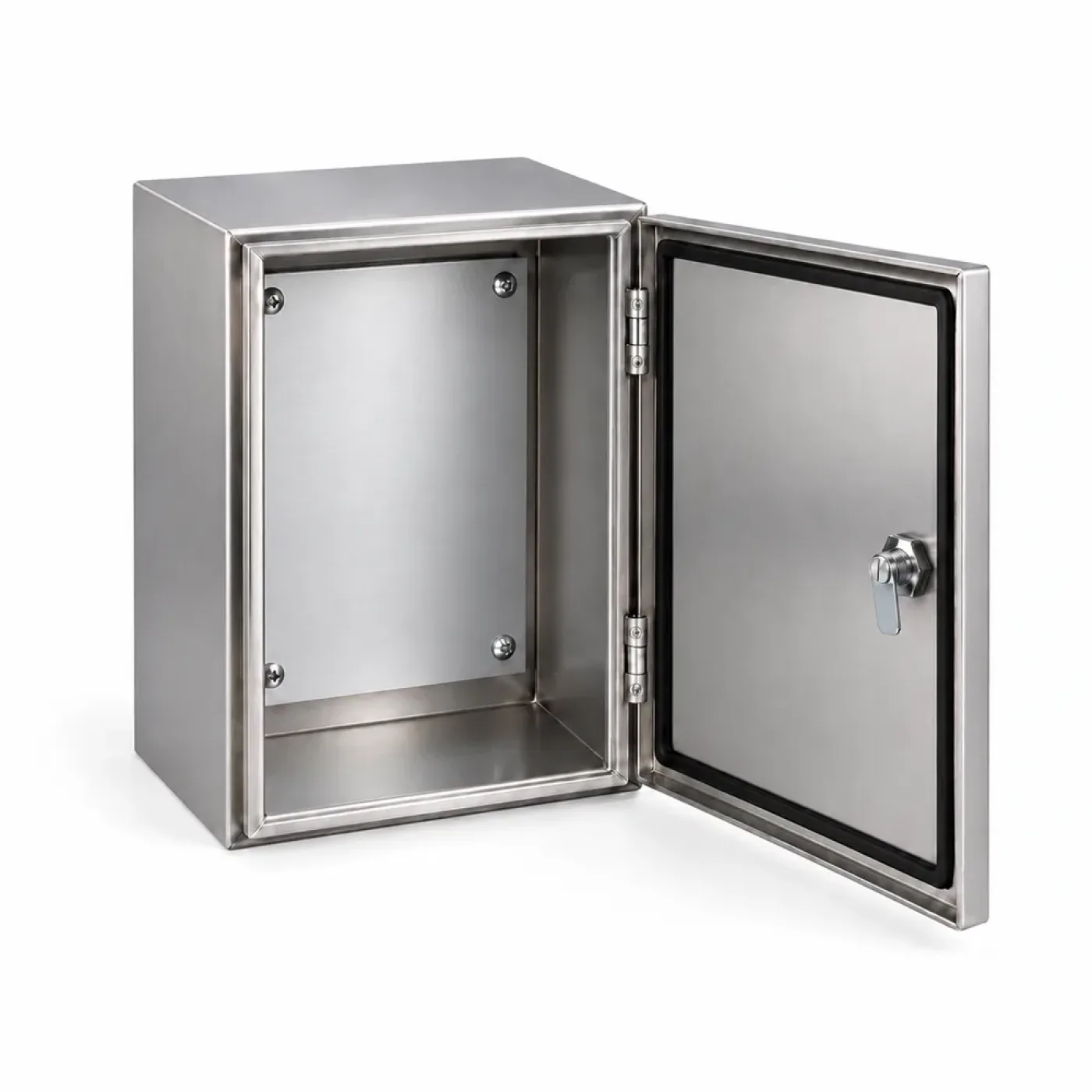
A stainless enclosure is not the nicer version of a painted steel one. It is bought where painted steel does not survive — and those places are reasonably clear. This article covers which they are, where 304 ends and 316 begins, and why a monoblock body is more than a manufacturing detail.
Where stainless is genuinely required
- Food and pharmaceutical production. Surfaces are washed regularly, usually with detergent and hot water. Painted steel blisters under that regime within a few years.
- Coastal sites and salt air. Salt advances from every point where it reaches the steel under the paint. For a seaside plant, stainless is a difference in service life.
- Water and wastewater plants. Constant humidity, condensation, chlorine.
- Chemical environments. Acid vapour, solvents, fertiliser.
- Vehicle washing and pressure cleaning. Both water and mechanical wear.
- Outdoor installations expected to last. Where periodic repainting is not possible.
Against that, in a dry indoor space a stainless enclosure is usually money spent for nothing. There, painted steel — or, where dust and water are the real problem, a plastic body — is the better decision.
304 or 316?
This distinction has to be made clearly, because getting it wrong is expensive.
| Grade | What it gives | Where |
|---|---|---|
| 304 | General corrosion resistance | Food, general industry, damp environments, indoor chemicals |
| 316 | 304 plus resistance to chlorides (molybdenum alloyed) | Seawater contact, pool plant, continuous chlorinated cleaning |
The stainless enclosures in our catalogue are 304 grade. 304 is the grade suited to most food plants and general industrial environments. But if you are in a chloride-rich environment — and we say this on the product page too — do not start with 304: in an application calling for 316, 304 pits, and small holes form in the surface.
A practical screening question: is there salt or chlorine in the environment? If there is, 316 should be discussed. If not, 304 is the correct and economical choice.
A monoblock body: more than a manufacturing detail
The supporting upper and lower chassis of our enclosures is monoblock welded; the body is produced as one welded structure rather than bolted together from separate panels. That has three concrete consequences:
- Hygiene. Bolted joints leave thin gaps between panels. In a food environment those gaps are points that cannot be cleaned and that hold dirt and moisture. A welded body has no such gap.
- Torsional rigidity. A body hung on a wall, or standing beside a vibrating machine, keeps its shape over time; the door stays aligned and the gasket keeps seating.
- Fewer corrosion starting points. Every bolt hole and every overlap is a place where moisture enters by capillary action.
Sheet thicknesses, and why they differ
The body is 1 mm and the covers 1.5 mm 304-grade sheet. The cover being thicker is not an accident: it is opened and closed constantly, devices and indicators are mounted on it, and the seal depends on it staying flat. A cover that flexes leaves the gasket unloaded at one corner.
Protection rating: IP54
Our monoblock stainless enclosures are rated IP54: dust-protected and resistant to splashing water from any direction. That is sufficient for indoor production areas and damp environments.
The point to watch is this: IP54 is not enough on a line that is pressure-washed. An area hosed down directly needs IP65 or better. Curiously, our plastic enclosures are IP65 — the reason is covered in our article plastic or metal enclosure. If a washed-down line needs stainless for hygiene and a higher IP for sealing, tell us your requirement before ordering.
Finish: does painted stainless make sense?
Our standard colour is RAL 7035, with a natural chrome finish available as an option. Painting stainless seems odd at first — it needs no paint for protection.
The reason is not protection but consistency: matching the other enclosures in a plant, keeping markings and labels legible, not showing fingerprints. The natural chrome finish is preferred in food plants, because without a paint layer there is no layer that can flake.
The mistake that ruins stainless in its first month
This appears in no datasheet but is seen constantly on site: contaminating a stainless body with carbon steel.
- Using galvanised or black screws. Fit ordinary screws to a stainless body and the screw rusts, and the rust stain spreads across the body. Use stainless fasteners.
- Grinding with a wheel that has cut carbon steel. Steel dust left on the wheel embeds in the stainless surface and rusts within weeks as brown spots. Use wheels and brushes reserved for stainless.
- Drilling the body on a bench covered in carbon steel swarf. The same outcome.
These stains appear not because the body itself is rusting but because the foreign iron on it is rusting — but the customer sees a rusted body. It is easy to prevent and hard to clean up afterwards.
Sizes
- Wall-mount (surface-mount monoblock): thirteen bodies from 200×250×200 mm to 600×900×200 mm. The depth is 200 mm throughout — if you are fitting a deep device, that is a constraint to check first.
- Floor-standing (modular industrial): bodies 2100 mm tall in 600, 700 and 800 mm widths.
The decision in short
- Is there washing, salt, chlorine or chemistry in the environment? If not, stainless may not be needed.
- If chlorides are present, discuss 316; if not, 304 is the right grade.
- In a food environment, consider the monoblock body and the natural chrome finish.
- If there is pressure washing, allow for IP54 not being enough.
- Confirm that 200 mm depth suits your devices.
- Specify stainless fasteners and dedicated grinding equipment for the installation.